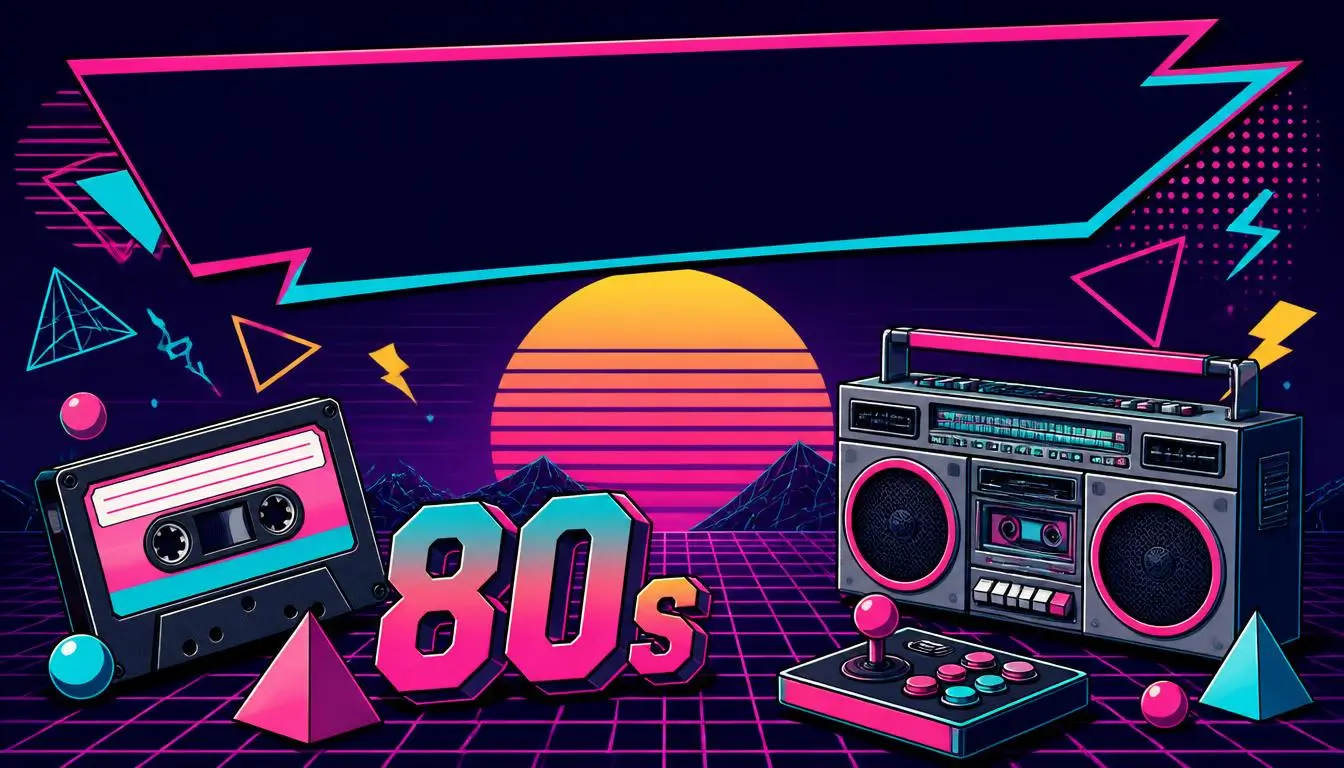
80s slang refers to the casual words and phrases that young people in the United States and the United Kingdom used during the 1980s, many of which were tied to surfer, skater, valley girl, and pop culture.
Words like “rad,” “gnarly,” “tubular,” and “totally” showed excitement, while “grody” and “bogus” showed disgust or annoyance.
Key Takeaways
- 80s slang grew out of surfer, skater, and valley girl culture, plus movies, music, and TV.
- Most terms express excitement (“rad,” “tubular”) or dislike (“bogus,” “grody”).
- Many words came from California youth culture before spreading nationwide.
- Some terms, like “rad” and “totally,” are still used today, often with a nostalgic wink.
- The tone is mostly playful and positive, though a few terms doubled as insults.
- Exact origins for many words are unclear, since slang spreads by word of mouth before it’s written down.
People search for 80s slang for a few simple reasons. Maybe a movie line confused them. A grandparent said something odd at dinner. They’re writing a script, a caption, or just love the decade’s neon energy.
80s slang shows up everywhere online. You’ll spot it in TikTok throwback videos, retro-themed Instagram posts, and comment sections joking about old-school phrases. It also pops up in shows and films set in the era, where characters call things “rad” or “bogus” without a hint of irony.
Is it still used today? Some of it, yes. Words like “rad” and “totally” survived and get used casually, sometimes seriously and sometimes as a joke. Other terms, like “gag me with a spoon,” mostly live on as nostalgic references rather than everyday speech.
This guide deeply breaks down what 80s slang means, where it likely came from, how people use pieces of it today, and dozens of real examples you can actually picture in conversation.
By the end, you’ll understand the vibe well enough to spot it anywhere it shows up, If that’s a movie script or your uncle’s stories.
What Does 80s Slang Mean?
80s slang means the informal vocabulary that spread through American and British youth culture during the 1980s. It wasn’t one single phrase but a whole toolkit of words for excitement, boredom, disgust, and friendship.
Some terms carried a single clear meaning. “Gnarly” described something impressive, often something a little extreme, like a wave or a stunt. Other words shifted meaning depending on tone. “Totally” could mean genuine agreement or dripping sarcasm, depending on how it was said.
A lot of 80s slang came from specific subcultures. Surfers and skaters gave the world “tubular” and “gnarly.” Valley girls in Southern California gave the world “like,” “fer sure,” and “as if.” Teen movies and music videos then took these regional phrases and broadcast them to a national, and eventually international, audience.
Quick Meaning Box
| Meaning | Simple Explanation |
| Excitement or approval | Words like “rad,” “tubular,” and “awesome” meant something was great. |
| Disgust or annoyance | Words like “grody” and “bogus” meant something was gross or unfair. |
| Emphasis | Words like “totally” and “majorly” made a statement stronger. |
| Social labels | Words like “dweeb” and “poser” described types of people. |
Pronunciation
“80s slang” is pronounced EY-teez slang. Individual terms have their own sounds worth noting:
- Gnarly: NAR-lee
- Tubular: TOO-byuh-ler
- Bogus: BOH-gus
- Grody: GROH-dee
Where Does 80s Slang Come From?
80s slang came from a mix of surfer and skater communities, Southern California teen culture, and the movies and music that spread those words nationwide. The exact origin of many individual terms is unclear, since slang usually spreads by speech long before anyone writes it down.
Surf and skate culture in California is widely credited with popularizing words like “gnarly” and “tubular,” both used to describe impressive waves or tricks.
Valley girl speech, associated with the San Fernando Valley area near Los Angeles, added phrases like “fer sure,” “gag me with a spoon,” and heavy use of “like” as a filler word.
This style got a huge boost from the 1982 song “Valley Girl” by Frank Zappa, featuring his daughter Moon Unit Zappa, which is often credited with bringing valley girl talk to a wider audience.
Beyond California, teen movies of the decade helped push slang into households across the country. Films aimed at teenagers used these words heavily in dialogue, which meant kids in other states picked them up secondhand, often without ever setting foot near a beach or a mall in the Valley.
Evolution of the 80s slang Term
80s slang didn’t appear all at once. It built up across the decade as surf culture, mall culture, and movie culture each added new words to the mix.
Early 80s slang leaned heavily on surfer and skater roots, with “gnarly” and “rad” already circulating among younger crowds on the West Coast.
As the decade went on, teen movies picked up steam, and slang moved from a regional thing into something teenagers across the country recognized, even if they’d never used it themselves before seeing it on screen.
By the late 80s, slang had spread through music videos, sitcoms, and radio, with phrases becoming shorthand for the decade itself. Some words, like “rad,” proved durable and simply never fully disappeared.
Others, like “gag me with a spoon,” faded from daily use but stuck around as a recognizable catchphrase people bring up specifically because it sounds so distinctly 80s.
There’s been a mild resurgence of interest in 80s slang thanks to shows and movies set in the decade, along with retro and nostalgia trends online.
This hasn’t necessarily brought the words back into regular conversation, but it has kept them familiar to younger generations who weren’t alive to use them the first time.
How People Use It Today
Today, 80s slang mostly shows up as a nostalgic reference rather than everyday vocabulary. People bring it back on purpose, often for humor or a throwback feel.
On TikTok and Instagram, you’ll see 80s slang used in captions for retro-themed outfits, throwback photo dumps, or videos referencing 80s movies and music.
On X, people sometimes joke using a phrase like “totally tubular” ironically, leaning into how dated it sounds. In texting, a friend might drop “rad” or “totally” casually, since both words never fully left common speech the way more niche terms did.
Gamers and Discord communities occasionally use 80s slang for retro-themed servers or synthwave and retro-gaming aesthetics, where the whole visual style leans into decade nostalgia. This isn’t universal, but it’s a real and visible use case tied to that specific online culture.
80s Slang Words
80s slang words cover a wide range, from excitement to insults to filler phrases. Common examples include “rad,” “gnarly,” “bogus,” “grody,” “dweeb,” and “psych.”
Each of these words served a distinct social purpose. “Rad,” short for “radical,” worked as a catch-all for anything impressive.
“Dweeb” labeled someone seen as awkward or overly nerdy. “Psych” was shouted after tricking someone, similar to saying “just kidding” today.
80s Slang Words for Cool
When 80s kids wanted to say something was cool, they reached for words like “rad,” “gnarly,” “tubular,” “awesome,” and “bitchin’.”
Each word carried a slightly different flavor. “Tubular” leaned surfer, often describing something amazing in a wave-like, rolling sense. “Bitchin'” was blunt and enthusiastic, common in casual teen speech.
“Awesome” started strong in the 80s and, unlike some of its peers, never really left everyday English.
80s Slang for So Cool
To go beyond just “cool” and say something was extremely impressive, people often stacked words together, like “totally tubular” or “majorly rad.”
This stacking technique added emphasis without needing a new vocabulary word. Saying something was “totally awesome” or “so gnarly” pushed the excitement up a notch, a pattern still common in casual English today.
80s Slang Insults Funny
Some ’80s insults worked more as playful jabs than serious put-downs. Words like “dweeb,” “poser,” and “airhead” were common, though tone and context mattered a lot.
“Poser” called out someone pretending to be part of a scene they didn’t really belong to, often used in skater and surfer circles.
“Dweeb” mocked someone seen as socially awkward. These words could sting, but among friends they often carried a joking, lighthearted edge rather than genuine cruelty.
80s Slang Terms
Beyond single words, 80s slang included full terms and expressions like “gag me with a spoon,” “as if,” and “wig out.”
“Wig out” meant to lose your composure or freak out over something, often used humorously. “As if” expressed strong disbelief or rejection, later famously reused in the 1995 film Clueless, which borrowed heavily from valley girl speech patterns.
80s Slang Phrases
Full phrases from the decade include “fer sure,” “gag me with a spoon,” “like, totally,” and “don’t have a cow.”
These phrases worked best in full sentences and carried a distinct rhythm. “Don’t have a cow” told someone to calm down or stop overreacting, a phrase that later got picked up and popularized further by the animated show The Simpsons in the early 1990s.
80s Slang for Party
For describing a great time or hyping up an event, 80s slang leaned on words like “party” as a verb itself, alongside phrases like “let’s party” and calling a fun gathering “a rager.”
“Party” used as a verb, as in “let’s party,” became one of the more recognizable pieces of 80s speech, often paired with an exclamation point in how it was said out loud.
80s Slang for Awesome
“Awesome” itself was one of the decade’s defining words, alongside close cousins like “rad,” “tubular,” and “killer” for describing something impressive.
“Killer” specifically described something intensely good, as in “that concert was killer.” Unlike some slang from the decade, “awesome” has aged the most gracefully, staying in casual use across generations since.
70s and 80s Slang
Some slang carried over from the 70s into the 80s, including words like “groovy” and “far out,” though these gradually felt more dated as the 80s introduced its own fresh vocabulary.
By the mid-80s, “groovy” and “far out” were already starting to feel like relics of the previous decade, gradually replaced in everyday teen speech by newer words like “rad” and “gnarly.”
Popular 80s Slang
The most popular 80s slang words, the ones most people instantly recognize today, include “rad,” “gnarly,” “totally,” “awesome,” and “gag me with a spoon.”
These words appear most often in throwback content and 80s-themed media because they’re the most universally recognized, even by people who weren’t alive during the decade.
Late 80s Slang
Late 80s slang carried over core words like “rad” and “awesome” while adding newer expressions tied to hip-hop’s growing mainstream presence, along with words like “def” (short for “definitely,” meaning excellent) and “fresh,” describing something stylish or impressive.
Hip-hop culture had a real and well-documented influence on slang by the late 80s, contributing words that later carried into the 90s as hip-hop’s cultural reach expanded further.
Tubular 80s Slang
“Tubular” specifically described something excellent, drawing directly from surfing, where a “tube” refers to the curling, hollow part of a wave.
Surfers used “tubular” first to describe an especially good wave, and the word later expanded to describe anything impressive, not just waves themselves.
Early 80s Slang
Early 80s slang leaned most heavily on its surf and skate roots, with words like “gnarly,” “rad,” and “tubular” already common among West Coast teens before the rest of the country caught on.
At this point, much of the slang hadn’t yet spread nationally through movies and music, so it still felt more regional and less universally recognized than it would by mid-decade.
Common 80s Slang
Common 80s slang, the words used in daily conversation rather than just niche subcultures, included “rad,” “totally,” “awesome,” “cool,” and “no way.”
These were the words most likely to show up in a typical teenager’s daily speech, regardless of If they surfed, skated, or lived anywhere near California.
Zoomer 80s Slang
Zoomers, meaning Gen Z, mostly encounter 80s slang through movies, shows, and internet nostalgia content rather than hearing it used naturally, and often use it ironically or as a joke reference rather than sincere everyday speech.
When Gen Z does use a word like “totally tubular,” it’s typically for comedic effect, leaning into how dated and exaggerated it sounds compared to modern slang.
British 80s Slang
British 80s slang developed somewhat separately from American slang, with its own words like “ace” (meaning excellent), “brill” (short for brilliant), and “sound” (meaning good or trustworthy).
These terms remained distinct from American 80s slang, and some, like “sound,” are still commonly used in the UK today, showing more staying power than many of their American counterparts.
Valley Girl 80s Slang
Valley girl slang, tied to Southern California’s San Fernando Valley, included phrases like “like,” “fer sure,” “gag me with a spoon,” and “grody to the max.”
This style of speech got major exposure through the 1982 Frank Zappa song “Valley Girl,” and it later shaped how teenage girl characters spoke in many 80s and 90s films and TV shows.
90s and 80s Slang
Some slang carried directly from the 80s into the 90s, including “rad” and “totally,” while the 90s introduced its own distinct words like “phat” and “all that.”
The transition wasn’t a clean break. Plenty of 80s words lingered into early 90s conversation before slowly being replaced by newer 90s terms.
British 80s Slang Words
Beyond “ace” and “brill,” British 80s slang included words like “mint” (meaning excellent) and “naff” (meaning uncool or tacky).
“Naff” specifically described something embarrassing or in poor taste, a useful insult with no exact American equivalent from the same era.
80s and 90s Slang Words
Words that spanned both decades include “rad,” “awesome,” and “totally,” which stuck around because they were flexible enough to apply to almost anything.
Their staying power came from simplicity. Unlike more specific terms like “tubular,” these words worked as general-purpose praise, which helped them survive the decade shift.
80s Teen Slang
80s teen slang covered school life specifically, with words like “burnout” (describing someone associated with drugs or slacking off), “jock,” and “dweeb” labeling different social groups.
These labels mirrored the social cliques often shown in 80s teen movies, where characters were sorted into recognizable types like the jock, the burnout, and the dweeb.
80s Surfer Slang
80s surfer slang gave the wider culture words like “gnarly,” “tubular,” and “stoked” (meaning excited), all rooted in describing waves, tricks, and the general surfing lifestyle.
“Stoked” in particular has had unusual staying power and remains common in surf, skate, and outdoor communities today, decades after its 80s peak in mainstream use.
Examples in Everyday Conversation
- “That new arcade just opened downtown, it’s totally tubular.”
- “Did you see his skateboard trick? So gnarly.”
- “This party is bogus, nobody even brought music.”
- “She’s such a dweeb, but I like her.”
- “No way you got that concert ticket, that’s rad!”
- “Ugh, this cafeteria food is so grody.”
- “For sure, I’ll meet you at the mall after school.”
- “He totally wigged out when he saw the test.”
- “Gag me with a spoon, did you see her outfit?”
- “That movie was killer, we should watch it again.”
Text Message Examples
- “omg that show was so rad 📼”
- “party tonight? totally down”
- “ur outfit is bitchin fr”
- “that test was bogus, way too hard”
- “stoked for the weekend!!”
- “he’s such a poser lol”
- “gnarly wipeout on that video”
- “as if I’m going without you”
- “don’t have a cow, I’m almost there”
- “Psych! Got you good “
Social Media Caption Examples
- Instagram: “Throwback to totally tubular vibes 🌈📼”
- TikTok: “POV: you’re stuck in 1985, and everything’s rad”
- X: “This playlist is straight up killer, no cap and no cassette needed”
- Threads: “Feeling stoked for this retro night out 🕺.”
- Facebook: “Found my old scrunchie, gag me with a spoon”
- Instagram: “Mall hair, mall vibes, totally tubular energy”
- TikTok: “Dressing like a dweeb on purpose today lol”
- X: “This weather is bogus, where’s my summer”
- Facebook: “Reunion night, feeling fer sure nostalgic”
- Instagram: “New kicks, totally rad, no notes”
Is It Positive or Negative?
Most 80s slang leaned positive, used to express excitement and approval. Words like “rad,” “awesome,” and “tubular” carried genuine enthusiasm.
Some terms, like “dweeb” or “poser,” could go either way depending on tone.
Said among close friends, they often felt playful. Said with a sharp tone, they could feel genuinely insulting.
Misunderstandings mostly happen with sarcastic use. Saying “totally” in a flat, unenthusiastic tone flips its meaning from real agreement to obvious sarcasm, something that can confuse people unfamiliar with 80s speech patterns.
Who Uses This Slang?
80s slang was mostly used by teenagers and young adults during the decade, especially those connected to surf, skate, and mall culture in the United States. Today, its use is different and more limited.
Modern use tends to skew toward people being nostalgic on purpose, If that’s older adults reminiscing or younger people referencing 80s movies and aesthetics for fun.
Gamers and fans of synthwave or retro aesthetics sometimes use the slang intentionally to match a retro theme. Outside of these specific contexts, it’s rarely anyone’s everyday vocabulary anymore.
Similar Slang Words
| Slang | Meaning |
| Rad | Excellent or impressive |
| Gnarly | Extreme, impressive, or intense |
| Tubular | Excellent, especially surf-related |
| Bitchin’ | Very good or exciting |
| Killer | Extremely impressive |
| Fresh | Stylish or new |
Opposite Words
- Bogus – describes something fake, unfair, or disappointing, the opposite of “rad” or “awesome.”
- Corny – describes something that feels overly cheesy or outdated.
- Grody – describes something disgusting, opposite of anything “tubular” or “fresh.”
- Wack – describes something bad or poorly done, more tied to late 80s hip-hop slang.
Common Mistakes
People sometimes misuse “gnarly” to mean something is bad, when it actually usually describes something impressive or intense, even if extreme.
Another common mistake is spelling “tubular” as “tubuler,” which changes the word entirely.
Some also assume all 80s slang came from surf or skate culture, when in reality valley girl speech and hip-hop each contributed their own separate set of words.
Mixing these origins together can lead to inaccurate claims about where a specific term came from.
When NOT to Use It
Avoid 80s slang in professional emails, job applications, and formal writing. Words like “rad” or “totally” read as too casual and can make writing seem unprofessional or dated in the wrong way.
School essays and business presentations also call for more neutral language.
Using slang in these settings can distract from your point or make your writing harder to take seriously, especially with an audience unfamiliar with the specific decade reference.
Fun Facts
- “Radical,” later shortened to “rad,” predates the 80s but became especially popular during the decade.
- The 1982 song “Valley Girl” by Frank Zappa and Moon Unit Zappa helped spread valley girl slang nationally.
- “Stoked” originated in surf culture and remains common in surfing and skating communities today.
- British slang from the same era, like “ace” and “brill,” developed mostly separately from American slang.
- “As if” was later reused prominently in the 1995 film Clueless.
- “Don’t have a cow” became widely associated with The Simpsons character Bart in the early 1990s.
- Many 80s slang terms are considered dated today but still appear regularly in movies and shows set in the decade.
Frequently Asked Questions
What slang was popular in the 80s?
Popular 80s slang included words like “rad,” “gnarly,” “tubular,” “awesome,” and “totally.” These words mostly expressed excitement or approval and came from surf, skate, and valley girl culture. Some, like “bogus” and “grody,” expressed the opposite, describing something disappointing or gross. Many of these words spread nationally through teen movies and music, which is part of why they’re still so recognizable in pop culture references today, even outside of the regions where they originally started.
What are some 80s catchphrases?
Common 80s catchphrases include “gag me with a spoon,” “as if,” “don’t have a cow,” and “fer sure.” These worked as full expressions rather than single words, often carrying more personality and humor than a simple slang word could on its own. Many of these phrases came from valley girl speech patterns, later reused in films and shows, which helped keep them recognizable well beyond the decade they originally came from.
What words were used in the 80’s?
Beyond catchphrases, individual 80s words included “rad,” “dweeb,” “burnout,” “psych,” “killer,” and “fresh.” Each targeted a different social use, from describing people to describing excitement or disappointment. Some of these words, like “fresh,” carried into hip-hop culture and later decades with slightly shifting meaning, while others, like “burnout,” stayed tied specifically to school-based social labels from the era.
What are some old slang terms?
Older slang terms, meaning those from the 70s and earlier that carried into or influenced 80s speech, include “groovy,” “far out,” and “dig it.” These generally faded out as the 80s introduced its own fresh vocabulary like “rad” and “gnarly.” Comparing old slang to 80s slang shows how quickly youth vocabulary can shift, with each new generation replacing much of what came before within just a few years.
Final Thoughts
80s slang captures a specific moment in youth culture, shaped by surfers, skaters, valley girls, and the movies that carried their words to the rest of the country. Some of it stuck around, like “rad” and “awesome.”
Some of it faded into nostalgic reference, like “gag me with a spoon.”
Understanding this slang isn’t just trivia. It helps make sense of old movies, family stories, and the retro aesthetic that keeps popping back up online.
If you’re writing a script, chasing a throwback vibe, or just curious what your parents meant by “totally tubular,” this vocabulary gives you a clear window into how an entire generation talked.

Emily Rodriguez is a content creator and editor at Slang Insight, specializing in Gen Z language trends and social media culture. Emily’s mission is to help readers stay updated with the latest slang so they never feel out of the loop in online conversations.