Gen Alpha slang refers to the internet-born words and phrases used by kids and teens born roughly between 2010 and 2024.
Terms like “skibidi,” “rizz,” “gyat,” and “fanum tax” spread mainly through TikTok and YouTube Shorts, often starting as jokes before becoming everyday classroom talk.
Key Takeaways
- Gen Alpha slang is the informal vocabulary used by kids born from about 2010 to 2024.
- Most of it starts on TikTok, YouTube Shorts, or in video games like Fortnite and Roblox.
- The tone is usually playful, silly, or exaggerated rather than serious or hostile.
- Words spread fast and burn out fast, so lists change month to month.
- Some terms (like “rizz”) have crossed into mainstream adult use; others stay kid-only.
- A few words have double meanings, so context always matters.
If you’ve overheard a kid say “that’s so skibidi” or call something “mad sigma,” you’re not imagining things. That’s Gen Alpha slang, and it’s everywhere right now in classrooms, group chats, comment sections, and family dinners where parents just stare in confusion.
Gen Alpha slang shows up most on TikTok, YouTube Shorts, and inside games like Fortnite, Roblox, and Minecraft. Kids pick up a word from a video, repeat it with friends, and within weeks it’s part of how an entire grade talks. Some words stick around. Most fade out just as fast as they arrived.
People search for Gen Alpha slang for a few reasons. Parents want to know if their kid is saying something rude. Teachers want to keep up with their students. Older siblings just want to stay in the loop. And plenty of adults are simply curious why an 8-year-old keeps yelling “gyat” at the TV.
That discussion deeply breaks down what Gen Alpha slang actually means, where it came from, how it’s used today, and how it’s different from Gen Z slang. By the end, you’ll be able to follow along in an actual conversation, no translator needed.
What Does Gen Alpha Slang Mean?
Gen Alpha slang is not one single word; it’s an entire vocabulary of terms that Generation Alpha uses online and in person. It covers everything from compliments and insults to reactions and inside jokes.
Unlike older slang that spread through music or movies, most Gen Alpha slang starts as a joke in a short-form video. A sound, a meme, or a random phrase gets repeated so often that it turns into shared vocabulary. Because of that, meanings can shift depending on tone, context, and who’s saying it.
A few examples of what falls under this umbrella:
- Skibidi – used loosely to mean cool, weird, or just as a nonsense filler word.
- Rizz – charisma, especially the ability to flirt smoothly.
- Gyat – an exclamation, often about someone’s appearance.
- Fanum tax – jokingly “taxing” or taking a bit of someone’s food.
- Sigma – a lone-wolf, independent type, often used sarcastically.
Some of these words have real, traceable meanings. Others are closer to sound effects that just mean “reaction” more than anything literal.
Quick Meaning Box
| Meaning | Simple Explanation |
| Umbrella term | Slang used by kids born roughly 2010–2024. |
| Where it starts | TikTok, YouTube Shorts, gaming voice chats. |
| Purpose | Humor, identity, group bonding. |
| Lifespan | Often weeks to a couple of years. |
| Tone | Usually playful, not hostile. |
Pronunciation
Gen Alpha slang is pronounced jen AL-fuh slang. Individual words vary; for example, “skibidi” is said skih-BID-ee, and “rizz” rhymes with “quiz.”
Where Does Gen Alpha Slang Come From?
Most Gen Alpha slang comes from short-form video culture, especially TikTok and YouTube Shorts, rather than any single source. The exact origin of most individual terms is unclear, since they often spread faster than anyone can trace them back to a first use.
A lot of it grows out of memes, video game commentary, and reaction content. “Skibidi,” for instance, is tied to a YouTube animated series called Skibidi Toilet, though the word itself is used far more loosely than the show’s actual plot.
“Rizz” is widely believed to come from the word “charisma,” shortened and reshaped by online creators, though who first used it that way isn’t confirmed.
Because kids are the ones actively creating and remixing this language, Gen Alpha slang forms faster and more chaotically than past generations’ slang did. There’s no single inventor; it’s closer to a group effort spread across millions of short videos.
Evolution of the Term
Gen Alpha slang really picked up speed around 2020 to 2022, as more young kids got access to smartphones and short-form video apps during a time when screen use at home increased.
Words that once lived only inside gaming Discord servers or YouTube comment sections started showing up in real-life conversations.
By 2023 and 2024, terms like “rizz” and “gyat” had broken out of kid-only spaces and into mainstream use, even appearing in major dictionaries’ “word of the year” discussions.
Some words, like “sigma,” borrowed from older internet meme culture and got reshaped with a new, more sarcastic meaning for a younger audience.
The pattern tends to repeat: a word starts as a joke, spreads through video remixes, peaks in popularity, then either fades out or becomes so common it’s no longer seen as “new” slang at all.
How People Use It Today
Today, Gen Alpha slang shows up most on TikTok, YouTube Shorts, Snapchat, and inside gaming chat on platforms like Roblox and Fortnite. It’s less common on X or Facebook, which skew toward older users.
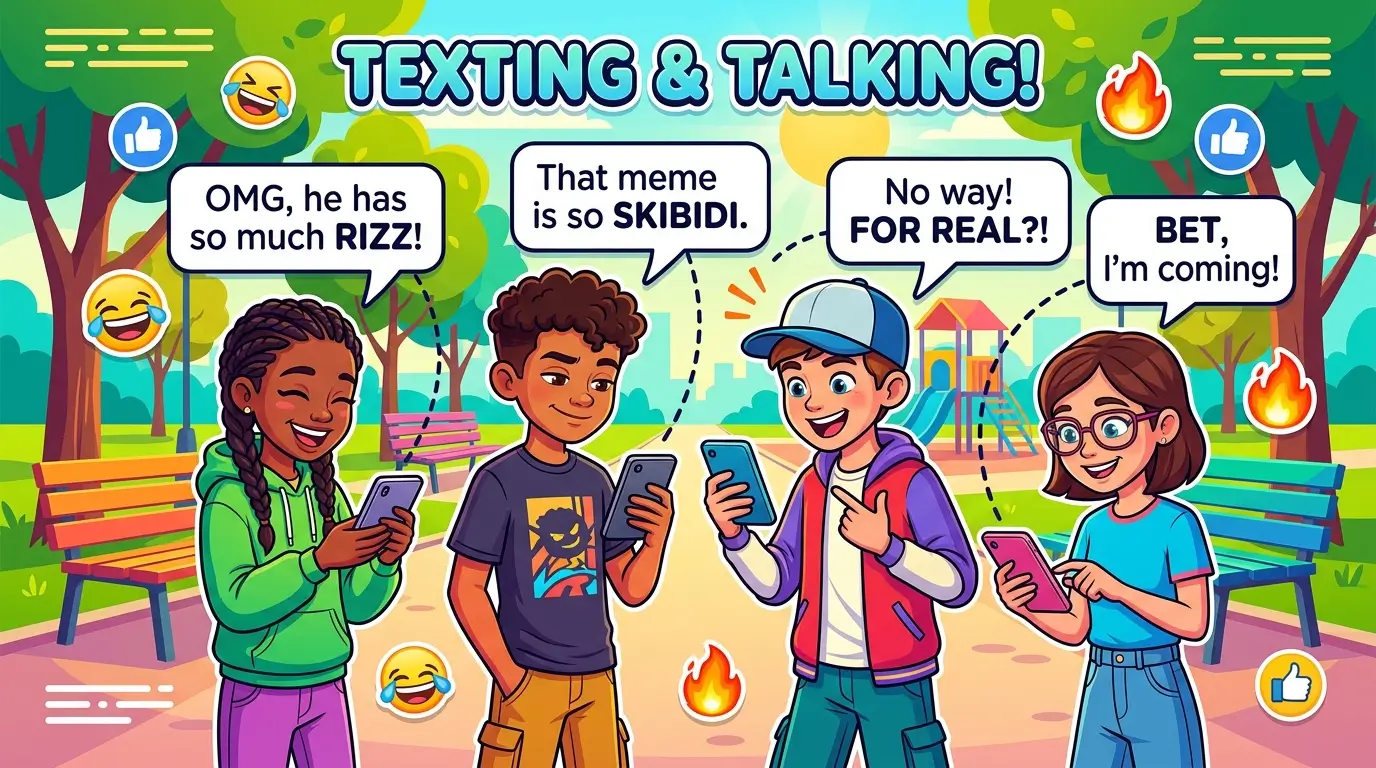
Kids use it in texting, video captions, comments, and everyday talk at school. It often works as a group signal: using the right word at the right time shows you’re in on the joke.
Adults who use it, especially teachers or parents, sometimes get a mixed reaction: kids either find it funny or slightly cringe, depending on how it’s used.
Gen Alpha Slang List
A solid Gen Alpha slang list usually includes a mix of compliments, insults, reactions, and filler words. Some of the most recognized terms right now include:
- Rizz – charisma or flirting skill.
- Gyat – exclamation about appearance.
- Skibidi – nonsense/cool, tied to the Skibidi Toilet series.
- Fanum tax – jokingly taking someone’s food.
- Sigma – independent or “main character” type.
- Mewing – a jaw-posture trend from an online fitness/orthodontic theory.
- NPC – calling someone boring or robotic, from video game terms.
- Ohio – used to mean something is strange or chaotic.
- Delulu – short for “delusional,” usually joking.
- Grimace shake – a viral meme referencing a McDonald’s promotion.
Lists like this change often, since new words replace old ones within months.
Gen Alpha Slang Meaning
The core meaning behind most Gen Alpha slang isn’t really about the dictionary definition of the word; it’s about tone and timing. A word like “gyat” doesn’t have one fixed meaning; it works more like an exclamation point.
That’s part of why these words confuse adults. They’re less about literal translation and more about matching energy in a conversation. Understanding Gen Alpha slang means paying attention to context, not just memorizing a definition.
Gen Alpha Slang for Cool
When Gen Alpha wants to say something is cool, they rarely use the word “cool” at all. Instead, they reach for words borrowed from meme culture and gaming.
Common ways to say something is cool in Gen Alpha slang include “skibidi” (used positively), “sigma,” “goated” (meaning the greatest of all time), and “bussin'” (borrowed from Gen Z, meaning really good). Tone matters a lot here; the same word can sound like a compliment or a joke depending on how it’s said.
Gen Alpha Slang vs Gen Z Slang
Gen Alpha slang and Gen Z slang share a lot of DNA, but they’re not identical. Z slang leaned heavily on words like “bet,” “no cap,” “slay,” and “bussin’,” many of which came from AAVE (African American Vernacular English) and hip-hop culture. Alpha slang, in contrast, leans more on gaming culture, YouTube memes, and short-form video sounds.
| Term | Meaning | Key Difference |
| Gen Z slang | “No cap,” “bet,” “slay,” “bussin'” | Rooted more in music, AAVE, and early social media culture. |
| Gen Alpha slang | “Skibidi,” “rizz,” “gyat,” “fanum tax” | Rooted more in gaming, YouTube, and TikTok meme remixes. |
Some words, like “rizz” and “bussin’,” get used by both generations, which is why the line between “Gen Z slang” and “Gen Alpha slang” can feel blurry.
Gen Alpha Slang Sentences
Seeing the words in full sentences makes the meaning click faster than a definition alone. Here are a few natural examples:
- “He’s got so much rizz, he got her number in two minutes.”
- “That goal was skibidi, ngl.”
- “Bro just fanum taxed my fries.”
- “Stop being so sigma, come sit with us.”
- “This whole day has been so Ohio.”
Gen Alpha Slang Quiz
A quick way to test your knowledge is to match the word to the meaning. For example: Does “rizz” mean (a) charisma, (b) tiredness, or (c) anger? The answer is charisma.
Try the same with “gyat,” “fanum tax,” and “delulu.” Cover the definitions above and see how many you can guess correctly before checking back.
67 Gen Alpha Slang
“67” is one of the newer entries in Gen Alpha slang, mostly used as a random, silly exclamation rather than something with a fixed meaning.
It’s often shouted as a joke, similar to how “skibidi” gets used more about the reaction than any literal translation. Because it’s so new, its exact origin and staying power are both still unclear.
Ohio Gen Alpha Slang
“Ohio” in Gen Alpha slang doesn’t refer to the actual state; it’s used to describe something strange, chaotic, or embarrassing.
The joke started as an exaggerated meme about Ohio being a weird place, and kids adopted it as shorthand for “this is bizarre.” Saying something is “so Ohio” means it’s confusing or off in a funny way.
New Gen Alpha Slang
New Gen Alpha slang shows up constantly, since the words are tied so closely to whatever video trend is popular that month.
Recent additions have included “67,” updated versions of “Ohio” jokes, and remixes of older terms like “rizz” (such as “rizzler” or “unspoken rizz”). Because turnover is so fast, a “new” word list from six months ago can already feel outdated.
What Does Goon Mean in Gen Alpha Slang
In older slang, “goon” simply meant a tough or thuggish sidekick. Among Gen Alpha and Gen Z online spaces, though, the word has picked up an adult, sexual slang meaning that’s unrelated to its original use.
Because of that shift, many parents and teachers consider the word inappropriate for kids to use, even casually.
If you hear a kid using it, it’s worth knowing the modern meaning isn’t the innocent one and addressing it the way you would any other mature content a child picked up online.
Examples in Everyday Conversation
- “Did you see his rizz at lunch? Smooth.”
- “That’s kind of Ohio, not gonna lie.”
- “Quit fanum taxing my snacks.”
- “He’s acting all sigma today.”
- “This homework is so skibidi, I can’t even.”
- “She’s delulu if she thinks that’s true.”
- “Stop being an NPC and actually talk.”
- “That was a goated play.”
- “Bro tried to mew during class.”
- “That’s giving major gyat energy.”
Text Message Examples
- “omg he texted back so fast, the rizz is real.”
- “why is this app being so Ohio rn.”
- “bro fanum taxed my lunch money.”
- “ok that’s actually kind of goated ngl.”
- “stop being delulu, he’s not texting back.”
- “she’s giving sigma energy today fr.”
- “That meme was skibidi levels of funny.”
- “no cap that was gya.”
- “he’s mewing in his pfp lol.”
- “67 just popped into my head randomly lol.”
Social Media Caption Examples
- Instagram: “Rizz level: unlocked”
- TikTok: “POV: you just got fanum taxed”
- X: “This whole week has been so Ohio”
- Threads: “Certified sigma moment right here”
- Facebook: “Kids today say ‘skibidi,’ and I’m lost”
- TikTok: “Delulu is the solulu, apparently”
- Instagram: “Goated summer, no notes”
- X: “NPC behavior at its finest”
- TikTok: “Mewing my way through finals week”
- Threads: “Someone explain ’67’ to me please”
Is It Positive or Negative?
Most Gen Alpha slang is meant to be playful rather than mean. Words like “rizz,” “goated,” and “skibidi” are usually compliments or neutral reactions. But context can flip the meaning fast; calling someone an “NPC” is meant as an insult, suggesting they’re boring or don’t think for themselves.
Misunderstandings usually happen when adults take a word too literally.
“Gyat” can sound rude out of context, but kids often use it as a general exclamation rather than a targeted comment. Still, some terms like the modern meaning of “goon” really are inappropriate and worth taking seriously if a child uses them.
Who Uses This Slang?
Gen Alpha slang is used mainly by kids and pre-teens roughly ages 6 to 16, though older Gen Z users and even some millennials pick up the more viral terms too.
Gamers use a good chunk of this vocabulary first, since terms like “NPC” and “sigma” started in gaming and internet meme spaces before spreading into general kid culture.
Teachers and parents sometimes adopt a word or two, usually to connect with kids, though it can come across as trying too hard if used the wrong way.
Similar Slang Words
| Slang | Meaning |
| Bussin’ | Really good (usually about food) |
| No cap | Not lying, for real |
| Bet | Okay, agreed |
| Slay | Doing something impressively well |
| Goated | Greatest of all time |
Opposite Words
- Mid – the opposite of impressive; average or disappointing.
- NPC – opposite of having “rizz” or standing out; means boring or robotic.
- Basic – the opposite of unique or interesting.
- Cringe – the opposite of cool; embarrassing.
Common Mistakes
A lot of people misuse “rizz” as only meaning “flirting,” when it more broadly means charisma or social smoothness in general.
Another common mistake is writing “skibidi” as if it always means something negative; it’s actually neutral or positive most of the time.
People also often assume “sigma” is always a serious compliment, when it’s frequently used sarcastically among kids poking fun at the “lone wolf” trend.
Finally, many adults misspell “gyat” as “gyatt” or “gyaat”; both are used online, but “gyat” is the more common spelling.
When NOT to Use It
Gen Alpha slang doesn’t belong in professional emails, school assignments, job interviews, or formal writing.
These words can come across as unprofessional or confusing to anyone unfamiliar with internet culture, and using them in a resume or workplace message can hurt credibility.
It’s also best avoided in front of teachers or bosses unless the setting is clearly casual, since slang like this can read as immature in serious situations.
Fun Facts
- “Rizz” was recognized as a major word of the year by a leading dictionary in 2023.
- “Skibidi” is tied to a YouTube animated series that became a massive hit with young viewers.
- Many Gen Alpha terms borrow directly from gaming vocabulary, like “NPC.”
- Slang lifespan has shortened significantly compared to past generations, thanks to how fast videos spread.
- Some words, like “sigma,” originally come from older internet forums before Gen Alpha reshaped their meaning.
- Parents and teachers increasingly search these terms just to understand everyday conversations with kids.
Frequently Asked Questions
What are some Gen Alpha slangs?
Some of the most common Gen Alpha slang words include “rizz” (charisma), “gyat” (an exclamation about appearance), “skibidi” (cool or nonsense filler), “fanum tax” (jokingly taking someone’s food), and “sigma” (an independent, sometimes sarcastic label). These words mostly spread through TikTok and YouTube Shorts before becoming everyday classroom talk. New terms replace older ones often, so a full list changes month to month depending on whatever trend is currently popular online.
How do gen alphas say “hi”?
Gen Alpha kids often still say a normal “hi” or “hey,” but online greetings sometimes get playful additions, like “yo, what’s the rizz today” or simply reacting with a trending sound or meme reference instead of words. In texting, greetings are often shortened even further, using emojis or single words like “yo” or “sup” rather than full slang phrases, since greetings tend to stay simpler than reaction-based slang.
What slang is skibidi?
“Skibidi” is a flexible slang word that can mean cool, weird, or simply work as a nonsense filler with no fixed meaning. It comes from a viral YouTube animated series called Skibidi Toilet, though kids use the word far beyond anything related to the actual show. Its meaning depends heavily on tone; it can be a compliment, a joke, or just an exclamation, which makes it one of the trickiest Gen Alpha terms for adults to fully pin down.
What are the top 10 Gen Z words?
Commonly cited Gen Z slang words include “no cap,” “bet,” “slay,” “bussin’,” “rizz,” “mid,” “sus,” “vibe check,” “lowkey/highkey,” and “goated.” Many of these came from AAVE and hip-hop culture before spreading widely through social media. Some, like “rizz” and “bussin’,” have crossed over into Gen Alpha use too, which shows how much overlap exists between the two generations’ vocabularies despite each having its own distinct slang identity.
Final Thoughts
Gen Alpha slang can feel like a moving target, and honestly, that’s kind of the point. It’s built to change fast, spread through video trends, and give kids a way to talk that feels entirely their own.
If it’s “rizz,” “skibidi,” or whatever comes next, most of it is just kids having fun with language, not something to stress over.
Knowing the basics helps you follow along without needing a translator every time your kid, student, or younger sibling talks. And if a new word shows up that isn’t on this list yet, chances are it’ll be explained in a video somewhere within the week.

Emily Rodriguez is a content creator and editor at Slang Insight, specializing in Gen Z language trends and social media culture. Emily’s mission is to help readers stay updated with the latest slang so they never feel out of the loop in online conversations.