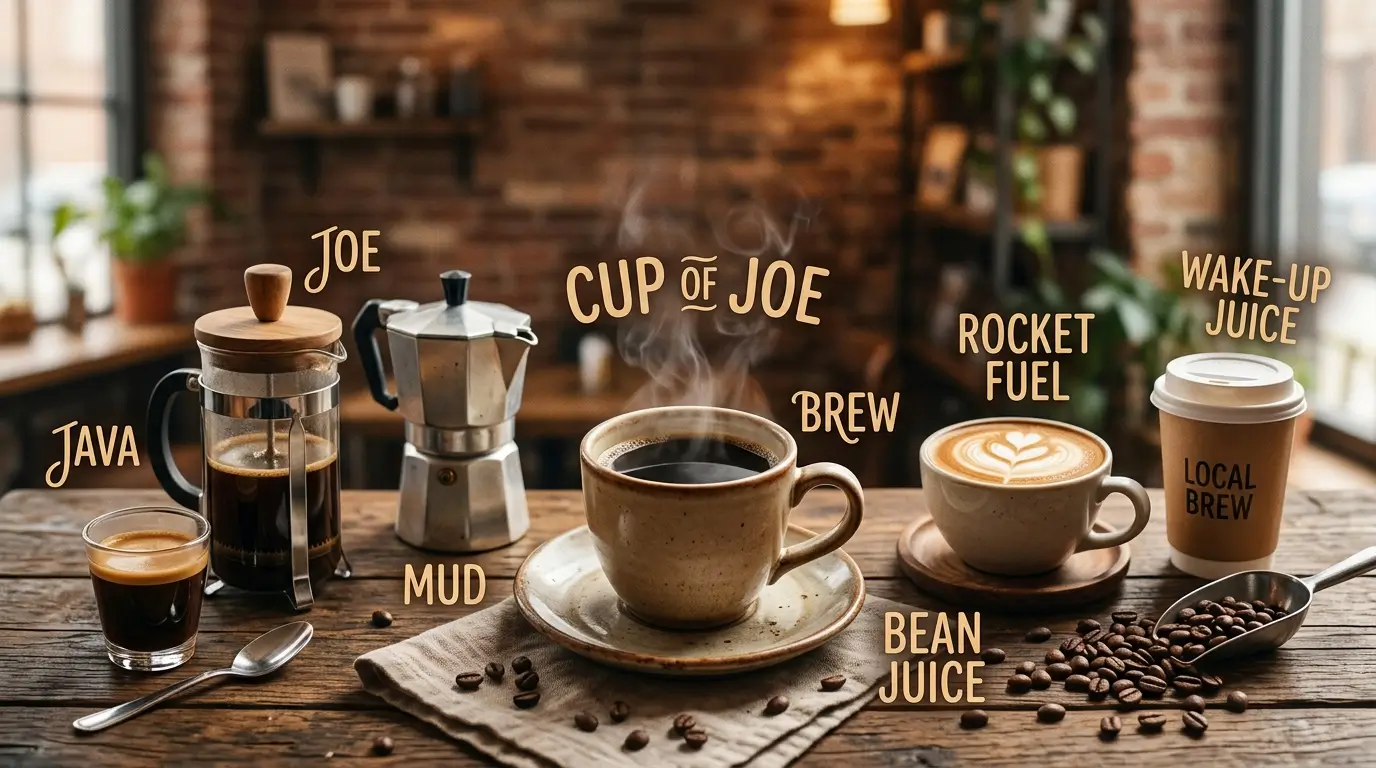
25 coffee slang refers to a collection of 25 popular nicknames and phrases people use for coffee, like “cup of joe,” “java,” “morning brew,” and “liquid energy.” These terms show up in casual conversation, coffee shops, texting, and social media, and most describe coffee’s taste, effect, or role in daily routines.
Key Takeaways
- Coffee slang includes classic terms like “joe” and “java,” plus newer phrases like “liquid energy.”
- Many terms describe coffee’s effect (waking you up) rather than its taste.
- Some slang, like “cup of joe,” dates back nearly a century; others are newer coffee-shop lingo.
- The tone is almost always positive or playful; coffee slang is rarely used negatively.
- These terms are used across all age groups, though coffee-shop and social media slang skew younger.
- Regional differences exist, though most English-speaking coffee slang overlaps closely across countries.
People search for coffee slang for a few simple reasons. Maybe someone said “pass me the joe,” and you weren’t sure what they meant. Maybe you saw “java” used online and wondered if it was about coffee or the programming language. Or maybe you just love coffee culture and want a full list of the fun words people use for it.
Coffee slang shows up everywhere: diners, coffee shops, text messages, and social media captions. Some of it has been around for generations, like “cup of joe.” Other terms are newer, tied to coffee-shop culture and how people talk about their morning routine online.
This guide covers 25 coffee slang terms, where they came from, and how people actually use them today. By the end, you’ll know exactly what someone means the next time they ask for “a shot of liquid energy” instead of just saying coffee.
What Does 25 Coffee Slang Mean?
“25 coffee slang” simply means a list of 25 informal words and phrases used instead of the word “coffee.” Some describe the drink itself, like “java” or “brew.” Others describe the effect it has, like “liquid energy” or “rocket fuel.”
A few are playful nicknames used mostly in coffee shops or among coffee enthusiasts, like “bean juice.”
Here are the 25 terms this list covers: cup of joe, java, brew, morning fuel, liquid energy, rocket fuel, bean juice, black gold, wake-up juice, cuppa, jitter juice, mud, joe, hot mud, caffeine fix, morning brew, go-juice, life juice, brain fuel, liquid motivation, roast, drip, espresso shot, pick-me-up, and daily grind (used loosely to mean a coffee habit, not just the routine itself).
Quick Meaning Box
| Meaning | Simple Explanation |
| Cup of joe | Classic American slang for a cup of coffee. |
| Java | Nickname referencing Java, an island known for coffee production. |
| Liquid energy | Playful term describing coffee’s wake-up effect. |
| Brew | Short, casual word for coffee, referencing how it’s made. |
| Bean juice | Informal, joking nickname for coffee. |
Pronunciation
“Coffee” is pronounced KAW-fee. Most of its slang terms are simple and easy to say: joh (joe), JAH-vuh (java), broo (brew), and KUP-uh (cuppa).
Where Does 25 Coffee Slang Come From?
Most coffee slang comes from either coffee’s origin, its preparation, or its effect on energy levels. The exact origin of many individual terms is unclear, but general patterns are well documented.
“Java” references the Indonesian island of Java, historically a major coffee-growing region. “Cup of joe” is widely believed to be American slang, though its exact origin story is debated and not fully confirmed.
Newer terms like “liquid energy” and “rocket fuel” are more descriptive than historical; they’re simply casual ways to describe how coffee makes people feel.
Origin Of The 25 Coffee Slang
“Cup of joe” has been used in American English since at least the early-to-mid 1900s, making it one of the oldest and most recognized coffee nicknames. “Java” has similarly old roots, tied to the coffee trade and Java Island’s reputation as a coffee source.
Newer slang, like “liquid energy” and “go-juice,” became more common as coffee culture grew alongside energy drink marketing and coffee-shop branding in the last few decades.
Coffee-shop culture, especially the rise of specialty coffee shops, added lighter, more playful terms like “bean juice” and “hot mud” to everyday conversation.
How People Use It Today
Coffee slang still shows up constantly in texting, coffee-shop menus, and social media captions. On Instagram and TikTok, people often caption their morning coffee photos with phrases like “liquid energy” or “brain fuel” instead of just saying coffee.
It’s common in casual conversation among coworkers, especially around office coffee runs, and it appears frequently in memes about mornings and productivity.
What Do We Say for Coffee in Urdu?
In Urdu, coffee is most commonly just called “coffee” (کافی), since it’s a borrowed word rather than one with a distinct native slang term. Tea culture is far more dominant in Pakistan and much of South Asia, so coffee doesn’t carry the same depth of regional slang that tea does.
Informally, people may simply say “ek coffee” (one coffee) the same way they’d order any other drink, without a slang nickname attached.
Slang to Use in 2023
Coffee slang that was especially common in 2023 leaned toward social-media-friendly phrases like “liquid energy,” “brain fuel,” and “pick-me-up,” often paired with morning routine content on TikTok and Instagram.
These terms work well as captions because they’re short, upbeat, and instantly understandable, which is likely why they saw more everyday use during that period compared to older, more old-fashioned terms like “hot mud.”
Coffee 2 Gram
“Coffee 2 gram” typically refers to the amount of instant coffee or ground coffee used per serving, since a standard single-serve packet or scoop is often measured in small gram amounts.
This isn’t slang itself, but it connects to how people talk about their coffee habits; measuring a quick “2-gram fix” is part of the casual, practical language coffee drinkers use when describing their routine.
Coffee Short Sentence
A “coffee short sentence” is simply a brief, casual line people use to talk about coffee, like “I need my joe” or “coffee first, questions later.”
These short phrases are common in captions, texts, and everyday small talk because they get the point across quickly without needing a full explanation.
Examples in Everyday Conversation
- “I can’t function without my cup of joe in the morning.”
- “Pour me some of that java, please.”
- “This brew is exactly what I needed today.”
- “I’m running on pure liquid energy right now.”
- “Grab me some rocket fuel before the meeting starts.”
- “This bean juice is stronger than usual.”
- “I need my morning fuel before I talk to anyone.”
- “That coffee shop makes the best hot mud in town.”
- “One more caffeine fix and I’ll be ready.”
- “I live for my daily cup of joe.”
Text Message Examples
- “omw, grabbing my liquid energy first”.
- “need my joe before this call lol”.
- “brew’s ready, come get some”.
- “running purely on rocket fuel today”.
- “can’t talk, mid caffeine fix”.
- “grabbing bean juice on the way in”.
- “Morning fuel: acquired ☕”.
- “No cuppa yet, don’t test me”.
- “brain fuel loading”.
- “Pick-me-up time, be right back”.
Social Media Caption Examples
- Instagram: “Morning fuel, ready to go ☕”
- TikTok: “POV: your only personality trait is liquid energy”
- X (Twitter): “This cup of joe is doing heavy lifting today”
- Threads: “Bean juice appreciation post”
- Facebook: “Nothing beats a good cup of joe on a slow morning”
- Instagram: “Brain fuel loading before the day starts”
- TikTok: “When the brew hits just right”
- X (Twitter): “Rocket fuel activated, let’s go”
- Threads: “Daily grind starts with a good cuppa”
- Facebook: “This hot mud is exactly what Monday needed”
Is It Positive or Negative?
Coffee slang is almost always positive or playful. Terms like “liquid energy” and “rocket fuel” are said with enthusiasm, not criticism.
There’s very little negative use of coffee slang, since coffee itself is a widely loved, everyday habit rather than something people complain about.
The only mild exception is sarcastic use, like joking that you “need an IV of coffee,” which is exaggeration rather than genuine negativity.
Who Uses This Slang?
Coffee slang is used across almost every age group, though the specific words differ. Older generations are more likely to say “cup of joe” or “java,” while younger people on social media favor phrases like “liquid energy” or “brain fuel.”
Office workers commonly use casual coffee slang around coffee breaks, and coffee-shop culture has added lighter, trendier terms to the mix in recent years.
Similar Slang Words
| Slang | Meaning |
| Java | Classic nickname for coffee. |
| Joe | Short version of “cup of joe”. |
| Brew | Casual term referencing how coffee is made. |
| Cuppa | Informal, friendly term for a cup of coffee. |
| Bean juice | Playful, joking nickname for coffee. |
Opposite Words
There’s no true opposite slang term for coffee, since it’s a specific drink rather than a word with a clear antonym.
The closest contrast would be slang for decaf or “sleepy time” drinks, like herbal tea, which are associated with winding down instead of waking up.
Common Mistakes
A common mix-up is confusing “java,” the coffee slang, with Java, the programming language; context always makes the difference clear.
People also sometimes assume all coffee slang is modern internet lingo, when terms like “cup of joe” and “java” are actually decades old.
Another mistake is using slang like “rocket fuel” too literally in formal writing, where it can come across as unclear or overly casual.
When NOT to Use It
Avoid coffee slang in professional emails, formal reports, or academic writing, since terms like “joe” or “bean juice” read as too casual for those settings.
In customer-facing business communication, it’s safer to just say “coffee” directly to avoid confusion, especially with international audiences who may not recognize American slang terms.
Fun Facts
- “Java” references the Indonesian island historically known for coffee production.
- “Cup of joe” has been used in American English since roughly the early-to-mid 1900s.
- Coffee slang tends to describe effect (energy) more often than taste.
- Coffee-shop culture has added several lighter, playful terms to everyday coffee slang in recent decades.
- Coffee slang is almost universally positive in tone.
- Urdu doesn’t have a strong native slang term for coffee, since tea culture dominates in that region.
Frequently Asked Questions
What is 25 in slang?
Outside of coffee slang, “25” doesn’t have one single widely recognized slang meaning on its own; its use varies heavily by context, like specific texting shorthand or numeric codes in certain online communities. In the context of this article, “25” simply refers to the number of coffee slang terms covered, rather than “25” itself carrying independent slang meaning.
What are slang terms for coffee?
The most common slang terms for coffee include cup of joe, java, brew, and liquid energy. These terms are widely recognized in the U.S. and used casually in conversation, texting, and social media. Some describe coffee’s taste or preparation, while others focus on its energizing effect, which is why so many newer terms lean toward words like “fuel” or “juice.”
What does coffee mean in a dirty mind?
Coffee itself doesn’t have a widely recognized alternate suggestive meaning the way some slang words do; it’s used almost exclusively to refer to the drink or the routine around it. Any suggestive interpretation would depend entirely on context within a specific conversation rather than being an established, common slang meaning.
What age is Gen Z slang for?
Gen Z generally refers to people born roughly between the late 1990s and early 2010s. In terms of coffee slang specifically, this age group tends to favor shorter, social-media-driven phrases like “liquid energy” or “brain fuel” over older, more traditional terms like “cup of joe.”
Final Thoughts
Coffee slang is one of those small, everyday language quirks that says a lot about how people relate to their morning routine.
If it’s an old classic like “cup of joe” or a newer phrase like “liquid energy,” these terms all point to the same thing: coffee is a daily habit people genuinely enjoy talking about.
Now that you know all 25 terms and where they came from, you’ll recognize them instantly the next time someone asks for a “shot of rocket fuel” instead of simply saying coffee.

James Carter is a slang researcher and writer at Slang Insight, dedicated to exploring the origins and meanings behind today’s most popular internet expressions. With a background in linguistics and a love for pop culture, James brings a unique perspective to every article, making slang easy to understand for everyone.