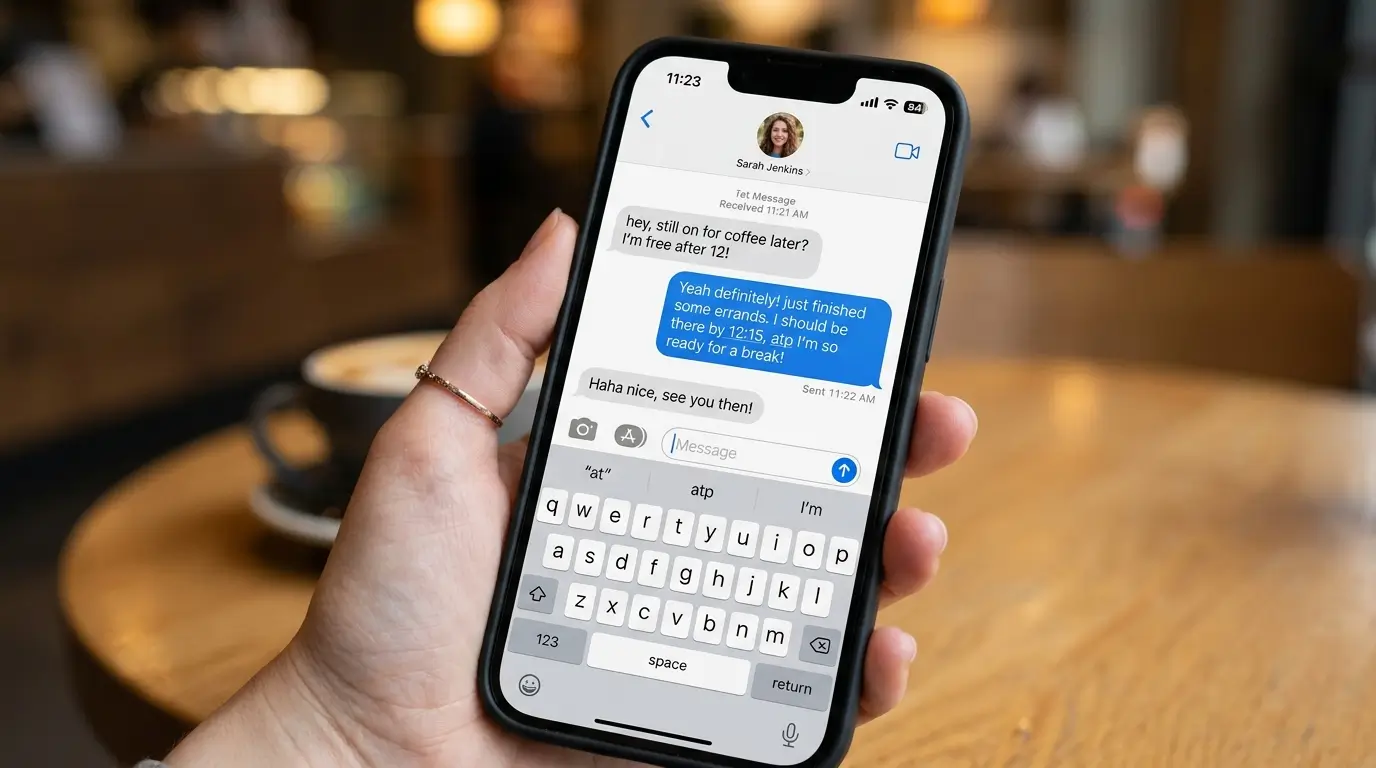
ATP is slang for “at this point,” used when someone wants to say they’ve reached their limit, given up on something, or just don’t care anymore.
It shows up in texts, tweets, and captions, usually to add a tired or done-with-it tone to a sentence, like “atp i’m just gonna stay home.”
Key Takeaways
- ATP most commonly stands for “at this point” in casual slang
- It’s used to express frustration, exhaustion, or a “why bother” attitude
- The exact origin is unclear, but it grew alongside texting shorthand and spread through social media
- Still widely used today, especially in texts, tweets, and captions
- The tone is usually neutral to slightly negative, showing resignation rather than anger
- Not to be confused with the science term ATP (adenosine triphosphate)
If you’ve scrolled through X, opened a group chat, or read a TikTok comment lately, there’s a good chance you’ve run into “atp.” It’s short, it’s casual, and it doesn’t always make sense out of context. That’s exactly why so many people search for what it means.
People usually come across atp meaning slang in a sentence like “atp I don’t even care anymore” or “atp let’s just cancel the plans.” It reads like a sigh in text form. The letters stand in for a phrase that would take longer to type, which fits perfectly with how people communicate online today.
This slang term isn’t going anywhere. It’s used across age groups, though it’s especially common among teens and young adults who spend a lot of time texting or posting. It shows up in casual chats, comment sections, and captions where someone wants to express that they’ve hit a point of frustration or acceptance.
This discussion now deeply covers everything about ATP: what it means, where it likely came from, how people use it on different platforms, and how to avoid mixing it up with other similar-looking abbreviations. By the end, you’ll know exactly when and how to use it yourself.
What Does ATP Mean in Slang?
ATP means “at this point” in most casual slang contexts, and it’s used to signal frustration, resignation, or a sense of giving up on something. It works almost like a verbal shrug.
The phrase carries a specific feeling. It’s not just describing a moment in time the way “at this point in my life” might in formal writing.
Instead, it usually implies the speaker has reached a limit. Something has built up, and they’re at the point where they no longer want to fight it, argue about it, or keep trying.
A few common examples show this clearly:
- “atp I’m just going to order food, cooking is not happening”
- “atp why even try to explain it”
- “she’s late again, atp I’m not waiting”
In each case, atp adds a layer of emotional context. The sentence would still make sense without it, but the tone would be flatter.
Adding “atp” tells the reader the speaker has been dealing with something for a while and has reached their limit.
There’s also a secondary, much less common use where ATP refers to “answer the phone,” mostly seen in older texting shorthand lists. This use is rare in modern conversation compared to “at this point,” which is by far the dominant meaning today.
Quick Meaning Box
| Meaning | Simple Explanation |
| At this point | Most common meaning; expresses frustration or resignation. |
| Answer the phone | Older, rare texting shorthand, seldom used now. |
| Adenosine triphosphate | Scientific term, unrelated to slang use. |
Pronunciation
ATP is pronounced letter by letter: “ay-tee-pee.” It’s not read as a word. People say each letter separately, the same way you’d pronounce “ASAP” letter by letter or “BRB.”
Where Does ATP Meaning Slang Come From?
The exact origin of ATP as slang is unclear. It appears to have grown naturally out of texting culture, where common phrases get shortened to save time and characters.
“At this point” is a phrase people already used often in spoken English, especially in casual venting or storytelling. As texting became the main way people communicated quickly, phrases like this one got trimmed down into abbreviations.
ATP fits a pattern seen with other shortenings like “idk” for “I don’t know” or “istg” for “I swear to god.”
There’s no confirmed record of one specific person, platform, or year that started the trend.
It likely developed gradually through everyday texting before catching on more widely through social media captions and comments, where short, punchy phrasing tends to spread fast.
Evolution of the Term
ATP as a texting abbreviation fits into a broader wave of shorthand that became common as mobile texting grew. Phrases that were common in speech slowly got turned into letter-based shortcuts to fit character limits and speed up typing.
As social media platforms grew, especially ones built around short captions and quick replies, abbreviations like ATP found a bigger audience. People saw it used in posts and comments, picked it up, and started using it themselves.
This kind of organic spread is common with slang; it doesn’t always have one clear starting point, but it becomes familiar through repetition across many small interactions.
There’s no clear evidence of ATP fading out or making a specific “comeback.” It has stayed steadily in use as one of many texting abbreviations people rely on for quick, casual communication.
How People Use It Today
ATP is used across texting apps, group chats, and social media platforms where casual, shorthand language is the norm.
It fits naturally into fast-paced conversations where people want to express a feeling quickly.
It shows up most in texts between friends, comment sections on TikTok and Instagram, and posts on X.
It’s less common in more formal spaces like LinkedIn or professional emails, where the tone doesn’t match casual venting slang.
ATP Meaning Slang Twitter
On X (formerly Twitter), ATP often appears in posts where someone is venting about a situation or reacting to news.
It’s used to add a “why does this keep happening” tone, especially in replies or quote posts where people are reacting to something frustrating or repetitive.
ATP Meaning Slang Text
In texting, ATP is one of the most natural places to see this abbreviation. It fits perfectly into short back-and-forth messages, especially when someone is describing a situation that has worn them down, like a long day or an annoying repeated problem.
ATP Meaning Slang TikTok
On TikTok, ATP shows up often in comment sections and captions. Creators and commenters use it to express that they’ve reached their limit with a trend, situation, or ongoing joke. It fits the platform’s fast, reactive style of communication.
ATP Meaning Slang Urban Dictionary
Urban Dictionary entries for ATP generally point to “at this point” as the top definition, describing it as a way to express frustration or resignation.
Crowd-sourced slang sites like this reflect how everyday people define and use the term, rather than an official or dictionary-backed source.
ATP Meaning Slang Chat
In group chats, atp often pops up when someone is recapping a frustrating situation to friends. It works as a quick way to say “I’ve had enough of this” without writing out a longer explanation.
ATP Meaning Slang Reddit
On Reddit, atp appears in comment threads, especially in discussion or venting-style subreddits. People use it the same way as elsewhere, to mark a point where they’ve stopped trying to be patient or optimistic about something.
ATP Meaning Slang Snapchat
On Snapchat, atp is common in captions and chat messages between friends. Since Snapchat conversations tend to be quick and casual, short abbreviations like this fit naturally into the platform’s messaging style.
Slang Word ATP Meaning
As a slang word, ATP is best understood as shorthand for a feeling more than just a phrase. It signals that someone has reached a breaking point, however small, in a situation they’re describing.
ATP Abbreviation Meaning Slang
As an abbreviation, ATP strips down “at this point” into three letters to make texting faster. It follows the same logic as many other texting abbreviations that trim common phrases into quick shorthand.
ATPO Meaning Slang
ATPO is a less common variation sometimes used to mean “at this point” as well, though it isn’t nearly as widespread as ATP. When people do use ATPO, it typically carries the same tone of frustration or resignation.
Examples in Everyday Conversation
- “Atp I’m just going to walk instead of waiting for the bus.”
- “She canceled again? Atp I’m not making plans with her anymore.”
- “Atp I don’t even remember why we started arguing.”
- “My wifi keeps cutting out, atp I might just switch providers.”
- “Atp let’s just order pizza, nobody wants to cook.”
- “He’s an hour late, atp I’m heading home.”
- “Atp I’ve re-read this chapter five times and still don’t get it.”
- “Atp just tell me the truth, I can handle it.”
- “This printer keeps jamming, atp I’m buying a new one.”
- “Atp we should just reschedule the whole trip.”
Text Message Examples
- “u coming or not? atp just let me know”
- “atp I give up trying to fix this myself”
- “Traffic is reckless, atp I might just turn around”
- “atp can we talk about literally anything else”
- “Still no reply from him, atp whatever”
- “atp i’ve asked three times, forget it”
- “my phone keeps glitching, atp new phone time”
- “atp let’s just meet at the usual spot”
- “she hasn’t texted back in hours, atp moving on”
- “atp I’m done overthinking this, sending it”
Social Media Caption Examples
- Instagram: “atp this is just my life now.”
- TikTok: “atp I’ve watched this 47 times, and I’m not stopping.”
- X: “atp nothing surprises me anymore.”
- Threads: “atp we all just accept the wifi will crash mid-meeting.”
- Facebook: “atp I’ve replanted this garden three times, send help.”
- Instagram: “atp I’m just gonna nap through the drama.”
- TikTok: “atp this trend isn’t ending and honestly neither am I.”
- X: “atp just gonna let the algorithm decide my mood today.”
- Threads: “atp I’ve accepted my package is lost forever.”
- Facebook: “atp Monday just needs to figure itself out.”
Is ATP Meaning Slang Positive or Negative?
ATP usually carries a neutral to mildly negative tone. It reflects frustration, tiredness, or acceptance rather than excitement or joy.
It’s rarely used to express something positive on its own. Instead, it signals that the speaker has hit a limit with patience, effort, or expectations.
It’s not typically considered rude, but it can come across as blunt or dismissive depending on the situation, especially if used in response to someone else’s message rather than about a general situation.
Misunderstandings can happen if someone reads atp as more aggressive than intended. Since tone is hard to read in text, “atp I’m done” can sound like frustration directed at the reader, even if the writer just means they’re tired of a situation in general.
Adding context helps avoid this kind of mix-up.
Who Uses This Slang?
ATP is used most by teens and young adults, especially in texting and social media comments. It fits naturally into the fast, casual style of communication common in these age groups.
That said, it’s not limited to any one group. Plenty of adults use it too, especially in casual texting with friends or family.
Gamers also use it in chat during online play, often to express frustration with a match or teammate. It’s less common in professional or formal settings, where casual abbreviations like this don’t fit the expected tone.
Similar Slang Words
| Slang | Meaning |
| Fr | For real |
| Ngl | Not gonna lie |
| Idc | I don’t care |
| Smh | Shaking my head |
| Istg | I swear to god |
Opposite Words
- “Still hopeful” the opposite feeling of atp’s resignation, showing patience instead of giving up
- “No rush” signals calm and ease, unlike atp’s tone of reaching a limit
- “All good” reflects satisfaction rather than frustration or tiredness
Common Mistakes
People sometimes confuse ATP with “asap,” which means “as soon as possible” and has a completely different meaning. Since both are three-letter abbreviations starting with “a,” it’s an easy mix-up in fast typing.
Another mistake is assuming ATP always means something angry. In most cases, it’s closer to tired or resigned rather than upset. Reading too much emotion into it can cause unnecessary tension in a conversation.
Some people also confuse the slang atp with the scientific term ATP, which stands for adenosine triphosphate and has nothing to do with texting slang. Context almost always makes clear which meaning is intended.
When Not to Use ATP Meaning Slang
ATP should be avoided in professional emails, school assignments, and formal writing. These settings expect complete, clear language rather than casual abbreviations.
Using ATP in a work email, for example, could come across as unprofessional or confusing to someone unfamiliar with the term. In school essays or formal papers, spelling out “at this point” keeps writing clear and appropriate for the audience. Save ATP for casual texts, social captions, and informal chats with people who already understand internet shorthand.
Fun Facts
- ATP is one of many texting abbreviations built from common spoken phrases
- The letters ATP also stand for adenosine triphosphate in biology, a completely unrelated meaning
- ATPO is a less common variant with a similar meaning to ATP
- ATP is typically read letter by letter, not as a spoken word
- It fits into a broader family of frustration-based slang like “smh” and “istg”
- The tone of ATP is usually resigned rather than angry
Frequently Asked Questions
What is ATP in Gen Z slang?
In Gen Z slang, ATP means “at this point,” and it’s used to express that someone has reached their limit with a situation. It’s common in texts, TikTok comments, and captions where a quick, casual tone fits better than a full sentence. Gen Z tends to use it alongside other short abbreviations like “fr” or “ngl” to keep messages fast and expressive. It’s less about describing a moment in time and more about showing a “done with this” attitude in a compact way.
What does ATP mean in texting?
In texting, ATP almost always means “at this point.” It’s used to add emotional weight to a message, usually frustration or resignation, without needing extra words. For example, “atp I’m just going to reschedule” shows the sender has reached a point where they’re ready to make a decision rather than keep waiting. It’s a quick way to signal tone in a short message, which is especially useful in texting where space and time are limited.
What is ATP social media?
On social media, ATP is used in captions, comments, and replies to express a similar feeling of frustration or acceptance. It’s especially common on platforms like TikTok, X, and Instagram, where short, reactive language fits the format. People often use it to add personality to a post, showing they’ve reached a limit with a situation, trend, or ongoing issue, often with a touch of humor.
What does ATP mean on TikTok?
On TikTok, ATP usually appears in comments or captions to express that someone has hit a breaking point with something, often in a lighthearted or relatable way. It’s frequently paired with everyday frustrations, like repeated technical issues or ongoing jokes within a trend. Because TikTok’s format favors short, punchy text, ATP fits naturally into captions where a longer explanation isn’t needed.
Is ATP the same as ASAP?
No, ATP and ASAP are different. ASAP means “as soon as possible” and refers to urgency, while ATP means “at this point” and refers to reaching a limit or point of frustration. They’re easy to mix up because both are short, three-letter abbreviations, but their meanings don’t overlap.
Final Thoughts
ATP is a small abbreviation that carries a lot of tone. It lets people express frustration, tiredness, or acceptance quickly, without needing to write out a full sentence.
If it’s in a text to a friend, a TikTok comment, or a tweet about a rough day, atp fits naturally into casual, fast-paced conversation.
It’s not complicated once you see it in context, but it’s easy to misunderstand if you’re not familiar with texting shorthand.
Now that you know what it means, where it likely came from, and how people use it across different platforms, you’ll be able to spot it instantly and use it naturally yourself.

Emily Rodriguez is a content creator and editor at Slang Insight, specializing in Gen Z language trends and social media culture. Emily’s mission is to help readers stay updated with the latest slang so they never feel out of the loop in online conversations.