70s slang refers to the casual words and phrases people used in the United States and the UK during the 1970s, shaped by disco culture, hippie holdovers from the 60s, TV shows, and Black vernacular English.
Words like “groovy,” “far out,” and “dig it” were common ways to say something was good, cool, or understood.
Key Takeaways
- 70s slang blends leftover hippie language from the 1960s with new disco-era and TV-driven expressions.
- Much of it came from music scenes, street culture, and African American Vernacular English (AAVE).
- The tone is mostly playful and positive, though some terms were used as insults.
- Many words like “groovy” and “far out” are still used today, often jokingly or nostalgically.
- It’s popular now because of retro TV shows, movies, and social media throwback trends.
- Some terms are regional, with British 70s slang sounding quite different from American versions.
People search for 70s slang for a few simple reasons. Maybe they just watched a show set in the disco era and got confused by the dialogue. Maybe a grandparent said something like “far out,” and they wanted to know what it meant.
Or maybe they’re writing a script, a costume party invite, or a nostalgic social media post and want it to sound authentic.
This slang shows up more than you’d think. It pops up in reruns of old sitcoms, in classic rock lyrics, in movies set in the disco years, and even in modern slang that borrowed from it. Some of it has faded away completely. Other pieces, like “groovy,” never really left; people still use them as a joke or a wink to the past.
Is 70s slang still used today? Some of it, yes. Words like “chill out,” “far out,” and “right on” survived because they’re fun to say and easy to understand. Other phrases died out because they were tied to specific TV shows, music trends, or fashion that nobody references anymore.
This guide covers where 70s slang came from, what it actually means, how it’s used now, and how it compares across regions like the US and UK. By the end, you’ll be able to read a decade-old sitcom script or a vintage letter and know exactly what people were saying.
What Does 70s Slang Mean?
70s slang means the informal vocabulary that was common during the 1970s, used to express approval, describe people, or casually talk about everyday life.
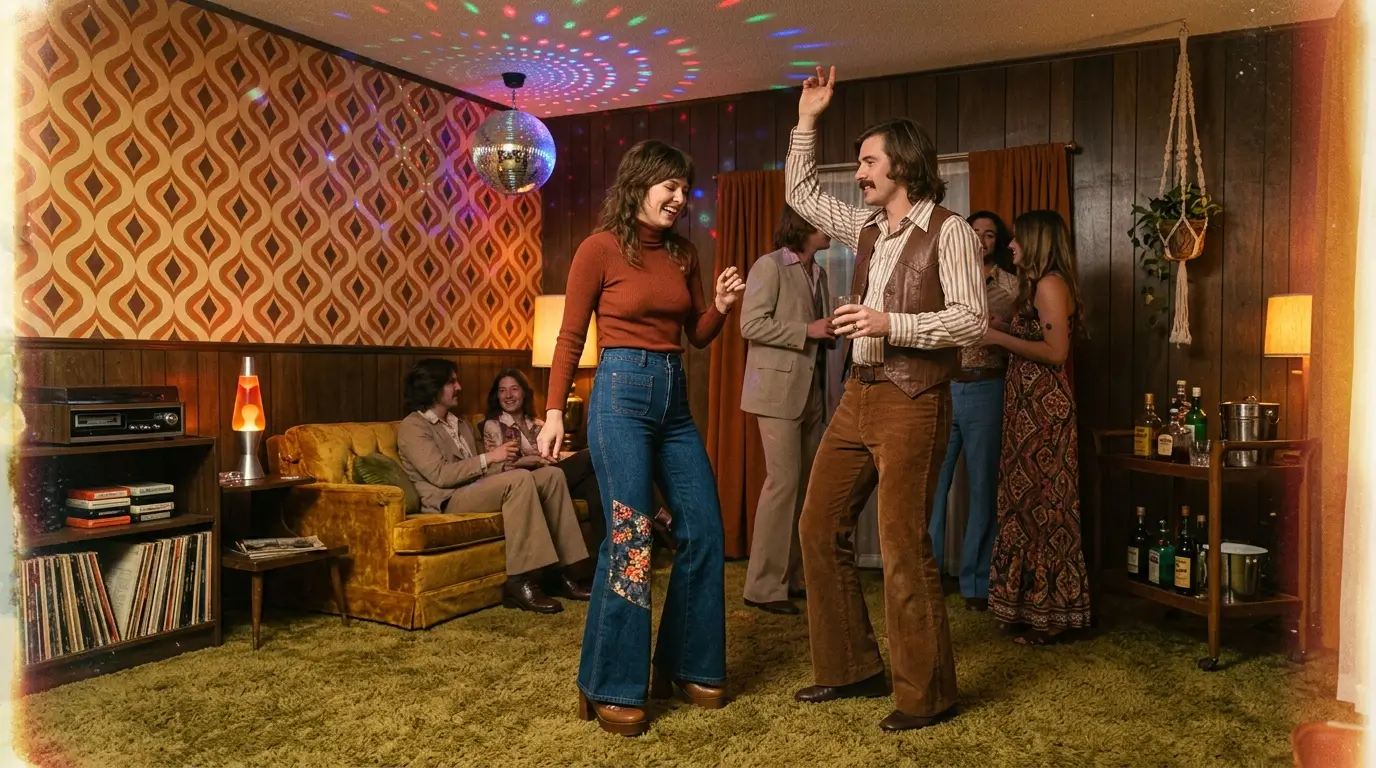
It wasn’t one single style of speech. It mixed several influences at once. Hippie culture from the late 1960s carried over words like “groovy” and “far out.” Disco culture added its own flashy vocabulary tied to music, dancing, and nightlife.
Black communities contributed a huge share of the era’s most lasting expressions, many of which later became part of mainstream English.
Television and movies also spread slang quickly, since these were the main forms of shared entertainment before the internet existed.
For example, someone in 1975 might say a party was “groovy,” call a stylish outfit “boss,” or describe a boring person as a “drag.” Each phrase carried a specific feeling: excitement, approval, disappointment packed into just one or two words.
Quick Meaning Box
| Meaning | Simple Explanation |
| Groovy | Cool, enjoyable, or excellent. |
| Far out | Amazing, surprising, or impressive. |
| Dig it | To understand or really like something. |
| Bread | Money. |
| Split | To leave a place. |
| Fox / Foxy | An attractive person. |
| Boss | Great or high quality. |
| Bummer | A disappointing situation. |
Pronunciation
“70s slang” is pronounced SEV-uhn-tees slang. There’s no tricky pronunciation here since it’s a straightforward phrase, not a single word. Individual slang terms from the decade, like “groovy” (GROO-vee) or “far out” (FAR-owt), are pronounced exactly how they look.
Where Does 70s Slang Come From?
Most 70s slang came from a mix of counterculture movements, Black communities, and popular entertainment of the time. The exact origin of many specific phrases is unclear, since slang usually spreads through spoken conversation long before anyone writes it down.
A lot of it traces back to the hippie movement, which was strongest in the late 1960s but stayed influential well into the 70s.
Words about peace, freedom, and good vibes carried over directly. At the same time, disco clubs and radio created their own set of expressions tied to music, fashion, and nightlife.
Black culture also played a major role, with many phrases entering wider American slang through music, especially soul, funk, and early hip-hop influences toward the end of the decade.
Because slang moves through speech first, it’s not always possible to pin an exact birthdate or inventor on a specific word. When that’s the case, the honest answer is simply that the exact origin is unclear.
Evolution of the 70s slang Term
70s slang didn’t appear overnight. It evolved in stages across the decade, shaped by shifting culture and technology.
Early in the decade, hippie language from the 60s was still very common. Terms like “groovy,” “peace out,” and “far out” carried a laid-back, spiritual tone. As the decade moved on, disco culture took over nightlife and brought flashier, more energetic slang tied to dancing, fashion, and status.
By the late 70s, television sitcoms had a massive influence on how slang spread across the country, since almost everyone watched the same handful of shows. This helped certain phrases become nationally recognized instead of staying limited to one city or scene.
In recent years, some of this slang has seen a small resurgence. Nostalgia for the 70s aesthetic through fashion trends, retro-themed shows, and vintage-style social media content has brought words like “groovy” and “far out” back into casual, often joking use.
How People Use It Today
Today, 70s slang mostly shows up nostalgically or ironically rather than as everyday speech. People use it on TikTok and Instagram when making retro-themed content, dressing up for a disco party, or poking fun at old sitcom dialogue.
On X and Reddit, it often appears in throwback posts or when people are comparing old slang to modern slang for fun.
It’s rarely used sincerely in day-to-day conversation anymore, since most of these words are tied closely to a specific era.
70s Slang for Cool
The most common way people said “cool” in the 70s was “groovy,” followed closely by “far out” and “boss.”
“Groovy” was the all-purpose word for anything good, from a song to a person’s attitude. “Far out” leaned more toward describing something surprising or mind-blowing, almost like today’s “wow, that’s wild.” “Boss” was another popular option, especially for describing clothes, cars, or anything impressively stylish.
Each word had a slightly different flavor, but they all pointed to the same basic idea: something was excellent.
70s Slang Insults Funny
Some 70s insults sound silly today, but they were genuinely used to put someone down. Calling someone a “drag” meant they were boring or annoying to be around.
“Square” described someone who was old-fashioned, uptight, or completely out of touch with current trends. “Nowhere man” was used for someone directionless or aimless in life.
These weren’t harsh curse words; they were more like playful jabs, often used between friends without real malice.
70s Slang for Weed
Marijuana had its own set of nicknames during the 70s, similar to how it does today. Common terms included “grass,” “weed,” and “reefer,” with “Mary Jane” also being widely recognized.
These terms were used casually in music, movies, and everyday conversation, especially as attitudes toward marijuana became more visible in pop culture during the decade.
70s Slang Black People
Black communities were responsible for a large share of the decade’s most influential slang, much of which later spread into mainstream American English. Words like “bread” for money, “dig” for understanding or liking something, and “fox” for an attractive person all have roots connected to African American Vernacular English (AAVE).
This slang often reached wider audiences through music genres like soul and funk, and later through early hip-hop culture emerging at the end of the decade.
Because slang travels through speech and music before it’s ever documented, the exact path some words took is unclear, but their cultural origin is well recognized.
70s Slang Translator
There wasn’t an actual translator tool in the 70s, since that’s a modern internet concept, but people naturally translated slang through conversation, TV, and radio.
Today, understanding old slang usually means checking guides like this one or asking someone who lived through the decade.
If you’re trying to “translate” a piece of 70s dialogue, the safest approach is matching unfamiliar words against common terms of the era, like the ones listed throughout this article.
Late 70s Slang
By the late 70s, disco culture had taken over much of the slang landscape. Words connected to dancing, nightlife, and fashion became more common, alongside phrases that emphasized confidence and style.
This period also saw the earliest hints of hip-hop culture beginning to influence everyday language, setting the stage for slang trends in the following decade.
Early 70s Slang
Early in the decade, slang still leaned heavily on hippie culture left over from the 1960s. Words focused on peace, good vibes, and casual approval, like “groovy” and “far out,” were still extremely common.
The energy was more relaxed and countercultural compared to the flashier, disco-driven slang that came later in the decade.
British 70s Slang
British 70s slang had its own distinct flavor, often different from American versions of the same ideas. Words like “smashing” meant excellent, “gutted” described deep disappointment, and “knackered” meant exhausted.
While American slang leaned on hippie and disco influences, British slang of the same era often came from working-class speech, television comedy, and regional dialects across England, Scotland, and Wales.
70s Disco Slang
Disco culture created a vocabulary all its own, tied closely to music, dancing, and nightlife fashion.
People described a great night out as “boogie,” called an impressive dancer “smooth,” and used “vibe” to talk about the overall feeling of a party or club. This slang was less about everyday conversation and more about capturing the energy of the disco scene itself.
70s Hippie Slang
Hippie slang carried a peaceful, laid-back tone that focused on good feelings and rejecting mainstream expectations.
Words like “groovy,” “far out,” “peace out,” and “vibe” all fall into this category. Much of this language was tied to values around freedom, community, and anti-establishment attitudes that had carried over strongly from the 1960s counterculture movement.
Examples in Everyday Conversation
- “That new record is totally groovy, you have to hear it.”
- “Did you see her outfit? Absolutely boss.”
- “This party is a total drag, let’s split.”
- “He’s such a square, he won’t even try it.”
- “That concert was far out, I’m still buzzing.”
- “I need some bread before we go to the diner.”
- “She’s a total fox, don’t you think?”
- “Chill out, everything’s gonna be fine.”
- “That was a real bummer, sorry it didn’t work out.”
- “Right on, I knew you’d get the job.”
Text Message Examples
- “Just saw the new movie, so groovy.”
- “Party tonight? sounds boss, I’m in.”
- “Ugh, what a bummer, my car broke down.”
- “She’s such a fox omg”
- “Chill out lol it’s not a big deal.”
- “far out, can’t believe that actually happened.”
- “I’m broke, need some bread before payday.”
- “he’s being such a square about this.”
- “Right on! Congrats on the promotion.”
- “Let’s split before it gets too crowded.”
Social Media Caption Examples
- Instagram: “Feeling groovy today #retrovibes”
- TikTok: “POV: it’s 1976, and everything is boss”
- X: “Far out how good this playlist is”
- Threads: “Chill out, it’s Friday finally”
- Facebook: “Throwback to disco nights, total vibe”
- Instagram: “This outfit is giving 70s fox energy”
- TikTok: “When someone calls your look a total drag 💀”
- X: “Right on to everyone who made it through the week”
- Threads: “Bummer of a Monday, send groovy vibes”
- Facebook: “Nothing but good bread and good friends today”
Is It Positive or Negative?
Most 70s slang carries a positive, upbeat tone, especially words tied to approval like “groovy,” “boss,” and “far out.” These were friendly, enthusiastic terms meant to express excitement or admiration.
Some terms leaned negative, like “drag,” “bummer,” and “square,” which described boredom, disappointment, or being out of touch. These weren’t usually meant as harsh insults, though tone and context mattered a lot. Using “square” playfully among friends felt different than using it to genuinely mock someone.
Misunderstandings can happen today if someone uses this slang sincerely instead of jokingly, since modern listeners might assume the speaker is being sarcastic or intentionally retro, even if that’s not the goal.
Who Uses This Slang?
70s slang today is used mostly in nostalgic or ironic contexts. People who grew up in that era might still use certain words naturally out of habit. Younger generations tend to use this slang as a joke, in retro-themed content, or when recreating the aesthetic of the decade for social media, fashion, or costume purposes.
It also shows up in scripts, novels, and shows set in the 1970s, where writers use it to make dialogue feel period-accurate.
Similar Slang Words
| Slang | Meaning |
| Groovy | Cool or excellent |
| Far out | Amazing or surprising |
| Boss | Great, high quality |
| Fab | Fabulous or wonderful |
| Cool cat | A stylish, laid-back person |
| Solid | Reliable or good |
Opposite Words
- Drag > the opposite of exciting; something tedious.
- Bummer > the opposite of a good outcome; a letdown.
- Square > the opposite of cool or trendy; old-fashioned or uptight.
- Nowhere > the opposite of impressive; describing something pointless or dull.
Common Mistakes
A frequent mistake is assuming every piece of 70s slang came from the same source, when really it blended hippie, disco, and Black cultural influences together. Another common error is misspelling terms, like writing “groovie” instead of “groovy.”
People also sometimes misuse tone-specific words, using something like “square” in a serious or hurtful way when it was traditionally more playful.
Finally, some assume all 70s slang has disappeared, when several terms are still used casually today.
When NOT to Use It
70s slang isn’t appropriate for professional emails, school assignments, resumes, or formal business writing.
Using words like “groovy” or “far out” in these settings can come across as unprofessional or confusing, especially to readers unfamiliar with the decade’s vocabulary.
It’s best saved for casual conversation, creative writing, nostalgic content, or costume and theme parties where the retro tone fits naturally.
Fun Facts
- “Groovy” actually originated earlier than the 70s, tracing back to jazz culture, but it reached peak popularity during this decade.
- Disco culture influenced not just slang, but fashion, dance styles, and music production techniques of the era.
- Many 70s slang terms rooted in Black culture and AAVE later became permanent parts of mainstream English.
- British and American 70s slang developed somewhat independently, leading to noticeably different vocabularies.
- Television sitcoms played a major role in spreading slang nationally before the internet existed.
- Some 70s slang overlapped directly with terms from the 1960s counterculture movement.
Frequently Asked Questions
What are some slang words from the 70s?
Common 70s slang words include “groovy” (excellent), “far out” (amazing or surprising), “bread” (money), “dig it” (to understand or enjoy something), “boss” (great or stylish), and “bummer” (a disappointing situation). Many of these came from hippie culture, disco nightlife, and Black communities. Some, like “groovy,” are still recognized today, often used jokingly or nostalgically rather than as everyday speech.
How do you say “cool” in the 70s?
The most common way to say “cool” in the 70s was “groovy,” with “far out” and “boss” also being popular alternatives. Each word had a slightly different flavor: “groovy” worked as an all-purpose compliment, “far out” leaned toward something impressive or surprising, and “boss” often described stylish clothes or possessions. All three expressed strong approval or admiration.
What are some hippie slang words?
Hippie slang from the era includes “groovy,” “far out,” “peace out,” “vibe,” and “dig it.” These words reflected the counterculture movement’s focus on peace, individuality, and rejecting mainstream norms. Much of this vocabulary carried over from the late 1960s and remained popular into the early 1970s before disco culture introduced its own set of expressions later in the decade.
What was the most popular slang word in 1972?
There’s no official record confirming one single “most popular” slang word for 1972 specifically, since slang usage wasn’t formally tracked at the time. However, “groovy” was widely used and recognized as one of the era’s defining terms throughout the early 1970s, appearing frequently in music, television, and everyday conversation.
Is 70s slang still used today?
Some 70s slang survives today, mostly in a joking or nostalgic way. Words like “groovy,” “far out,” and “chill out” are still recognizable and occasionally used, especially in retro-themed social media content, costume parties, or shows set in the decade. Most of it isn’t used sincerely in daily conversation anymore, since it’s closely tied to that specific era’s culture.
Final Thoughts
70s slang captures a specific moment in time, one shaped by hippie leftovers, disco energy, and major contributions from Black culture and music. Some of it faded away completely, tied too closely to trends and shows nobody references anymore.
Other pieces, like “groovy” and “far out,” stuck around because they’re fun, expressive, and easy to drop into conversation as a nostalgic nod.
Understanding this slang isn’t just useful for decoding old movies or sitcoms. It’s a small window into how people expressed excitement, disappointment, and everyday life before texting and social media existed.
Next time you hear someone call something “groovy,” you’ll know exactly where that word came from and why it stuck around so long.

James Carter is a slang researcher and writer at Slang Insight, dedicated to exploring the origins and meanings behind today’s most popular internet expressions. With a background in linguistics and a love for pop culture, James brings a unique perspective to every article, making slang easy to understand for everyone.