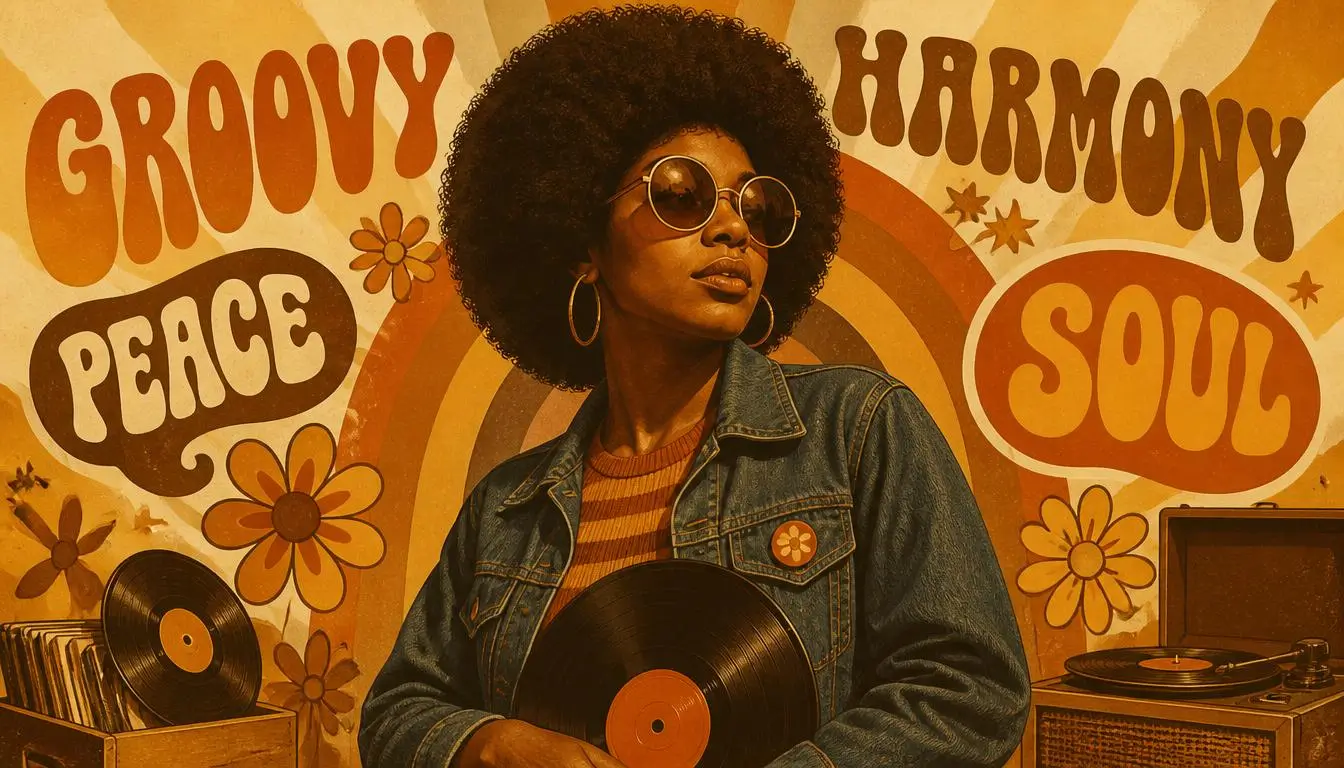
70s stoner slang refers to the casual words and phrases used in the 1970s to talk about marijuana, being high, and stoner culture in general. Terms like “stoned,” “toke,” “reefer,” “joint,” and “mary jane” all come from this era, and many are still used today.
Key Takeaways
- 70s stoner slang describes the words people used in the 1970s to talk about weed and getting high.
- Many terms grew out of jazz-era and 1960s counterculture language, then spread through mainstream movies and music.
- The exact origin of most individual terms is unclear, since slang usually spreads through speech before it ever gets written down.
- Words like “stoned,” “joint,” and “toke” are still common today, while others like “grass” and “groovy” feel more old-fashioned now.
- The tone is mostly playful and casual, not offensive, though context still matters.
- Stoner slang from the 70s shaped a lot of the weed vocabulary people still use in 2026.
People look up 70s stoner slang for many different reasons. Some are watching an old movie or show and hear a word they don’t recognize. Others are curious about where common weed slang actually started. And some just like learning how language changes over time.
This kind of slang shows up in classic films, old song lyrics, and stories from parents or grandparents who lived through the decade. A lot of it still gets used today, just with a few new words mixed in.
The 1970s were a big decade for casual drug slang in general. Music, movies, and youth culture all played a part in spreading these words beyond small friend groups and into everyday conversation. Some terms faded out. Others, like “stoned” and “high,” never really left.
This guide deeply breaks down what 70s stoner slang means, where it likely came from, and how much of it is still around. It also covers pronunciation, common mix-ups, and real examples of how people use these words in conversation and online.
What Does 70s Stoner Slang Mean?
70s stoner slang is the informal vocabulary people used in the 1970s to talk about marijuana and the experience of being high. It is not one single word but a whole category of terms.
This includes words for the drug itself (like “grass” or “reefer”), words for the act of smoking (like “toke” or “light up”), and words for the feeling of being high (like “stoned,” “baked,” or “buzzed”). Some of these terms had already existed in smaller circles before the 70s, but the decade is when they spread widely.
For example, someone in 1975 might say, “We got stoned and listened to records all night.” Today, someone might say almost the same sentence, and it would still make sense. That overlap is a big reason this slang still gets searched.
Quick Meaning Box
| Meaning | Simple Explanation |
| The drug marijuana | Called “grass,” “reefer,” or “mary jane.” |
| Act of smoking | Called “toking,” “lighting up,” or “taking a hit.” |
| The feeling of being high | Called “stoned,” “baked,” or “buzzed.” |
| A person who smokes often | Called a “stoner” or “pothead.” |
| General approval or good vibes | Words like “groovy” or “far out.” |
Pronunciation
There is no tricky pronunciation involved here since these are all standard English words used in a slang sense. “Stoner” is said just like it looks: STOH-ner. “Toke” rhymes with “smoke.” “Reefer” is said REE-fer.
Where Does 70s Stoner Slang Come From?
Most 70s stoner slang grew out of jazz culture from decades earlier and then spread through 1960s counterculture before becoming common in the 70s. The exact origin of many individual words is unclear.
Words like “reefer” and “grass” were already in use among jazz musicians in the early to mid 1900s, long before the 1970s.
By the time the 60s counterculture movement picked up steam, this vocabulary had spread to a much wider group of young people. The 70s is really where this slang became mainstream enough to show up in movies, TV, and everyday teenage conversation.
It’s worth being honest here: slang rarely has one clean origin story. It spreads through speech, gets picked up by different groups, and changes meaning slightly along the way.
Anyone who claims a precise date or a single inventor for a slang term is usually guessing. The safest and most accurate thing to say is that 70s stoner slang built on earlier jazz and counterculture language rather than appearing out of nowhere.
History of the Term
The word “stoner” itself and the broader vocabulary around it followed a slow build rather than an explosion.
In the early 1900s, jazz musicians used words like “reefer” and “muggles” for marijuana. This language stayed mostly within music and nightlife circles for decades.
By the 1960s, the counterculture and hippie movement adopted a lot of this vocabulary and added new terms of their own, like “groovy” and “far out,” which were used more broadly but often overlapped with drug culture.
The 1970s were when a lot of this language hit the mainstream. Movies, music, and a more relaxed public attitude toward marijuana use in some circles all helped these words spread beyond small subcultures.
Words like “stoned,” “high,” “joint,” and “toke” became common enough that most people, If they used marijuana or not, understood what they meant.
From the 80s onward, some terms faded while others stuck around. “Groovy” and “far out” now sound distinctly retro. But “stoned,” “joint,” “high,” and “toke” are still used today almost exactly the way they were used fifty years ago.
There has also been a mild resurgence of interest in 70s slang generally, partly through nostalgia media and partly because older slang terms often get recycled by newer generations looking for something different from current trends.
How People Use It Today
Today, 70s stoner slang mostly survives through the words that never really went out of style, rather than through active revival campaigns.
People use terms like “stoned,” “high,” “toke,” and “joint” in regular conversation, texting, and social media captions without thinking of them as old-fashioned at all.
On platforms like Instagram and X, older slang sometimes gets used ironically or nostalgically, especially in posts referencing 70s aesthetics, music, or movies.
Reddit threads about retro culture or classic rock often bring up this vocabulary too, usually in a “remember when people said this” kind of way.
There isn’t strong documented evidence of a major TikTok trend specifically built around 70s stoner slang, so it’s more accurate to say this language quietly persists rather than actively trends.
Stoner Slang Words
Stoner slang words cover everything from the drug itself to the feeling of being high. Common examples from the 70s and since include “grass,” “reefer,” “weed,” “mary jane,” “joint,” “toke,” “stoned,” “high,” “buzzed,” and “baked.” Some of these are still everyday words, while others sound more dated now.
70s Hippie Slang
70s hippie slang overlaps heavily with stoner slang but also includes broader terms for approval, mood, and lifestyle.
Words like “groovy,” “far out,” “outta sight,” and “right on” were common ways to express that something was good or agreeable, if or not marijuana was involved.
Slang for Stoner
Slang for stoner includes words like “pothead,” “toker,” and “burnout,” which all describe someone who smokes marijuana regularly.
“Pothead” is probably the most widely recognized alternative and has stayed in common use since the 70s.
Stoners Meaning in Urdu
In Urdu, there isn’t one single traditional word that exactly matches “stoner” as English slang uses it.
The nearest equivalent describes a regular marijuana user, often conveyed in Urdu by combining the word for marijuana or hashish with a term for someone who uses it regularly.
Because “stoner” is such a specific piece of English slang, it’s usually just borrowed directly rather than fully translated.
Stoners Meaning Slang
In slang, “stoner” means a person who smokes marijuana regularly, often as part of their daily routine or personality. It’s usually casual and not meant as a harsh insult, though tone and context can change that.
What Does Stoner Mean in Slang
In slang, “stoner” describes someone associated with frequent marijuana use, sometimes paired with a laid-back or relaxed personality stereotype. It can be used neutrally, affectionately, or occasionally as a mild jab, depending on how it’s said.
Where Did the Term Stoner Come From
The term “stoner” likely comes from the phrase “getting stoned,” which itself has unclear origins but was in use by the mid-1900s to describe intoxication.
“Stoner” as a label for a person who smokes marijuana regularly follows the same logic as calling a heavy drinker a “drinker,” just applied to marijuana use instead.
Examples in Everyday Conversation
- “You seem pretty stoned right now, are you good to drive?”
- “He’s such a stoner, he’s got weed jokes for everything.”
- “We used to toke up behind the bleachers after school.”
- “That whole party was just people getting baked in the backyard.”
- “She’s more of a casual smoker, not really a full stoner.”
- “Pass the joint before it burns out.”
- “I got way too high off that one hit.”
- “My uncle still talks like it’s the 70s, calling everything ‘grass.'”
- “They were buzzed enough to start laughing at nothing.”
- “That movie is basically a love letter to stoner culture.”
Text Message Examples
- “lol im so stoned rn”
- “u still got that joint from last night?”
- “we baked or nah tonight”
- “he’s such a stoner it’s actually kinda funny”
- “gonna toke before the movie starts”
- “I’m too high to text properly rn”
- “grass run low, need to restock”
- “who’s tryna get buzzed later”
- “he showed up already high lol”
- “Classic stoner move forgetting where he put it”
Social Media Caption Examples
- Instagram: “Stoner Sunday vibes 🌿”
- TikTok: “POV: you’re the stoner friend who always has snacks ready”
- X: “Being a little too stoned to remember why I opened this app”
- Threads: “70s stoner playlist hits different at night”
- Facebook: “Throwback to when ‘groovy’ meant something”
- Instagram: “Stoner starter pack: lighter, snacks, playlist”
- TikTok: “Explaining 70s slang to Gen Z be like I”
- X: “Every generation has its stoner slang, this was the 70s version”
- Threads: “Retro slang appreciation post”
- Facebook: “Old school stoner talk never really left us”
Is It Positive or Negative?
Stoner slang is generally light and casual, not aggressive or offensive. Calling someone a “stoner” is usually affectionate or neutral, describing a personality type more than making a harsh judgment.
That said, tone matters. Said with a smile among friends, it’s playful. Said dismissively in a professional or serious context, it can sound like someone is being written off as unmotivated or unreliable, which is a real stereotype tied to the word.
Misunderstandings mostly happen when someone uses this slang in a setting where it comes across as unprofessional or disrespectful, even if that wasn’t the intent.
Who Uses This Slang?
This slang gets used across a wide range of people, not just one age group. Older adults who lived through the 70s use terms like “grass” and “groovy” naturally, sometimes without realizing how dated they sound to younger listeners.
Younger people pick up words like “stoned,” “high,” and “toke” through movies, music, and everyday conversation, often unaware of how old these terms actually are.
Fans of classic rock and 70s pop culture tend to use this vocabulary more often, especially when referencing that era specifically.
It’s less about one specific group owning the slang and more about it being woven into general casual English at this point.
Similar Slang Words
| Slang | Meaning |
| Baked | Very high on marijuana. |
| Buzzed | Mildly high or lightly intoxicated. |
| Toasted | Another way to say very high. |
| Blazed | High, often from smoking recently. |
| Lit | Can mean high, though also used for excitement generally. |
Opposite Words
- Sober > not under the influence of anything at all.
- Straight > used to describe someone who is not high or drunk.
- Clean > often used to describe someone not currently using any substances.
- Level-headed > describes a calm, unaffected state, opposite of being buzzed or stoned.
Common Mistakes
A common mistake is assuming “stoned” always means angry or upset, since the word “stone” can sound harsh. In slang, it almost always refers to being high, not to anger.
Another mistake is spelling “toke” as “toque,” which is actually an unrelated word for a type of hat. People also sometimes confuse “grass,” the slang term, with simply talking about lawn grass, so context always matters when reading or hearing it.
When NOT to Use It
Stoner slang should be avoided in professional emails, school assignments, job interviews, and any formal writing. Using words like “stoned” or “toke” in these settings can come across as unprofessional, even if you mean it casually or jokingly.
It’s also worth avoiding this slang around people you don’t know well, especially in mixed-age or workplace settings, since not everyone shares the same comfort level with drug-related language. When in doubt, plain, neutral language is the safer choice.
Fun Facts
- Many 70s stoner slang terms, like “reefer,” actually trace back to jazz culture decades earlier.
- “Stoned” as a term for intoxication predates the 70s by many years.
- Some 70s slang, like “groovy,” is now used mostly for nostalgic or ironic effect.
- Not all 70s slang was drug-related; some crossed over from general hippie culture.
- Many terms from this era remain in everyday English without people realizing their age.
Frequently Asked Questions
What were the popular slang terms of the 1970s?
Beyond stoner-specific words, the 70s had a wide range of general slang like “groovy,” “far out,” “outta sight,” “right on,” and “boogie.” Some of these overlapped with stoner culture, while others were just general expressions of approval or excitement used across many social situations, not only among people who smoked marijuana.
What is stoner slang?
A stoner slang term is any informal word used to describe marijuana, the act of using it, or the state of being high. This includes words like “toke,” “joint,” “stoned,” and “baked.” These terms function as a shared vocabulary that lets people talk about the experience casually, without using clinical or formal language.
What are slang terms for getting high?
Common slang for getting high includes “stoned,” “baked,” “buzzed,” “blazed,” and “toasted.” Each word can carry a slightly different sense of intensity, with “buzzed” often implying a lighter feeling and “baked” or “stoned” implying something stronger. These terms are still widely used and understood today.
Is stoner slang from the 70s still used today?
Yes, a good portion of it is. Words like “stoned,” “high,” “joint,” and “toke” are still common in everyday speech. Other terms, like “groovy” or “grass,” are less common now and tend to sound retro or are used for nostalgic effect rather than everyday conversation.
Final Thoughts
70s stoner slang isn’t just an old-fashioned curiosity. A lot of it is baked right into how people casually talk about marijuana today, If they realize the words are decades old or not.
From jazz-era roots to 1970s mainstream use, this vocabulary shows how slang can travel a long distance and still stick around.
Some words faded into nostalgia, while others became permanent parts of everyday English.
Either way, understanding where these terms came from adds a little context next time you hear them in an old movie, a classic song, or a conversation with someone who lived through that decade firsthand.

Emily Rodriguez is a content creator and editor at Slang Insight, specializing in Gen Z language trends and social media culture. Emily’s mission is to help readers stay updated with the latest slang so they never feel out of the loop in online conversations.