Irish slang is the informal, everyday vocabulary used across Ireland and Northern Ireland, mixing English with Hiberno-English patterns and the occasional Irish-language word.
It covers everything from friendly greetings and insults to words for being drunk, pretty, or plain silly, and it changes depending on the region.
Key Takeaways
- Irish slang blends standard English with rhythms and words borrowed from the Irish language (Ghaeilge).
- Much of it developed through everyday speech, not any single traceable event, so many origins stay a bit fuzzy.
- It’s still used constantly today, in person, in texts, and increasingly on TikTok and Instagram.
- Tone varies a lot: some words are warm and playful, others are outright insults.
- Northern Ireland has its own flavor of slang that overlaps with, but isn’t identical to, slang from the Republic.
- Most terms are casual and should be avoided in formal writing or professional settings.
If you’ve ever watched an Irish show, scrolled through Irish TikTok, or chatted with someone from Dublin, Cork, or Belfast, you’ve probably run into a word that made no sense at all. That’s Irish slang doing its job.
People search for it because they hear a term in conversation, in a song, or in a comment section, and they want to know what it actually means before they use it wrong.
Irish slang isn’t one fixed list. It’s a living, shifting way of speaking that changes from county to county and generation to generation.
Some words have been around for decades. Others picked up new life online in the last few years. What ties it all together is a sense of humor, directness, and warmth that’s hard to fake if you didn’t grow up around it.
This guide deeply breaks down the most common terms, where they likely came from, how they’re used today, and when you should probably leave them out of your vocabulary altogether. If you’re planning a trip to Ireland, chatting with Irish friends online, or just curious after seeing a confusing comment, this should answer everything you need.
What Does Irish Slang Mean?
Irish slang refers to the casual words and phrases used in everyday speech across Ireland, distinct from formal or standard English. It includes greetings, insults, descriptions of people, and expressions tied to mood or behavior.
The term covers a huge range of vocabulary rather than one single word. Some slang is understood nationwide, like “craic” (fun or good conversation) or “eejit” (a foolish person). Other terms are more regional, so someone in Donegal might use a word that would confuse someone in Kerry.
A lot of Irish slang comes from Hiberno-English, which is English as it’s spoken in Ireland, shaped by Irish-language grammar and vocabulary.
Because of this, some phrases that sound odd to outsiders, like “I’m after eating,” make total sense to Irish speakers. Other slang has nothing to do with Irish grammar at all and is just informal English that caught on locally.
Quick Meaning Box
| Meaning | Simple Explanation |
| Craic | Fun, banter, or good conversation. |
| Eejit | A foolish or silly person, usually said lightly. |
| Yoke | A thing whose name you can’t remember. |
| Wagon | An unpleasant or rude woman. |
| Gowl | An annoying or unlikeable person. |
| Notions | Acting overly fancy or above your station. |
| Knacker | A rough or badly behaved person (can be offensive) |
| Peeler | A police officer. |
Pronunciation
Most Irish slang is pronounced close to how it looks, but a few words trip people up. “Craic” is said like “crack.” “Eejit” is said “EE-jit.” “Gowl” rhymes with “owl.”
“Yoke” rhymes with “poke.” Regional accents will shift the sound slightly, so a word said in Belfast may land differently than the same word said in Galway.
Where Does Irish Slang Come From?
Irish slang comes mostly from everyday speech shaped by the Irish language, working-class communities, farming life, and Ireland’s long history of storytelling. The exact origin of most individual words is unclear, since slang usually spreads by word of mouth rather than being written down.
Many terms trace back to Irish (Ghaeilge) words or phrases that got anglicized over generations. Others grew out of specific communities, like Traveller communities, dockworkers, or rural farming areas, before spreading more widely.
Because slang moves through speech first and writing second, pinning down an exact decade or inventor for most words isn’t realistic, and any source claiming an exact origin story should be read with a healthy amount of skepticism.
History of the Term
Irish slang as a whole has been evolving for centuries, shaped by Ireland’s relationship with the Irish language, British rule, emigration, and later, global pop culture.
Older generations passed down words through family and community speech, and that pattern continues today, just with new channels added.
In the last fifteen years or so, social media has given Irish slang a second life outside Ireland. Words like “craic” and “eejit” now show up in comment sections and memes shared by people who’ve never set foot in Ireland, mostly thanks to Irish creators, comedians, and shows gaining international audiences. That doesn’t mean the slang is new. It means the audience got bigger.
How People Use It Today
Irish slang today shows up everywhere: in person, in texts, and constantly across TikTok, Instagram, and X.
Younger Irish users especially lean on it in captions and comments as a way of signaling identity and humor online.
On TikTok, Irish creators often use slang deliberately, sometimes explaining it to a global audience who find the sound and rhythm entertaining. On Instagram and X, it shows up more casually, dropped into captions the way anyone else might use everyday English.
In texting, slang tends to get shortened even further, especially “craic” and “eejit,” which are common enough to barely register as slang to Irish speakers anymore.
Irish Slang Words and Meanings
Irish slang words and meanings can shift depending on tone and context, even for the same term. Understanding the everyday meaning first makes it easier to catch when a word is being used playfully versus seriously.
For example, “eejit” almost always sounds affectionate, even when technically calling someone foolish. “Wagon,” on the other hand, is rarely soft.
Learning the base meaning of a word is step one, but paying attention to how it’s delivered matters just as much.
Irish Slang Phrases
Irish slang phrases often go beyond single words into full expressions that carry a specific meaning as a unit.
“What’s the craic?” means “what’s going on” or “how are you,” not a literal question about drugs or crime, despite how it might read out of context. “I will, yeah” is a phrase used sarcastically to mean “absolutely not.”
These phrases rely heavily on tone and delivery, which is part of why they’re tricky for non-Irish speakers to pick up from text alone.
Hearing them spoken, even in a video clip, makes the meaning click much faster than reading a definition.
Irish Slang Insults
Irish slang insults range from mild teasing to genuinely harsh put-downs, and the line between the two depends heavily on relationship and tone. Words like “eejit” or “gobshite” are often said between friends without real malice.
“Knacker” and “wagon,” by contrast, are sharper and can be genuinely hurtful or offensive depending on context.
Because insult slang carries real weight for some terms, it’s worth being cautious using any of these words with people you don’t know well, especially outside Ireland where the tone and history behind a word might not translate.
Irish Slang for Idiot
The most common Irish slang for idiot is “eejit,” a softened, often affectionate version of “idiot” used constantly in everyday speech.
“Gowl” and “gobshite” are stronger versions of the same idea, leaning more toward genuine annoyance than gentle teasing.
“Eejit” is so normalized in Irish speech that it’s used for strangers, friends, family, and even public figures without much heat behind it. “Gobshite,” on the other hand, usually signals real frustration or dislike.
Irish Slang for Drunk
Irish slang for being drunk includes words like “locked,” “hammered,” “langers,” and “steamin’,” all describing varying levels of intoxication. Some of these overlap with slang used elsewhere in the English-speaking world, while others, like “langers,” are more distinctly Irish.
These words are almost always used casually among friends describing a night out, and the specific word chosen often depends on region as much as how drunk someone actually was.
Irish Slang for Pretty Girl
Irish slang for a pretty girl includes terms like “gorgeous,” “stunner,” or more traditionally, “beour” in some regions, though usage varies a lot by area and generation. Compliment-based slang tends to be less standardized across Ireland than insult slang, since it’s used more casually and locally.
Context and tone matter here too. What sounds like a genuine compliment in one setting can come across as overly familiar or even a bit cheeky in another, depending on who’s saying it.
Craic Irish Slang
Craic is one of the most recognizable pieces of Irish slang, referring to fun, banter, entertainment, or general good vibes. “The craic was mighty” means the fun or atmosphere was great. “What’s the craic?” is simply asking what’s going on.
The word is used constantly in Ireland, in greetings, in describing nights out, and in general small talk.
It’s one of the few Irish slang words that most non-Irish people have at least heard of, partly because it’s spread so widely through tourism, music, and social media.
Northern Irish Slang
Northern Irish slang overlaps with slang from the rest of Ireland but includes its own distinct words and expressions shaped by local history and dialect.
Terms like “wee” (small, or used as a general softener) and “boke” (to feel sick or vomit) are especially common in the North.
Because Northern Ireland has its own political and cultural history separate from the Republic, some slang there developed along different lines, influenced by both Irish and Scots-Ulster speech patterns. A visitor moving between Dublin and Belfast will notice real differences in vocabulary, even though both are broadly “Irish slang.”
Yoke Irish Slang
“Yoke” is a catch-all Irish slang word used when you can’t think of, or don’t need, the actual name of an object. “Pass me that yoke” works for almost anything: a tool, a gadget, a snack, or something entirely unfamiliar.
It’s one of the most flexible words in Irish slang because it fits almost any noun. This flexibility is exactly why it’s stuck around so consistently across generations.
Wagon Irish Slang
“Wagon” is Irish slang for a woman who’s being unpleasant, rude, or difficult, and it’s generally considered a harsher insult. It’s almost always used negatively, unlike softer insult terms like “eejit.”
Because of its sharper edge, “wagon” isn’t typically used jokingly between close friends the way milder slang is. It tends to show up when someone is genuinely annoyed with another person’s behavior.
Examples in Everyday Conversation
- “What’s the craic, are you coming out tonight?”
- “Ah, don’t mind him, he’s a bit of an eejit.”
- “Pass me that yoke on the table there.”
- “She was raging after work, proper wagon mood.”
- “We had a mighty night, the craic was ninety.”
- “He’s after leaving already, typical.”
- “I was langers by midnight, honestly.”
- “Stop being such a gowl about it.”
- “She’s gorgeous, everyone says it.”
- “I will, yeah, like that’s happening.”
Text Message Examples
- “what’s the craic 2nite?”
- “omg he’s such an eejit lol”
- “where’s that yoke gone”
- “she’s being a total wagon rn”
- “Craic was mighty last night”
- “I was absolutely locked”
- “he’s after texting me again”
- “stop being a gowl”
- “she’s stunning tbh”
- “Yeah, I will, yeah”
Social Media Caption Examples
- Instagram: “Craic was 90 tonight.”
- TikTok: “POV: your ma calls you an eejit for the 5th time today.”
- X: “The absolute state of that gowl on the news.”
- Threads: “wee update on my day: chaos.”
- Facebook: “Great catch up with the girls, mighty craic as always.”
- Instagram: “Locked by 11 pm, no regrets.”
- TikTok: “explaining ‘yoke’ to my American followers.”
- X: “She’s an absolute wagon, and I stand by that.”
- Threads: “Northern slang appreciation post.”
- Facebook: “Off out for the craic, back whenever.”
Is It Positive or Negative?
Irish slang covers the full range from warm and playful to genuinely rude, depending entirely on the specific word. “Craic” and “eejit” lean positive or neutral, used casually without much bite. Words like “wagon” and “knacker” carry real negativity and can be offensive depending on who’s using them and why.
Misunderstandings usually happen when tone doesn’t translate well over text, or when someone unfamiliar with Irish speech takes a lightly teasing word, like “eejit,” too seriously.
The reverse also happens: outsiders sometimes use sharper insult slang casually without realizing how harsh it can land.
Who Uses This Slang?
Irish slang is used across nearly all ages in Ireland, though specific words trend differently by generation.
Older generations tend to stick with long-standing terms like “craic” and “eejit,” while younger people mix in newer online-driven phrasing alongside the classics.
Teens and young adults are especially active in spreading Irish slang online, through TikTok and Instagram captions. Meanwhile, older speakers use the same words simply as part of everyday conversation, without thinking of them as “slang” at all.
Similar Slang Words
| Slang | Meaning |
| Gobshite | A foolish or annoying person, stronger than “eejit.” |
| Gowl | Someone irritating or unlikeable. |
| Notions | Acting fancier or better than your background suggests. |
| Banjaxed | Broken or exhausted. |
| Deadly | Excellent. |
| Fair play | Well done or good for you. |
Opposite Words
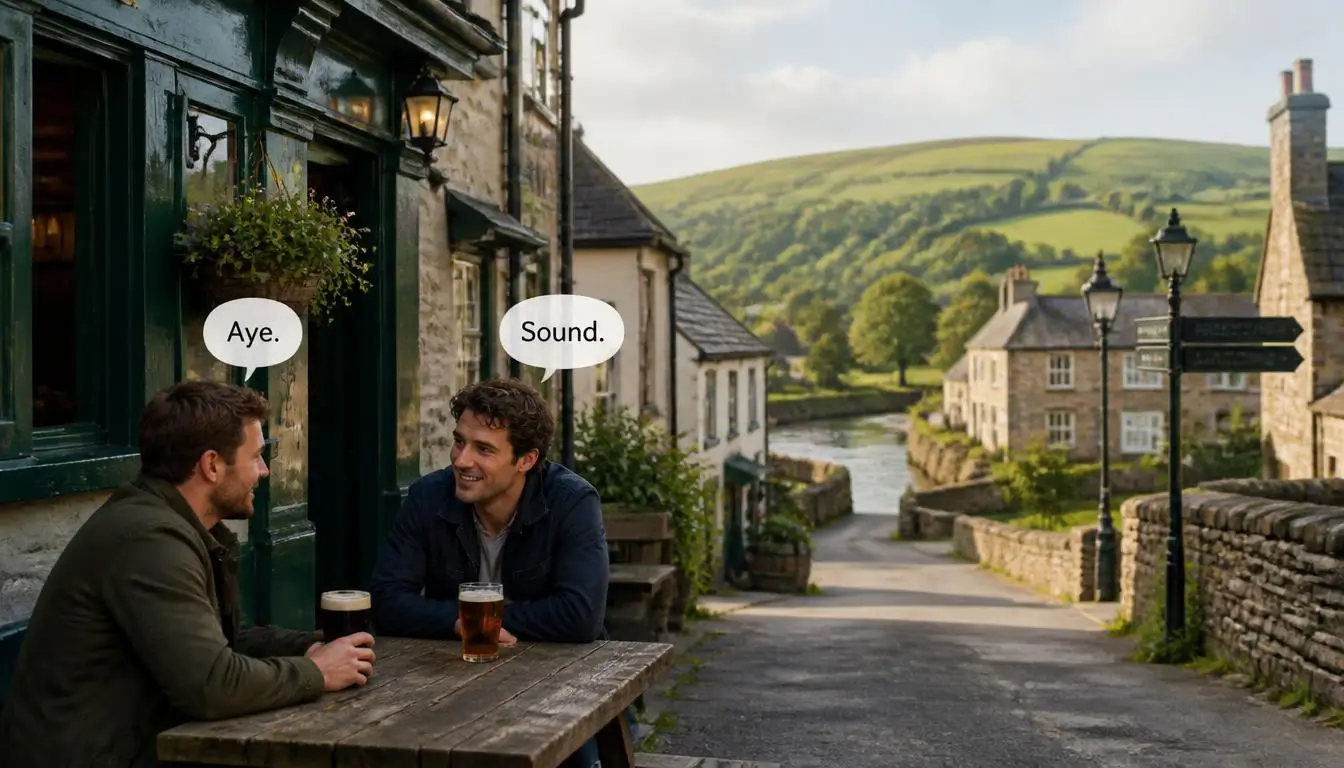
- Sound – the opposite tone of an insult like “wagon”; means someone reliable, kind, or decent.
- Deadly – used to mean something is excellent, the opposite feeling of calling something “banjaxed” or broken.
- Class – another positive term, meaning great or impressive, contrasting with negative slang like “gowl.”
Common Mistakes
People often misuse “craic” by assuming it’s related to drugs, when it simply means fun or good conversation.
Another common mistake is spelling it “crack,” which changes the meaning entirely in writing even though it’s pronounced the same.
Some also assume all Irish slang insults are lighthearted, when words like “wagon” or “knacker” can be genuinely offensive depending on context.
Outsiders sometimes overuse slang like “top of the morning,” which isn’t actually common Irish speech and reads as a stereotype rather than authentic slang.
When NOT to Use It
Irish slang doesn’t belong in professional emails, school assignments, formal essays, or business communication.
Using terms like “eejit” or “craic” in these settings can come across as unprofessional or confusing to readers unfamiliar with the vocabulary.
It’s also worth avoiding sharper insult slang, like “wagon” or “knacker,” in any context outside close, casual relationships, since these words can genuinely offend depending on who’s listening and their background.
Fun Facts
- “Craic” is sometimes spelled “crack” in older English-language sources, since the modern Irish spelling became popular more recently.
- “Yoke” can technically replace almost any noun in a sentence and still make sense to an Irish listener.
- Northern Irish slang shares roots with both Irish and Scots-Ulster dialects.
- “Eejit” is used so often in Ireland that many speakers don’t think of it as slang at all.
- Irish slang varies noticeably even between nearby counties, not just between Ireland and Northern Ireland.
Frequently Asked Questions
What is a very Irish thing to say?
“What’s the craic?” is about as classic an Irish phrase as they come. It’s used constantly as a greeting, roughly meaning “what’s going on” or “how’s it going.” You’ll hear it everywhere, from casual catch-ups with friends to quick chats with a shop worker. It doesn’t necessarily expect a detailed answer either; a simple “not much, you?” works fine. It’s less about literally reporting news and more about acknowledging someone in a friendly, familiar way.
Do the Irish say “aye”?
Yes, especially in Northern Ireland and parts of the north of the Republic, “aye” is a common way of saying “yes.” It’s less common in southern counties like Cork or Kerry, where other regional speech patterns dominate instead. “Aye” reflects the overlap between Irish and Scots-Ulster speech in the north, which is part of why Northern Irish slang can sound noticeably different from slang further south.
What do Irish say instead of “I love you”?
Direct declarations of love aren’t always the norm in everyday Irish speech, especially between friends or family. Instead, affection often comes through banter, teasing, or phrases like “you’re sound” or “you’re gas,” which show warmth without stating it outright. Among romantic partners, “I love you” is still used, but casual affection between friends or family more often shows up as playful slagging rather than direct statements.
What does yer ma’s yer da mean?
“Yer ma’s yer da” is a jokey, nonsensical insult, roughly implying someone’s parents are actually the same person, used purely for comedic effect rather than as a literal accusation. It’s not meant to be taken seriously and shows up mostly in playful teasing among friends, especially younger speakers. It’s a good example of how Irish slang insults can be absurd on purpose, valuing the joke and delivery over any real meaning behind the words.
Final Thoughts
Irish slang isn’t something you memorize from a list and master overnight. It’s shaped by region, generation, and relationship, which means the same word can land completely differently depending on who’s saying it and why.
What stays consistent is the personality behind it: quick, funny, a little sharp sometimes, and always tied closely to how Irish people actually talk to each other.
If you picked this up to understand a text, a comment, or a conversation with Irish friends, the best way to actually get comfortable with these words is hearing them used naturally, again and again, in real context.

Emily Rodriguez is a content creator and editor at Slang Insight, specializing in Gen Z language trends and social media culture. Emily’s mission is to help readers stay updated with the latest slang so they never feel out of the loop in online conversations.