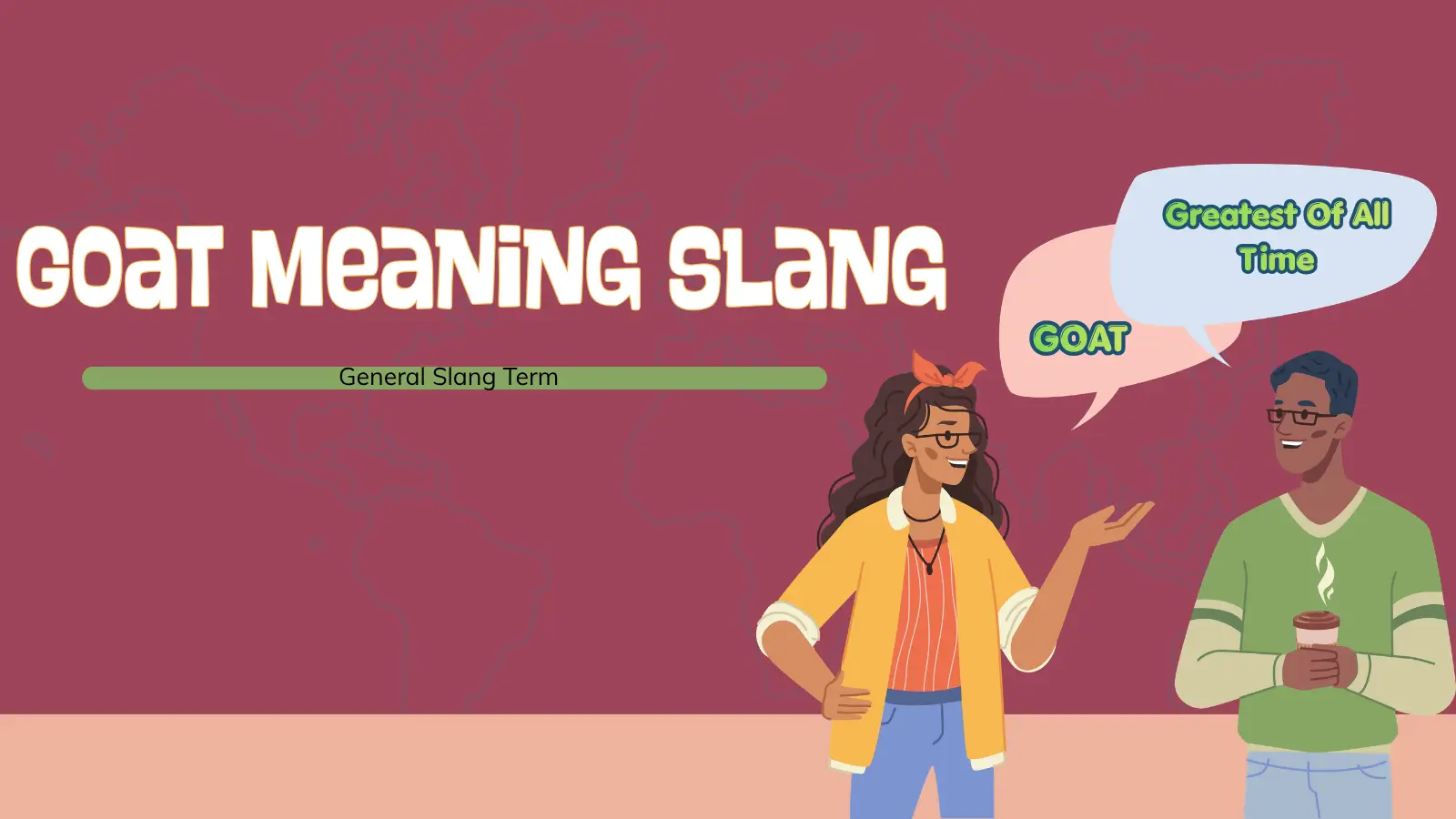
“Goat” in slang stands for “Greatest Of All Time.” People use it to praise a person, team, or thing as the best of its kind, such as when they call Serena Williams “the GOAT” of tennis.
It can also describe everyday things, like calling your favorite snack “goated.”
Key Takeaways
- “Goat” (or G.O.A.T.) means “Greatest Of All Time,” the highest compliment you can give.
- The term is tied to boxer Muhammad Ali and was popularized as an acronym by rapper LL Cool J’s 2000 album.
- It’s used across sports, music, gaming, and everyday texting.
- “Goated” is the newer slang spin-off, meaning something is excellent or impressive.
- The tone is almost always positive, though the plain word “goat” (lowercase, no acronym) can still mean the literal animal or, in older sports slang, a player blamed for a loss.
- It’s still widely used today, especially among Gen Z and Gen Alpha online.
You’ve probably seen “GOAT” pop up under a highlight video, a meme, or a comment praising someone’s skills. Maybe a friend texted you “you’re the goat” after you nailed something, and you weren’t totally sure what they meant.
That’s exactly why so many people search for the goat meaning slang term — it shows up everywhere, from sports debates to TikTok captions, but nobody explains it in the comments.
The short version: it means “Greatest Of All Time.” It’s a way to say someone or something is the absolute best, no contest.
But the story behind the term is more interesting than a simple acronym. It has roots in boxing, hip-hop, and even old-school sports insults, and it has grown new branches like “goated” that Gen Z uses constantly.
This guide covers everything: where the term came from, how it’s used now, what it looks like in real conversations and texts, and where you should avoid using it. By the end, you’ll never have to wonder what someone means when they call you or their pizza a goat.
What Does goat meaning slang Mean?
In slang, “goat” almost always refers to the acronym G.O.A.T., meaning “Greatest Of All Time.” It’s a superlative, the biggest compliment you can hand someone.
People use it to crown the best player in a sport, the best artist in a genre, or even the best sandwich at their favorite restaurant. It’s flexible. You can call a person the GOAT, or you can call an object “goated,” which just means it’s excellent.
There’s also an older, less common meaning. Before the acronym became popular, American sports slang used “goat” for a player who cost their team a game the complete opposite of today’s meaning. That negative use has largely disappeared, while the modern sense now praises someone as the greatest of all time. Still, knowing the older meaning can help you understand older sports writing or conversations among longtime fans.
Outside slang, “goat” simply refers to the familiar farm animal. The surrounding context usually makes the intended meaning clear.
Quick Meaning Box
| Meaning | Simple Explanation |
| G.O.A.T. (modern slang) | Greatest Of All Time — the best at something. |
| Goated (spin-off slang) | Something is excellent, impressive, or top-tier. |
| Goat (old sports slang) | A player blamed for a loss (mostly outdated). |
| Goat (literal) | The farm animal. |
Pronunciation
“Goat” is pronounced exactly like the animal: rhymes with “boat,” “coat,” and “float.” Even though it’s technically an acronym (G.O.A.T.), nobody says the letters out loud; it’s always said as one word, “goat.”
Where Does goat meaning slang Come From?
The positive slang use of “goat” traces back to boxer Muhammad Ali, who called himself “The Greatest” throughout his career. In 1992, his wife Lonnie Ali turned that nickname into a business, incorporating a company called Greatest of All Time, Inc.
The acronym got its biggest push into pop culture from rapper LL Cool J, who released an album in 2000 titled “G.O.A.T. featuring James T. Smith: The Greatest of All Time.”
LL Cool J has said he combined the “greatest of all time” phrase associated with Ali with a nod to Earl “The Goat” Manigault, a legendary New York City street basketball player, to create the acronym.
Word researchers have also traced an early acronym use of “goat” to a 1993 hip-hop track, which suggests the term was already circulating in rap culture before LL Cool J’s album made it mainstream.
The exact moment the word crossed over from a private rap-scene reference into everyday slang is unclear, but by the 2000s and 2010s it was a fixture in sports debates, especially around athletes like Michael Jordan, Tom Brady, and Serena Williams.
History of the Term
The word “goat” had a life in sports slang long before it meant “the best.” Early in the 1900s, sportswriters used “goat” as an insult for the player who made the costly mistake — the one blamed for the loss. That negative meaning stuck around for decades in baseball and other sports.
The shift toward a positive meaning happened gradually through the second half of the 20th century, largely thanks to Ali’s self-declared greatness.
LL Cool J’s 2000 album cemented the acronym in mainstream culture, and sports media picked it up heavily in the 2000s and 2010s during debates over Jordan versus LeBron James, or Federer versus Nadal versus Djokovic.
The term saw a major resurgence in the mid-2010s and 2020s as social media turned GOAT debates into a constant, ongoing conversation. Around this same time, “goated” emerged as a playful new form, letting people call anything not just legendary athletes excellent.
Gaming communities, especially around Fortnite and other competitive games, helped push “goated” into everyday teen vocabulary.
How People Use It Today
Today, “goat” and “goated” are everyday words on TikTok, Instagram, X, Discord, Snapchat, and in regular texting. On TikTok, captions calling a food, song, or moment “goated” are extremely common, often paired with the goat emoji.
On X (formerly Twitter), sports fans use GOAT constantly to argue about athletes.
In gaming spaces like Discord, “goated” often praises a teammate’s clutch play or a strong loadout choice.
In everyday texting, it’s simply a fast way to hype up a friend, a meal, or a show without typing out “you’re amazing.”
Goat meaning slang Gen Z
For Gen Z, “goat” is less about formal debates and more about casual, everyday praise. A Gen Z speaker might call their mom “the goat” for cooking dinner, or call a homework hack “goated.”
It’s less serious and more playful than the sports-world usage older generations associate with the term.
Goat meaning slang tiktok
On TikTok, “goat” shows up in captions, comments, and sounds tied to impressive clips — a perfect trick shot, a surprising plot twist, a killer dance move.
Creators often pair the word with the goat emoji 🐐 as a quick visual shorthand for “this is the best.”
Goat meaning slang in a sentence
Seeing it in context makes the meaning click fast. Here are a few natural examples:
- “That last-minute goal made him the GOAT of this season.”
- “This taco truck is goated, no cap.”
- “She’s the GOAT when it comes to fixing computers.”
My goat meaning slang
When someone says “my goat,” they’re usually calling a specific person a friend, sibling, or partner their personal favorite or their hero, similar to saying “my guy” or “my ride or die,” but with extra praise baked in.
It signals loyalty and admiration at the same time.
Bro goat meaning slang
“Bro goat” (sometimes written “bro is the goat”) is a casual way friends hype each other up, often with a hint of humor. It’s frequently used sarcastically, too — teasing a friend for doing something small as if it were legendary, like acing a video game level or finding a parking spot fast.
Goated meaning slang
“Goated” is the adjective form of GOAT. Instead of calling someone “the GOAT,” you say something “is goated,” meaning it’s excellent, impressive, or top-tier.
It works for people, food, songs, outfits, or basically anything you want to praise quickly.
Goat in sports meaning slang
Sports is where the modern GOAT conversation lives loudest. Fans and commentators use it to debate the single best player in a sport’s history think Michael Jordan versus LeBron James in basketball, or Serena Williams’s case in tennis.
These debates rarely reach a final answer, since “greatest” depends on which stats, eras, and achievements people value most.
Escape goat meaning slang.
“Escape goat” is a common misspelling of “scapegoat,” a completely different word meaning someone unfairly blamed for a problem.
It has nothing to do with the GOAT acronym; the confusion comes purely from the similar sound. If you meant to write about someone taking the blame, “scapegoat” is the correct spelling.
Old goat meaning slang
“Old goat” is an older, informal phrase used to describe a stubborn or eccentric older man, often affectionately.
It predates the GOAT acronym entirely and comes from the literal animal’s reputation for being stubborn. It’s unrelated to the “greatest of all time” meaning, even though the spelling overlaps.
Examples in Everyday Conversation
- “Did you see that catch? He’s officially the GOAT.”
- “My grandma’s apple pie is goated, hands down.”
- “Everyone at work agrees she’s the GOAT of customer service.”
- “This coffee shop’s cold brew is goated.”
- “Bro really thinks he’s the goat after winning one round.”
- “That comedian’s new special is goated.”
- “You’re the GOAT for remembering my birthday.”
- “This app update is actually goated.”
- “He’s the GOAT of group projects — always carries the team.”
- “Her essay was so good, honestly goated writing.”
Text Message Examples
- “bro that assist was goated 🐐”
- “you’re literally the goat for helping me move”
- “this new song is goated no skips”
- “coach called you the goat of practice today lol”
- “goated homework hack, thank u”
- “she’s the goat for splitting the bill evenly”
- “ngl this recipe you sent is goated”
- “you passed?? goat behavior fr”
- “That meme is goated; send more”
- “he’s the goat, saved my whole week”
Social Media Caption Examples
- Instagram: “Goated brunch spot, we’ll be back 🐐”
- TikTok: “POV you just found the most goated thrift find”
- X: “This QB is the GOAT, and I won’t argue about it”
- Threads: “Goated playlist for a Sunday reset”
- Facebook: “Shoutout to the goat who organized this reunion”
- Instagram: “New sneakers = goated fit today”
- TikTok: “Rating goated snacks so you don’t have to”
- X: “GOAT debate starts now: who’s your pick?”
- Threads: “This recipe is goated, saving it forever”
- Facebook: “Our teacher is the actual GOAT of this school”
Is It Positive or Negative?
“Goat” and “goated” are almost always positive; they’re compliments, sometimes exaggerated for fun. Calling someone “the goat” for a small win is usually lighthearted teasing, not an insult.
The only place confusion can happen is with the old, negative sports use of “goat,” where it meant someone blamed for a loss.
That meaning is rare today, so most listeners will assume the compliment version. Still, tone and context matter;r sarcasm can flip almost any compliment into a joke at someone’s expense, so pay attention to how it’s said, not just the word itself.
Who Uses This Slang?
Teens and young adults use “goat” and “goated” the most, especially in texting, gaming chats, and social captions. Sports fans of all ages use the acronym GOAT specifically for debates about all-time great athletes.
Gamers frequently say “goated” to praise a teammate’s move or a strong item. It has also crossed into general adult conversation and even shows up in casual workplace chat, since the meaning is now widely understood across generations.
Similar Slang Words
| Slang | Meaning |
| Legend | Someone recognized for a specific great achievement. |
| Icon | Someone or something culturally significant. |
| Elite | Top-tier or among the best. |
| Built different | Someone with unusually impressive skill or resilience. |
| No cap | No lie, seriously (often paired with a compliment) |
Opposite Words
- Mid > describes something average or unimpressive, the opposite of goated.
- Trash > a much harsher way to call something bad or low-quality.
- Basic > describes something unoriginal or unremarkable.
- Scapegoat > while not a true opposite, it’s the word people confuse with “goat” that carries a negative, blame-based meaning.
Common Mistakes
A frequent mix-up is spelling “scapegoat” as “escape goat,” which changes the meaning entirely. Another common error is assuming “goat” always means something negative because of its older sports use; today it almost always means the opposite.
Some people also confuse “GOAT” (the acronym) with the plain word “goat” in casual writing, so lowercase versus context matters when reading older text.
When NOT to Use It
Skip “goat” or “goated” in professional emails, school essays, cover letters, or any formal business writing. These settings expect standard, widely understood language, and slang can come across as unprofessional or unclear to readers who don’t follow internet trends.
Stick to plain words like “excellent,” “outstanding,” or “the best in the field” when writing for a boss, teacher, or client.
Fun Facts
- The goat emoji 🐐 is commonly used online specifically to represent the GOAT acronym.
- Muhammad Ali’s wife, Lonnie Ali, formally registered “Greatest of All Time, Inc.” in 1992.
- LL Cool J’s 2000 album “G.O.A.T.” helped push the acronym into mainstream hip-hop culture.
- A resale sneaker marketplace named GOAT built its brand around the “greatest” concept.
- Serena Williams’s husband once used a variation, “G.M.O.A.T.” (Greatest Mother Of All Time), on a public billboard.
- “Goat” was originally a negative sports term used to blame a player for a loss, decades before it became a compliment.
Frequently Asked Questions
What does goat mean in Gen Z slang?
For Gen Z, “goat” usually means someone or something is the best at what it does — but it’s often used more casually and playfully than the formal sports debates older generations know. A Gen Z user might call a snack, a song, or a friend’s small win “goated” without meaning it as literally as an all-time sports title. It’s less about crowning an official champion and more about quick, everyday hype, often paired with the goat emoji in texts and captions.
What does it mean when a guy calls a girl the goat?
When a guy calls a girl “the goat,” he’s giving her the highest compliment available in slang — saying she’s the best at something specific, or simply amazing overall. It could be about her skills, personality, humor, or how she handled a situation. It’s not romantic language on its own, though it can be said in a flirty tone depending on the relationship and context. Without more context, it’s simply strong praise.
What does goat mean in dating?
In a dating context, calling someone “the goat” is a way of saying they’re exceptional — a top-tier partner, an amazing date, or just really good at something notable, like cooking or communicating. It’s not a standard dating term with its own separate rules; it’s the same GOAT compliment applied to a romantic setting. Someone might say “you’re the goat” after a great date to express genuine appreciation.
What does Trump say goat stands for?
Donald Trump has publicly explained “GOAT” the same way most people understand it: an acronym for “Greatest of All Time.” He has referenced the term multiple times, including describing crowds calling him “GOAT” and clarifying that it stands for greatest of all time. His explanation matches the standard, widely accepted meaning rather than introducing a different definition.
Final Thoughts
“Goat” has traveled a long way from an old sports insult, to Muhammad Ali’s self-declared greatness, to LL Cool J’s 2000 album, all the way to a word you’ll see under nearly every impressive clip online.
If someone’s using it to crown the best athlete of all time or just hyping up a good taco, the meaning stays simple: this is the best.
Next time you see “goat” or “goated” in a text, caption, or comment section, you’ll know exactly what’s being said, and you might even use it yourself the next time something genuinely deserves the title.

James Carter is a slang researcher and writer at Slang Insight, dedicated to exploring the origins and meanings behind today’s most popular internet expressions. With a background in linguistics and a love for pop culture, James brings a unique perspective to every article, making slang easy to understand for everyone.