Jamaican slang refers to the informal words and phrases used in Jamaican Patois (also called Patwa), the English-based creole language spoken across Jamaica.
It blends English with West African, Spanish, and other influences, and it’s used in everyday talk, music, and now social media worldwide.
Key Takeaways
- Jamaican slang comes from Jamaican Patois, a full creole language, not just “broken English.”
- Many terms have roots in West African languages, Spanish, and British English from the colonial era.
- The slang is still used daily in Jamaica and has spread globally through reggae, dancehall, and social media.
- Some words are warm and friendly (like “irie”), while others are strong curse words (like “bloodclaat”).
- Tone and context matter a lot; the same word can be a joke among friends or a serious insult.
People search for “Jamaican slang” for a few different reasons. Some just heard a word in a Sean Paul or Popcaan song and want to know what it means. Others are planning a trip to Jamaica and want to sound less like a tourist. And a lot of people run into these words on TikTok or Instagram, where Jamaican Patois shows up constantly in captions, comments, and memes.
This slang isn’t a passing trend. It’s part of a real language that Jamaicans have spoken for generations, at home, in church, in the market, and now online. Words like “irie” and “bumbaclot” have traveled far outside Jamaica, but plenty of everyday Patois terms are still a mystery to outsiders.
Next, deeply breaks down the most common Jamaican slang words and phrases, where they likely came from, how people use them today, and when you probably shouldn’t use them at all.
By the end, you’ll be able to read a Jamaican caption or hear a line in a dancehall song and actually know what’s being said.
What Does Jamaican Slang Mean?
Jamaican slang is the everyday vocabulary of Jamaican Patois, used to greet people, tease friends, describe feelings, or curse someone out. It covers everything from casual greetings to strong profanity.
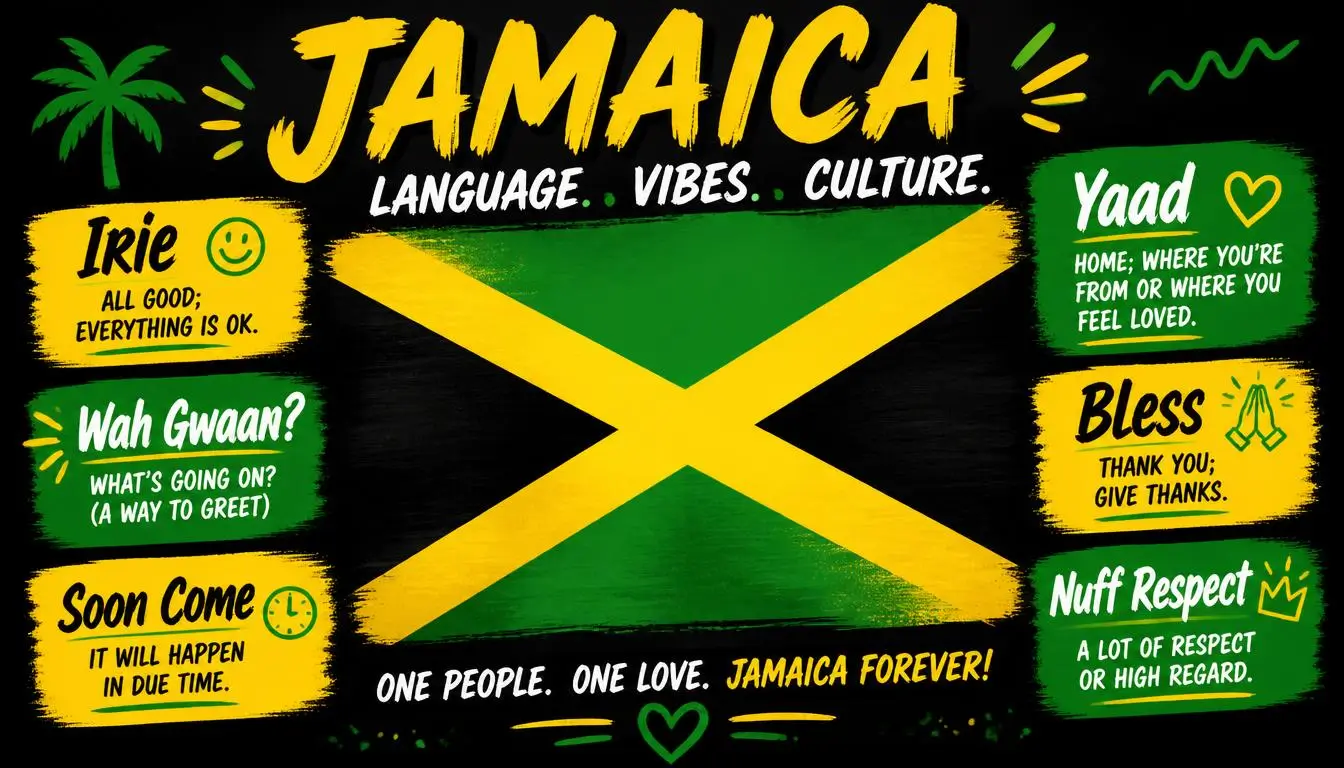
The term doesn’t point to one single word; it’s an umbrella for hundreds of expressions. Some are single words, like “irie” (feeling good) or “pickney” (child). Others are full phrases, like “wah gwaan” (what’s going on) or “mi soon come” (I’ll be there shortly, which locals joke can mean anywhere from five minutes to five hours).
A few are curse words strong enough to get bleeped on Jamaican radio, like “bloodclaat” and “bumbaclot.”
What ties all of it together is that these words come from Jamaican Patois grammar and pronunciation, not standard English, even when the spelling looks familiar.
Quick Meaning Box
| Meaning | Simple Explanation |
| Informal creole vocabulary | Everyday words used in spoken Jamaican Patois. |
| Greetings and small talk | Words like “wah gwaan” and “bless up.” |
| Terms of affection | Words like “bredren,” “chargie,” and “sweetness.” |
| Strong curse words | Words like “bloodclaat” and “bumbaclot.” |
| Cultural and Rastafari terms | Words like “irie” and “babylon.” |
Pronunciation
Jamaican Patois relies mainly on spoken language rather than one standardized spelling system, so people often write the same word in several ways online, such as “bumbaclot,” “bumboclaat,” or “bumbo claat.” As a general guide:
- Irie > sounds like “EYE-ree”
- Pickney > sounds like “PIK-nee”
- Bumbaclot > sounds like “BUM-bo-claht”
- Chargie > sounds like “CHAR-jee”
- Wagon > (short for wagonist) pronounced like the English word “wagon”
Where Does Jamaican Slang Come From?
Jamaican slang grew out of Jamaican Patois, a creole language that formed during the colonial and slavery era in Jamaica, mixing English with West African languages, and later picking up bits of Spanish, Irish, and other influences.
Enslaved Africans brought to Jamaica spoke many different West African languages. Over generations, they combined vocabulary from those languages with the English used by British colonizers, creating a new grammar and sound system entirely their own.
Words like “nyam” (to eat) and “duppy” (ghost) have roots in West African languages. Other terms developed from English and other languages over time. For example, “pickney” comes from the older term “pickaninny,” which likely developed from a Portuguese or Spanish word for a small child.
The exact origin of many Jamaican slang words remains unclear. Patois has evolved through everyday conversation for generations, and speakers have often passed down word histories orally instead of recording them in formal sources.
History of the Term
Jamaican Patois developed during the colonial period, but people mainly used it as an informal spoken language for many years. Schools and official institutions often favored Standard English and looked down on Patois.
That changed as Jamaican music went global. Reggae in the 1960s and ’70s, led by artists like Bob Marley, introduced Rastafari-influenced words like “irie” and “babylon” to listeners far outside the Caribbean.
Dancehall music in the 1980s and beyond pushed the slang even further into pop culture, and Jamaican vocabulary started showing up in British slang, especially in London, thanks to the large Jamaican diaspora in the UK.
Jamaican slang has seen another wave of attention through social media. Words like “bumbaclot” turned into internet memes on platforms like TikTok, often stripped of their real cultural weight and used as a punchline.
This has caused mixed feelings in the Jamaican community, since a real curse word or cultural term gets flattened into a joke for people who don’t understand what it actually means or where it comes from.
How People Use It Today
Jamaican slang is used constantly on TikTok, Instagram, and X, both by Jamaicans posting in their natural voice and by people outside Jamaica repeating words they’ve picked up from music or memes.
On TikTok, Jamaican creators often caption videos entirely in Patois, and non-Jamaican users pick up phrases through sound trends and reaction videos. Instagram captions use lighter slang like “sweetness” or “gyal dem” to describe friends or good vibes.
On X and Reddit, Jamaican slang tends to show up in conversations about music, sports, or Caribbean culture specifically.
Texting between Jamaicans, both on the island and in the diaspora, is full of shortened Patois spellings, which we’ll cover in the texting examples below.
Jamaican Slang Words You Need to Know
A handful of Jamaican slang words come up again and again in everyday speech, and knowing them makes a huge difference in understanding a conversation or a song.
Some of the most common ones include “wah gwaan” (what’s going on), “mi deh yah” (I’m here, meaning “I’m doing fine”), “nuff” (a lot, or very), “duppy” (ghost), “nyam” (to eat), “bredren” (a close male friend or brother figure), and “gyal” (girl).
These words show up in casual conversation, music lyrics, and social media captions constantly, so they’re a solid starting point for anyone trying to understand Jamaican Patois.
Jamaican Slang Insults
Jamaican Patois has a wide range of insults, from mild teasing to serious curse words meant to genuinely offend someone.
On the milder end, “eediat” means idiot, and “dutty” (literally “dirty”) gets used to describe someone acting shady or gross, as in “dutty gyal” or “dutty behavior.”
Stronger insults lean on the curse words covered later in this guide, like “bloodclaat” and “bumbaclot,” which turn into serious insults when aimed directly at a person.
There are also insults tied to sexuality that are considered slurs, which we won’t detail here, since they’re used to genuinely demean people rather than just tease.
Jamaican Slang for Pretty Girl
The most common Jamaican slang for a pretty girl is “sweetness” or calling her a “browning,” a term for a light-skinned or mixed-race woman that’s popular in dancehall culture, though it can be a sensitive term depending on who’s using it.
Other compliments include “yuh nice” (you’re pretty) or simply calling someone “gorgeous gyal.” “Browning” in particular carries some cultural weight because it ties beauty standards to skin tone, a topic that’s been debated within Jamaica itself.
It’s a term you’ll hear a lot in dancehall lyrics, but it’s worth understanding the context before using it casually.
Jamaican Slang for Friend
Jamaican Patois has several warm terms for a close friend, and “bredren” is probably the most well-known, used for a close male friend or someone treated like family.
The female equivalent is “sistren.” Another common one is “chargie,” a slang term for a close friend or “ride or die,” believed to come from the idea of a co-defendant, someone “charged” alongside you in a shared situation, who stuck by your side.
You’ll also hear “mi g” used casually between friends, similar to how “bro” or “dawg” works in American English.
What Does “Irie” Mean in Jamaican Slang?
“Irie” means feeling good, at peace, or that everything is alright. It’s one of the most recognized Jamaican slang words worldwide, largely thanks to reggae music and Rastafari culture.
You’ll hear it as a greeting response (“Everything irie?” “Yeah, mon, irie.”) or as a general description of a relaxed, positive mood.
It’s tied closely to Rastafari, a religious and cultural movement that began in Jamaica in the 1930s, where the word reflects a sense of spiritual well-being and harmony, not just casual happiness.
Blood Clot in Jamaican Slang
“Bloodclaat,” also spelled “blood clot” or “bloodclat,” ranks among the strongest curse words in Jamaican Patois. The term literally refers to a menstrual cloth, and speakers use it as a highly vulgar exclamation with a level of intensity similar to major English swear words.
People may shout it on its own to express shock, anger, or pain. They can also add it to another word to strengthen an insult, such as calling someone a “bloodclaat idiot.”
Its literal meaning makes the term especially crude, even in Jamaican culture. Avoid using it casually, especially around people you do not know well or older Jamaicans.
What Does Bumbaclot Mean in Jamaican Slang?
“Bumbaclot” is another of Jamaica’s strongest curse words, closely related to “bloodclaat” in meaning and intensity, generally referring to a piece of cloth used as a sanitary rag, used as a swear word to express anger, shock, or frustration, or as a direct insult toward someone.
It became widely known outside Jamaica after spreading as an internet meme around 2019, especially on TikTok, often used as a joke by people with no connection to Jamaican culture.
Within Jamaica, it’s genuinely considered a strong profanity, not a lighthearted meme word, so context matters a lot if you actually want to use it respectfully.
Pickney in Jamaican Slang
“Pickney” means a child or children. It’s a common, non-offensive word used constantly in everyday Jamaican speech, similar to saying “kid” or “kids” in English.
The word likely developed from older English and Portuguese/Spanish terms for a small child. You’ll hear it in phrases like “mind yuh pickney dem” (take care of your children) or “him a good pickney” (he’s a good kid).
Unlike a lot of Patois slang, “pickney” is neutral and used by people of all ages without any negative connotation.
Babylon in Jamaican Slang
“Babylon” is a term from Rastafari culture used to describe oppressive systems of power, most often the police, government, or Western institutions seen as corrupt or unjust.
The word comes from the biblical city of Babylon, used in Rastafari belief to represent a system that has historically oppressed Black people, drawing a parallel to the biblical Israelites’ exile in Babylon.
In everyday slang, “Babylon” is used most often to refer to the police, as in “Babylon a come,” meaning the police are on their way. It carries real political and spiritual weight for people connected to Rastafari, not just casual slang.
Jacket in Jamaican Slang
In Jamaican slang, a “jacket” refers to a child that a man is raising and believes to be his biological child, when in fact the child was fathered by someone else.
The term is widely used and often talked about with dark humor in Jamaican culture, sometimes showing up in music, comedy, and even the Jamaican tabloid concept of “jacket court” storylines.
The exact origin of the word is unclear, though some explanations connect it to the idea of a man wearing something (the responsibility of fatherhood) that isn’t actually his.
Examples in Everyday Conversation
- “Wah gwaan, mi bredren? Long time mi no see yuh.”
- “Mi deh yah, jus a work through the week, yuh know.”
- “Yuh cyaan tell mi nutten, mi already know the vibe.”
- “Him a real chargie, we grow up together from small.”
- “Dat gyal sweetness eeh, everybody a talk bout her.”
- “Mi soon come, jus a finish one likkle ting.”
- “Everything irie over yah so, no problem at all.”
- “Watch how him a gwaan like him nuh have no sense.”
- “Nuff people did deh a di dance last night.”
- “Low mi nuh, mi nuh inna no argument today.”
Text Message Examples
- “wah gwaan 2nite? we linking up or wah”
- “mi deh yah still, jus tired star”
- “yuh see di message mi sen yuh?”
- “irie, mi good, jus busy wid wuk”
- “mi soon reach, traffic bad right now”
- “dat man a real wagonist, watch him”
- “bredren wah time yuh a pass thru”
- “nuff ppl a talk bout di party already”
- “mi cyaan lie, di food did sweet enuh”
- “low di drama, mi nuh have time fi dat”
Social Media Caption Examples
- Instagram: “Sunday vibes, everything irie.”
- TikTok: “Wah gwaan wit dis new trend tho.”
- X: “Babylon out here again, same old story.”
- Threads: “Real bredren don’t need a reason to check on you.”
- Facebook: “Big up to all my chargie dem, love unnu forever.”
- Instagram: “Sweetness on a Friday night.”
- TikTok: “Nuff love from the yard 🇯🇲.”
- X: “Mi deh yah, tired but grateful.”
- Threads: “Watch out fi wagonist dem, dem nuh loyal.”
- Facebook: “Blessed and irie, that’s the only update.”
Is It Positive or Negative?
Jamaican slang includes everything from warm and friendly expressions to harsh or offensive terms, so the tone depends on the specific word and the situation.
Words like “irie,” “bredren,” “sweetness,” and “chargie” are friendly and positive, used to greet people or show affection. Words like “bloodclaat,” “bumbaclot,” and certain slurs carry strong, harsh meanings, so using them casually, especially if you are not Jamaican, can sound disrespectful and show a lack of understanding about their cultural context.
A word like “dutty” can go either way depending on tone, playful teasing versus a genuine insult. When in doubt, it’s safer to stick to the clearly positive terms unless you understand the full context of a stronger word.
Who Uses This Slang?
Jamaicans of all ages use Jamaican slang both on the island and across the diaspora. Music and social media have also introduced many of these expressions to non-Jamaican teens and young adults online.
In Jamaica, people often use these expressions as part of everyday speech. Children, adults, and elders may all use them, although people usually avoid stronger curse words around older relatives and in formal settings.
In the UK, where there’s a large Jamaican diaspora, Patois words have blended into wider British slang, especially in London youth culture.
On global social media, especially TikTok, non-Jamaican users often repeat words like “bumbaclot” as a joke without necessarily understanding the cultural or linguistic background behind them.
Similar Slang Words
| Slang | Meaning |
| Wah gwaan | What’s going on / hello |
| Nuff | A lot, or very |
| Duppy | Ghost |
| Nyam | To eat |
| Gyal | Girl |
| Bredren | Close male friend, brother |
| Sistren | Close female friend, sister |
Opposite Words
- Babylon vs. Zion > “Babylon” represents oppressive systems in Rastafari belief, while “Zion” represents freedom, peace, and the promised land.
- Irie vs. Dutty mood > “Irie” means feeling great, while being in a “dutty mood” (or just generally upset) is the opposite: low or bad energy.
- Bredren/chargie vs. Wagonist > “Bredren” and “chargie” describe a real, loyal friend, while “wagonist” describes someone fake, who only shows support once something is already popular.
Common Mistakes
People often misspell or mispronounce Jamaican slang, since Patois doesn’t have one official spelling system, so variations like “bumbaclot” versus “bumboclaat” are both common and both understood.
A bigger mistake is misunderstanding tone. Some people assume every curse word in Patois is lighthearted because it sounds fun or musical, when in reality words like “bloodclaat” are genuinely offensive in the wrong context.
Another common mistake is overusing slang picked up from memes, like saying “bumbaclot” as a general joke word, without realizing it’s a real, heavy curse word for the people who actually speak the language.
When NOT to Use It
Jamaican slang, especially the stronger curse words, doesn’t belong in professional emails, job interviews, school assignments, or any formal writing, since it can come across as unprofessional or, worse, like you’re mocking a culture and language you don’t fully understand.
Even the friendlier terms, like “bredren” or “irie,” can feel out of place in a formal business setting unless you’re already speaking casually with someone who uses that language themselves.
In customer service, academic writing, or any communication with someone you don’t know well, it’s safer to stick to standard English and save the slang for casual conversations with friends or people who share that cultural context.
Fun Facts
- Jamaican Patois is officially classified as a creole language by linguists, not a dialect of English.
- “Bomboclat” became a widespread internet meme around 2019, especially on TikTok, despite being a genuine curse word in Jamaica.
- The word “duppy” (ghost) is believed to trace back to West African languages like Akan or Ga.
- Reggae and dancehall music are the biggest reasons Jamaican slang spread to a global audience.
- There’s no single standardized spelling system for Jamaican Patois, since it developed mainly as a spoken language.
- Some Jamaican slang words, like “nyam,” have direct roots in specific West African languages.
- Jamaica has a large diaspora in the UK, which is a major reason Jamaican slang blended into British youth slang.
Comparison Table: Patois vs. Slang vs. Dialect
| Term | Meaning | Key Difference |
| Jamaican Patois | The full Creole language spoken in Jamaica | Has its own grammar and structure, not just informal English. |
| Jamaican slang | Informal words and phrases within Patois | Refers to specific vocabulary, not the whole language. |
| Dialect | A regional variation of a language | Patois is classified as a creole by linguists, not a dialect of English. |
Frequently Asked Questions
How do you say shut up in Jamaican slang?
A common way to say “shut up” in Jamaican Patois is “shut yuh mouth” or the stronger, ruder “shut yuh bloodclaat mouth.” A softer, less aggressive way people tell someone to stop talking or back off is “low mi” or “low it,” which more literally means “leave me alone” or “leave it alone.” The tone you pick really depends on how serious or playful the moment is, since the curse-word version is genuinely rude, not a joke phrase.
How to flirt in Jamaican slang?
Flirting in Jamaican Patois often starts with a compliment like “yuh nice” or calling someone “sweetness.” A guy might say “mi like yuh style” or “yuh a real gyal” to show interest. Calling someone a “browning” often has a flirtatious meaning, but the term refers to skin tone, so its meaning and appropriateness can depend on the audience and context. Overall, Jamaican flirting leans on warm, direct compliments rather than subtle hints, paired with a playful, confident tone.
What does “wah yuh deh pon” mean?
“Wah yuh deh pon” translates roughly to “what are you up to” or “what are you doing.” It’s a casual, everyday question used to check in with someone, similar to texting a friend “what are you doing right now” in English. You’ll often see it shortened in texts as “wah u deh pon.” People also add a specific time frame, such as “wah yuh deh pon fi di weekend,” when they want to ask about someone’s weekend plans.
What does “licky licky” mean in Jamaican?
“Licky licky” describes someone who’s overly eager to please, flatters people for personal gain, or acts like a suck-up, similar to calling someone a “brown-noser” in English. It can also describe someone greedy, especially around food or free things. The phrase uses reduplication, repeating “licky” twice, which is a common pattern in Jamaican Patois used to add emphasis or describe a repeated, ongoing behavior.
Is Jamaican slang the same as Jamaican Patois?
Not exactly. Jamaican Patois is the full creole language, with its own grammar, pronunciation, and sentence structure. Jamaican slang usually refers to specific informal words and phrases within that language, the vocabulary people point to when they say “what does this word mean,” rather than the language as a whole. So Patois is the language, and slang is really just the colorful vocabulary layer people notice most.
Final Thoughts
Jamaican slang is a small window into a much bigger language and culture. Behind every word, if it’s a warm greeting like “irie” or a heavy curse word like “bloodclaat,” there’s history tied to Jamaica’s language, music, and the people who’ve kept Patois alive for generations.
Learning a few of these words can help you understand a song, follow a conversation online, or just appreciate Jamaican culture a little more. Just remember that tone and context matter.
Some words are perfect for a friendly caption, and others carry real weight that’s worth understanding before you toss them into a joke.
Either way, now you’ve got a solid starting point for making sense of Jamaican slang wherever you run into it next.

Sarah Mitchell is a content writer at Slang Insight, passionate about internet culture, trending phrases, and the ever-changing world of digital communication. With a keen eye for spotting new slang before it goes viral, Sarah loves breaking down complex expressions into simple, relatable explanations for readers of all ages.