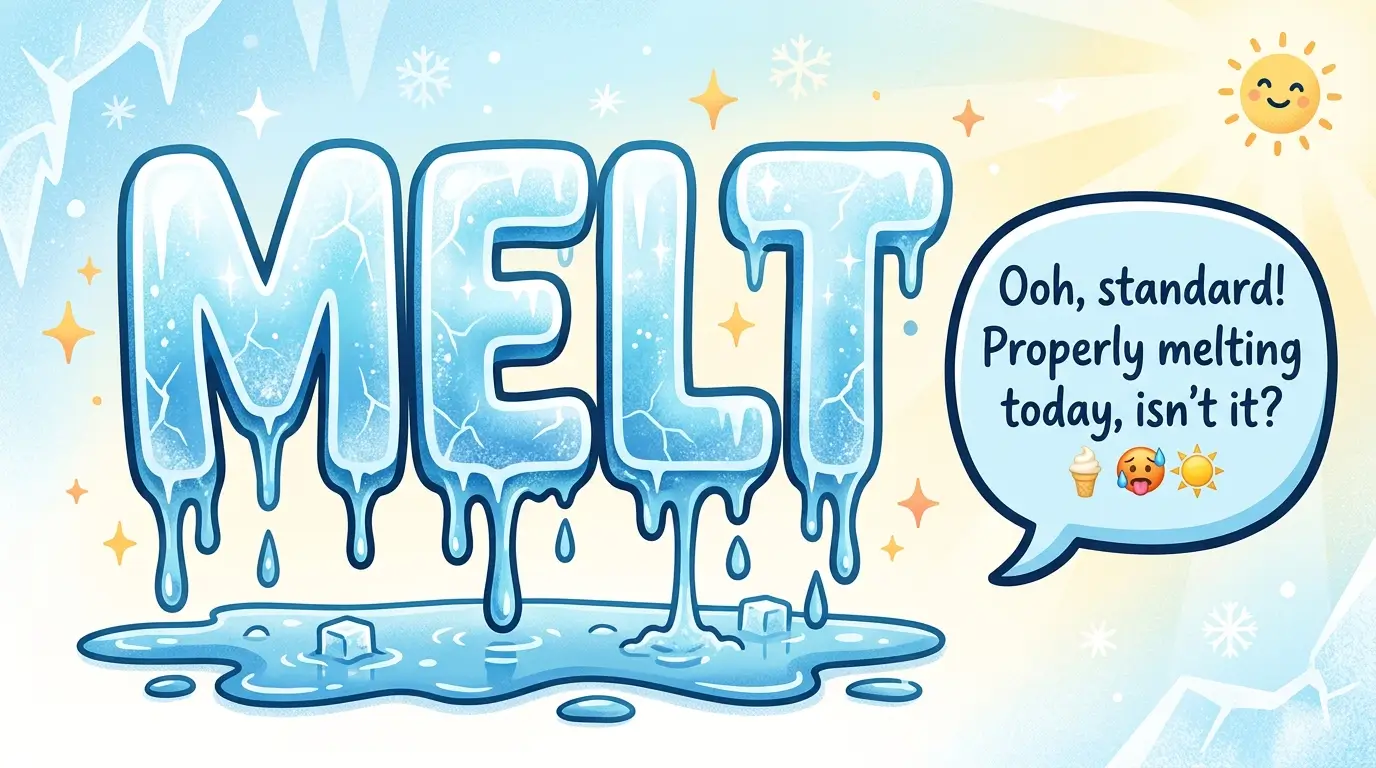
“Melt” is British slang for someone who’s being soft, overly emotional, silly, or a bit foolish, usually said as a lighthearted tease rather than a harsh insult.
It’s also used more broadly online to describe someone acting cringe or dramatic over something small.
Key Takeaways
- Core meaning: A “melt” is a person who’s soft, whiny, overly sensitive, or acting silly.
- Origin: Rooted in British and Scottish/Irish slang; the exact starting point is unclear, but the word spread widely through UK reality TV and everyday banter.
- Current usage: Still active today across the UK, and picked up steam on TikTok and other social platforms with a wider Gen Z audience.
- Tone: Mostly playful and teasing among friends, though it can sting if said with a harsher tone.
- Form: Works as a noun (“you’re such a melt”) and less often as a description of behavior (“stop melting”).
If you’ve spent any time around British slang, reality TV clips, or UK TikTok, you’ve probably run into the word “melt.” It shows up in group chats, comment sections, and everyday conversation, and it can be confusing if you’re not used to it. Is it an insult? A joke? Something else entirely?
The melt slang meaning is actually pretty simple once you break it down. People use it to poke fun at a friend who’s being overly emotional, dramatic, or a little soft about something minor. Think less “serious insult” and more “affectionate jab,” the kind of thing mates say to each other after someone gets teary over a sad ad or refuses to go outside because it’s a bit chilly.
This term is still very much alive in 2026. It’s a common part of UK slang, especially among younger speakers, and short-form videos have helped spread it across internet culture.
You might hear it on a reality show, see it in a text from a British friend, or spot it in a TikTok comment. Understanding its meaning, origin, modern usage, and context can help you use the term naturally and avoid using it incorrectly.
What Does Melt Slang Mean?
At its core, calling someone a “melt” means you think they’re being soft, whiny, or a little foolish about something. It’s most often aimed at a friend who’s overreacting, being overly emotional, or backing out of something because they’re nervous or fussy.
The word carries a few connected shades of meaning:
- Emotionally soft: someone who gets teary, sentimental, or easily worked up.
- Weak or spineless: Someone who can’t stand their ground or backs down quickly.
- Silly or foolish: Someone doing something a bit cringe or embarrassing, often said with laughing emojis online.
A typical example: a friend refuses to walk in light rain because he doesn’t want his hair to get wet, so the group calls him a melt.
Nobody’s genuinely angry; it’s banter. The word can land harder in certain tones, but among friends it’s usually closer to “softie” or “drama queen” than a true insult.
Quick Meaning Box
| Meaning | Simple Explanation |
| Soft or overly emotional person | Someone who gets upset or sentimental easily. |
| Weak or spineless person | Someone who can’t stand up for themselves. |
| Silly or foolish behavior | Someone acting cringe or dramatic over something small. |
| Playful insult among friends | A teasing way to call someone a softie. |
Pronunciation
“Melt” is pronounced /mɛlt/, one syllable, rhyming with “felt,” “pelt,” and “belt.”
There’s no special stress pattern or alternate pronunciation to worry about; it’s said exactly like the everyday word “melt” (as in ice melting), just used with a different meaning.
Where Does Melt Slang Meaning Come From?
The exact origin is unclear. What’s known is that “melt” as an insult for a soft or foolish person has circulated in British English, and specifically Scottish and Irish slang, for a long time before it became widely known online.
The imagery lines up with the literal word: someone “melting” under pressure, going soft the way ice softens under heat.
The term also picked up a more specific, political usage in the UK. Around the mid-2010s, “melt” was used within some corners of the Labour Party as a derogatory label for centrist or centre-left members, particularly critics of Jeremy Corbyn.
That usage is narrower and tied to UK political discourse rather than everyday slang.
For most people today, though, “melt” is simply an everyday British dig aimed at a friend who’s being soft, fussy, or dramatic no politics involved. Because slang like this spreads through speech long before anyone writes it down, pinning an exact decade or inventor isn’t possible, and any source claiming otherwise should be treated with caution.
Evolution of the Term
“Melt” has been part of everyday British slang for years, used casually among friends and family long before it had any online presence. It’s associated with regional UK speech, including Scottish usage, where it’s been noted as a common everyday word for someone acting soft or silly.
The term reached a much wider audience through UK reality television, particularly shows like Love Island, where contestants’ slang became part of the show’s appeal and got repeated across social media clips and recap articles.
That exposure introduced “melt” to viewers well outside the UK who might never have heard it otherwise.
More recently, the word has had a resurgence through TikTok, where British creators use it in comedy skits, slang-explainer videos, and everyday clips.
This has broadened its use beyond the UK, with some Gen Z audiences elsewhere picking it up as a general term for someone being silly, soft, or a bit cringe.
How People Use It Today
Today, “melt” appears most often in casual, spoken-style contexts: texting, group chats, TikTok comments, and Instagram captions. It’s less common in formal writing, which fits its identity as a purely conversational insult.
On TikTok, the word appears in British slang explainer videos and comedy clips, often aimed at teaching non-UK audiences what it means. On X (formerly Twitter) and Instagram, it pops up as a quick reaction to someone being dramatic or oversensitive in a post or comment thread.
In group chats and texts, people often use it as a direct, friendly jab: “You’re such a melt” when someone backs out of plans or overreacts to something minor.
Melt Slang Meaning TikTok
On TikTok, “melt” often appears in British slang content. Creators make short explainer videos for American and international audiences, while comedy sketches and comment sections use the term to playfully call out someone for acting soft, overly emotional, or dramatic.
This platform is a big reason the word has reached people outside the UK.
You Melt Slang Meaning
“You melt” is simply the direct, second-person version of the insult said straight to the person being teased. It’s extremely common in speech and texting: “shut up, you melt” or “you’re such a melt” both carry the same meaning, calling someone soft, silly, or overly sensitive in a light, joking way.
Tuna Melt Slang Meaning
A tuna melt has nothing to do with the slang term. It’s a hot sandwich made with tuna salad and melted cheese, typically grilled or broiled until the cheese browns. The “melt” here refers literally to the cheese melting, not to a person’s character.
If someone jokes about a “tuna melt” in a slang context, it’s almost always a pun rather than a real second meaning.
Proper Melt Slang Meaning
Adding “proper” in front of melt is a common British intensifier; “proper” just means “really” or “very” in UK slang.
So “proper melt” means someone is being extremely soft, dramatic, or foolish, more so than a regular tease would suggest. It’s a stronger, more emphatic version of the same insult.
Patty Melt Slang Meaning
As the tuna melt, a patty melt is a food term, not slang. It’s a sandwich made with a beef patty, melted cheese, and grilled onions, usually on rye bread.
It shares no real connection to the personality-based slang term beyond the shared word “melt” and the literal melting of cheese.
Meltdown Slang Meaning
A “meltdown” describes an intense emotional outburst or a complete loss of composure, someone crying, yelling, or falling apart under stress. It’s related to “melt” in spirit (both involve losing composure), but it describes an event or reaction, not a type of person. Someone can have a meltdown without ever being called a melt, and vice versa.
Melter Slang Meaning
“Melter” is simply the noun form of the same idea: someone who acts like a melt. It’s used interchangeably with “melt” in most contexts: “he’s such a melter” means the same thing as “he’s such a melt.”
Some regions favor one form over the other, but they carry identical meaning.
Melt Irish Slang Meaning
In Irish slang, “melt” carries a very similar meaning to its British usage: a soft, foolish, or overly sensitive person.
Ireland and the UK share a lot of overlapping slang due to geographic closeness and cultural exchange, and “melt” is one of the terms that’s common on both sides of the Irish Sea, often used the exact same way among friends.
Melt Gen Z Slang Meaning
Among Gen Z, the melt slang meaning has broadened slightly beyond its British roots. Younger internet users, especially those active on TikTok, use it as a light insult for anyone acting cringe, overly emotional, or silly not strictly tied to being “soft.”
It’s typically used playfully, often followed by laughing emojis, and rarely meant to cause real offense.
Examples in Everyday Conversation
- “He wouldn’t get in the pool because the water was ‘too cold,’ what a melt.”
- “You’re crying at a phone advert? You absolute melt.”
- “Stop being a melt and just ask her out already.”
- “He backed out of the rollercoaster last second, classic melt behavior.”
- “She wouldn’t eat the spicy wings, total melt move.”
- “Don’t be such a melt, it’s just a paper cut.”
- “He got nervous and left the party early, bit of a melt honestly.”
- “You’re worried about one bad review? You melt.”
- “He apologized three times for being two minutes late, what a melt.”
- “She won’t watch horror movies alone, she’s such a melt about it.”
Text Message Examples
- “lol you’re such a melt for canceling over a bit of rain.”
- “Stop being a melt and just text her back.”
- “he cried during the movie again, proper melt.”
- “Why are you scared of the dentist, you melt?”
- “You melt, it’s not even that spicy.”
- “he’s been a melt all week about this presentation.”
- “You’re gonna be a melt about the cold water again, aren’t you?”
- “She’s such a melter, wouldn’t even watch the trailer.”
- “Don’t be a melt, just ask for the raise.”
- “bro is a certified melt, scared of a spider that small.”
Social Media Caption Examples
- Instagram: “Me refusing to leave the car because it’s drizzling certified melt behavior.”
- TikTok: “POV: you’re the melt of the friend group, and everyone knows it.”
- X: “he cried over a football result again, absolute melt.”
- Threads: “Not me being a proper melt about a bit of thunder.”
- Facebook: “Tagged by my mates as ‘the melt’ of the group chat, fair enough.”
- Instagram: “when your mate calls you a melt for not wanting to swim in the sea in October.”
- TikTok: “explaining British slang: today’s word is MELT.”
- X: “melt behavior: refusing to answer the door because you’re not dressed.”
- Threads: “she’s such a melt, wouldn’t even try the ride.”
- Facebook: “officially the melt of the family after that thunderstorm reaction.”
Is It Positive or Negative?
“Melt” leans mildly negative, but the tone almost always softens its impact. Among friends, it’s teasing rather than cruel, closer to calling someone a “softie” or “drama queen” than a genuine put-down. It’s the kind of word people use with a laugh, often paired with an emoji like to signal it’s not serious.
That said, tone and relationship matter. Said sharply, or by someone who isn’t a close friend, “melt” can feel more insulting and land as a real dig at someone’s confidence or emotional state. It’s worth reading the room before using it with someone you don’t know well.
Who Uses This Slang?
“Melt” is used mainly by teens and young adults in the UK, and increasingly by Gen Z audiences elsewhere who picked it up through social media. It’s common in casual friend-group banter, reality TV recaps, and comment sections.
Older UK speakers use it too, since it’s been part of everyday British vocabulary for a long time, but its recent spread beyond the UK is largely thanks to platforms like TikTok exposing international audiences to British slang content.
Similar Slang Words
| Slang | Meaning |
| Softie | Someone gentle, sensitive, or easily emotional. |
| Wimp | Seen as weak or lacking courage. |
| Drama queen | Someone who overreacts or makes a big deal out of small things. |
| Snowflake | Someone perceived as overly sensitive (more common in US/political slang) |
| Wet | British slang for someone weak or lacking backbone. |
Opposite Words
- Hard / Hard as nails > describes someone tough, unbothered, or emotionally resilient, the opposite of soft.
- Dreatful > used for someone blunt, bold, or unbothered by criticism.
- Unbothered > describes someone calm and unaffected by things that would upset others.
- Legend > a positive term for someone impressive or admirable, the opposite tone entirely.
Common Mistakes
A common mix-up is confusing the slang “melt” with the food term, as in tuna melt or patty melt; these are unrelated sandwiches, not insults.
Another mistake is assuming “melt” always means something harsh; in most everyday use, it’s lighthearted, not a serious attack on someone’s character. People also sometimes misspell it as “meld” or “melte,” which changes or removes the meaning entirely.
Finally, some assume the word is new or invented on TikTok, when really it has older roots in British and Irish speech that predate its social media popularity.
When NOT to Use It
Avoid using “melt” in professional emails, school assignments, job interviews, or any formal writing. It’s slang built for casual, spoken-style communication among friends, and it can come across as unprofessional or even disrespectful in a workplace setting.
It also doesn’t translate well outside informal contexts; using it with someone you don’t know well, or in a serious conversation, risks sounding rude rather than playful. When in doubt, stick to clear, direct language in formal situations and save “melt” for casual chats.
Fun Facts
- “Melt” rhymes with “felt,” “pelt,” and “belt,” making it easy to remember and say.
- The word has a documented, unrelated political usage in UK Labour Party circles from the mid-2010s.
- “Melter” is used as an interchangeable noun form of “melt” in some UK regions.
- UK reality shows like Love Island helped introduce British slang, including terms like “melt,” to a much wider audience.
- Scottish slang content on TikTok has specifically highlighted “melt” as a regional word of the day.
- The insult “melt” and the food term “tuna melt” share zero historical connection despite the same spelling.
Frequently Asked Questions
What does “melt” mean in Gen Z slang?
Among Gen Z, “melt” often works as a playful insult for someone who acts cringe, overly emotional, dramatic, or silly, especially online. The term keeps its British sense of describing someone as soft or weak, but younger users often give it a wider meaning. They may call someone a “melt” after an embarrassing moment, a dramatic reaction, or an unnecessary overreaction. People usually use it in a lighthearted way rather than as a serious insult, especially when teasing friends in comments, captions, or group chats.
What does it mean if a person is a melt?
When someone calls a person “a melt,” they usually mean that person seems soft, overly sensitive, weak-willed, or a little foolish in a particular situation. The term often describes a specific behavior rather than someone’s entire personality. For example, someone might call you a melt if you back out of plans, get emotional easily, or feel nervous about something minor. Friends often use the word in a teasing way, while strangers may use it more critically.
What does it mean when someone says you melt?
“You melt” is the direct version of the insult, aimed straight at the listener. It means the speaker thinks you’re being soft, dramatic, or silly about whatever just happened. It’s almost always used in casual, friendly settings, like texting or hanging out, and carries a joking tone rather than genuine anger. The same meaning applies ifit’s said as “you melt” or “you’re such a melt.”
What does it mean to melt?
Outside of slang, “to melt” means to turn from a solid into a liquid when heat causes the change, such as ice turning into water. In slang, people use “melting” less often than the noun “melt.” When they do, it often describes someone losing their composure or becoming emotionally soft, which connects to the same idea behind the noun “melt.”
Is “melt” the same as being called a snowflake?
They’re similar but not identical. “Melt” is a casual, mostly British term for someone soft or dramatic in a specific moment, often said between friends. “Snowflake” carries more political baggage, especially in American English, and is often used to criticize someone’s broader sensitivity or beliefs rather than a single silly moment.
Final Thoughts
“Melt” is one of those slang words that sounds harsher than it usually is. Most of the time, it’s a friendly jab aimed at someone being a bit soft, dramatic, or silly, not a genuine insult meant to hurt.
Its roots trace back to everyday British and Irish speech, and its recent spread through reality TV clips and TikTok has introduced it to a much wider, younger audience.
If someone calls another person a “melt,” they often say it jokingly rather than angrily. If someone calls you a melt, laughing it off usually works better than taking the comment personally.
Like most slang terms, tone and context shape the meaning. Friends may use “melt” as harmless banter, but you should avoid it in formal or professional settings.

Sarah Mitchell is a content writer at Slang Insight, passionate about internet culture, trending phrases, and the ever-changing world of digital communication. With a keen eye for spotting new slang before it goes viral, Sarah loves breaking down complex expressions into simple, relatable explanations for readers of all ages.