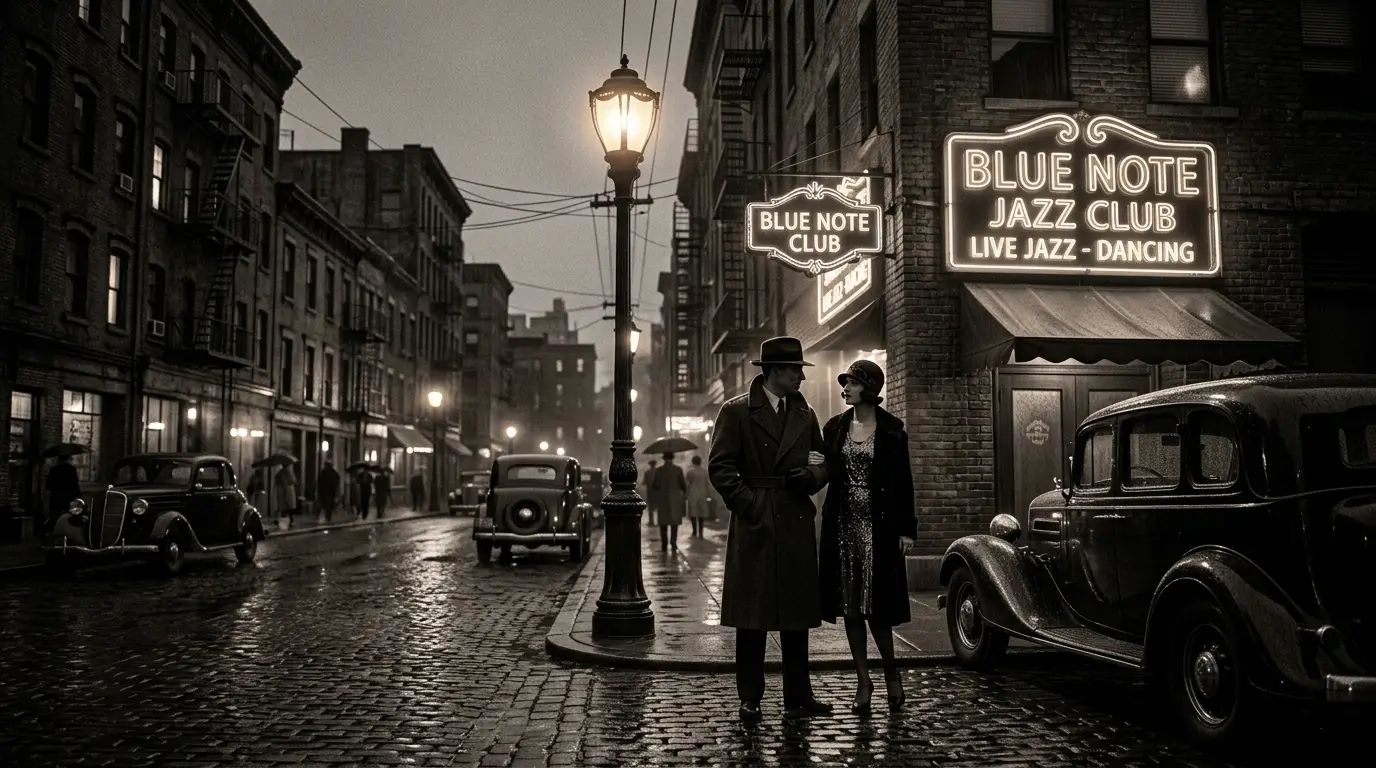
1930s slang refers to the colorful words and phrases Americans and Brits used during the Great Depression era, including terms like “swell,” “the cat’s pajamas,” “baloney,” and “on the lam.” Much of it came from jazz clubs, gangster culture, radio, and early Hollywood films, and some terms are still used today.
Key Takeaways
- 1930s slang grew out of the Great Depression, jazz culture, gangster films, and radio broadcasts.
- Popular terms include “swell,” “baloney,” “dame,” “scram,” and “on the lam.”
- The tone ranges from playful and complimentary to tough, cynical, and street-smart.
- Many words came from American cities, especially New York, and spread through movies and newspapers.
- A few terms, like “swell” and “baloney,” are still understood and occasionally used today.
- Other terms, like “hotsy-totsy” or “wisenheimer,” have mostly faded from everyday speech.
People search for 1930s slang for a lot of reasons. Some are writing a school paper on the Great Depression. Others are watching an old gangster movie and hear a word they don’t recognize. Writers working on period fiction often need real terms to make dialogue sound authentic.
The 1930s was a decade shaped by hard times, but the slang from it was full of energy. People used playful expressions to poke fun at tough situations. Gangsters, reporters, and everyday folks all had their own version of street-smart talk.
You’ll run into 1930s slang most often in old films, radio recordings, newspaper archives, and detective novels. A handful of these words never really left. Others sound completely foreign to modern ears. This guide breaks down where the slang came from, what it meant, and how people actually used it, so you don’t need to search anywhere else to understand it.
What Does 1930s Slang Mean?
1930s slang is the informal vocabulary that developed in the United States and Britain during the Great Depression decade. It covers everything from compliments and insults to crime-related terms and everyday small talk.
The slang wasn’t just one style. It included playful terms like “swell” for something great, tough-guy language from gangster culture like “rub out,” and general Depression-era complaints like “flat broke.” Some words described people, like “dame” for a woman or “sap” for someone easily fooled. Others described actions, like “scram,” which meant to leave quickly.
Quick Meaning Box
| Meaning | Simple Explanation |
| General approval | Words like “swell” and “the cat’s pajamas” meant something was excellent. |
| Crime and gangster talk | Terms like “rub out” and “on the lam” came from organized crime and detective stories. |
| Describing people | Words like “dame,” “mug,” and “palooka” described different types of people. |
| Everyday complaints | Phrases about being broke or having tough luck reflected Depression-era struggles. |
| Nonsense or lies | Words like “baloney” and “malarkey” meant someone was talking nonsense. |
Pronunciation
“1930s slang” is pronounced nine-teen-THUR-tees slang. Individual terms vary. For example, “baloney” is pronounced buh-LOH-nee, and “malarkey” is muh-LAR-kee.
Where Does 1930s Slang Come From?
1930s slang came from a mix of jazz clubs, gangster culture, Hollywood films, and radio broadcasts. The exact origin of many individual terms is unclear, but most spread quickly through movies, newspapers, and word of mouth.
The decade followed the stock market crash of 1929, and the Great Depression shaped a lot of the tone. People needed humor and toughness to get through hard times, and slang reflected both. Organized crime was also highly visible during Prohibition and its aftermath, which is why so many gangster-related terms became part of everyday speech.
Radio was a major factor too. It was the first time slang could spread nationwide almost instantly, since millions of households tuned into the same broadcasts. Hollywood gangster films and detective stories also pushed certain phrases into mainstream use. For many specific words, though, there’s no single confirmed inventor or exact birth date. The exact origin is unclear for a lot of individual terms, and word historians often trace general patterns rather than one precise source.
History of the Term
Slang from the 1930s built on expressions from the 1920s and added its own twist shaped by economic hardship. Some Jazz Age words like “the bee’s knees” and “swell” carried over from the 1920s into the 1930s. Newer terms emerged as gangster culture, detective fiction, and Depression-era struggles became bigger parts of daily conversation.
By the end of the decade, some of this slang had become so common that it showed up in everyday newspapers and advertising. After World War II, a lot of it faded as new generations created their own expressions. Still, a few words never disappeared completely. Terms like “swell” and “baloney” survived and are still recognizable today, even if they sound a little old-fashioned.
How People Use It Today
Most 1930s slang isn’t used in daily conversation anymore, but a few words survive in casual speech and pop culture. People sometimes use “swell” sarcastically, or say “that’s baloney” when they think someone is lying.
You’ll also find this slang showing up in period movies, video games set in the 1930s, true crime podcasts about historical gangsters, and vintage-style social media content. Some creators use old slang words as a fun theme for captions or short videos, treating them almost like a novelty rather than everyday language.
1930s Slang Words and Phrases
1930s slang words and phrases covered nearly every part of daily life, from compliments to complaints. Here are some of the most recognizable ones.
- Swell – great, wonderful
- The cat’s pajamas – something excellent or impressive
- Baloney – nonsense
- Malarkey – nonsense or exaggeration
- Scram – leave immediately
- Giggle water – alcohol
- Joint – a place, like a bar or club
- Wet blanket – someone who ruins the fun
- Heebie-jeebies – a nervous or uneasy feeling
- Screwy – strange or wild
1930s Slang Insults
1930s slang insults were often blunt and colorful, designed to put someone down without being too harsh. They ranged from calling someone foolish to calling them a coward or a pushover.
Common insults included “sap,” meaning someone gullible, and “palooka,” meaning a clumsy or untalented person, often used for boxers who weren’t very good. “Chiseler” described someone who cheated others out of money. “Wisenheimer” was a mocking term for someone who thought they were smarter than everyone else. These insults were common in gangster films and detective stories, where tough characters traded sharp comebacks.
1930s Slang for Woman
1930s slang for woman included several terms, and the tone depended heavily on context. “Dame” was one of the most common, generally neutral to slightly tough-sounding. “Doll” or “doll face” was typically a compliment about a woman’s looks.
In gangster slang specifically, “moll” referred to a gangster’s girlfriend or female companion. These terms show up constantly in detective novels and old films, and the meaning could shift from respectful to dismissive depending on tone and delivery.
1930s Slang for Men
1930s slang for men also had a wide range, from complimentary to insulting. “Big cheese” meant an important or powerful man, often the boss. “Mug” was a general, somewhat rough term for a man, often used by police or detectives.
“G-man” specifically referred to a government agent, especially an FBI agent, a term that became popular thanks to real headlines and gangster films. These terms reflect how much of 1930s culture revolved around law enforcement and organized crime.
1930s Slang for Cool
1930s slang for cool leaned toward words like “swell,” “the cat’s pajamas,” and “hotsy-totsy.” These all expressed enthusiasm or approval, similar to how someone today might say “awesome” or “amazing.”
“The cat’s pajamas” was especially popular for describing anything impressive, from a person to an event. “Hotsy-totsy” suggested something was just right or pleasing. While these phrases sound unusual now, they served the exact same purpose as modern slang for “cool.”
1920s 1930s Slang
1920s and 1930s slang overlap heavily because many Jazz Age expressions carried straight into the following decade. Words like “swell,” “the bee’s knees,” and “giggle water” started in the 1920s and stayed popular into the 1930s.
The biggest difference is tone. 1920s slang often reflected the carefree energy of the Jazz Age, while 1930s slang picked up a harder edge shaped by the Great Depression and rising crime rates. Still, the overlap is large enough that many word lists group both decades together.
1930s British Slang
1930s British slang had its own flavor, separate from American gangster and jazz-influenced terms. British slang from this era often reflected class differences, wartime anxiety building toward the end of the decade, and everyday working-class humor.
Common British expressions included “spiffing,” meaning excellent, and “old bean,” a friendly way to address someone. British slang tended to be more understated compared to the bold, punchy American style, though both shared a similar playful spirit.
American 1930s Slang
American 1930s slang was shaped heavily by regional culture, especially cities with strong ties to jazz, crime, and early film production. It tended to be direct, fast-paced, and often tied to specific social groups like gangsters, reporters, or working-class city dwellers.
Much of what people now think of as classic “old-timey” American slang, like “swell,” “scram,” and “baloney,” comes straight from this decade. It spread through newspapers, radio, and Hollywood films faster than slang had ever spread before.
1930s Gangster Slang
1930s gangster slang came from organized crime culture during and after Prohibition. It was blunt, coded, and often meant to describe violence or crime without saying it directly.
Terms like “rub out” and “bump off” meant to kill someone. “On the lam” meant running from the police. A “stool pigeon” or “canary” was an informant. “Torpedo” referred to a hired gunman. This vocabulary became widely known thanks to real news coverage of Prohibition-era crime and the gangster films that dramatized it.
1930s New York Slang
1930s New York slang played a huge role in shaping national slang trends, since so much media, crime reporting, and entertainment came out of the city during this decade. New York’s mix of immigrant communities, jazz clubs, and organized crime created a unique slang blend.
Words tied to gangster culture, nightlife, and city living often trace back to New York specifically, even when they later spread nationwide. Because so many newspapers, films, and radio shows were produced there, New York slang had an outsized influence on how Americans talked in general during the 1930s.
Examples in Everyday Conversation
- “That new car is the cat’s pajamas.”
- “Quit talking baloney and tell me the truth.”
- “The cops are looking for him, so he’s on the lam.”
- “She’s a real doll, isn’t she?”
- “Don’t be a sap, read the contract first.”
- “He’s the big cheese around here.”
- “Scram before someone sees you.”
- “That story gave me the heebie-jeebies.”
- “Stop being a wet blanket and come dance.”
- “This whole deal sounds screwy to me.”
Text Message Examples
- “party tonight, gonna be the cat’s pajamas 🐱”
- “that excuse is total baloney lol”
- “he’s such a wisenheimer, always got a comeback”
- “new haircut, feeling hotsy-totsy today”
- “don’t be a wet blanket, come out with us”
- “this whole plan sounds screwy ngl”
- “she’s a total doll, be nice to her”
- “gotta scram, talk later”
- “he’s on the lam from his responsibilities lol”
- “quit the malarkey and just tell me”
Social Media Caption Examples
- Instagram: “Feeling like the cat’s pajamas today 🐾”
- TikTok: “POV: your friend is spitting pure baloney”
- X: “This whole situation is screwy and nobody can explain why.”
- Threads: “Big cheese energy only today.”
- Facebook: “Throwback to when ‘swell’ meant amazing.”
- Instagram: “Doll face, coffee, sunshine. That’s it, that’s the post.”
- TikTok: “Trying out 1930s slang for a day, results are hotsy-totsy.”
- X: “Someone’s on the lam from their group chat responsibilities.”
- Facebook: “Grandpa’s stories are full of the best old slang.”
- Threads: “No malarkey, this recipe actually works.”
Is It Positive or Negative?
1930s slang can be positive, negative, or neutral depending on the specific word and context. Compliment terms like “swell” and “the cat’s pajamas” are clearly positive, while insults like “sap” and “chiseler” are clearly negative.
Some words, like “dame” or “mug,” sit in a gray area. They aren’t automatically rude, but tone and delivery matter a lot. In a friendly context, “dame” might just mean woman. In a harsh context, it can sound dismissive. Misunderstandings usually happen when modern readers assume every old slang word carries the same edge, when really the meaning depended heavily on how it was said.
Who Uses This Slang?
1930s slang today is mostly used by history enthusiasts, writers, and fans of classic film and detective fiction. It’s rarely part of everyday modern conversation.
You’ll find it used by content creators making vintage-themed videos, authors writing historical fiction, teachers covering the Great Depression, and museum or history-focused social media accounts. It’s less about regional or generational use today and more about niche interest in retro pop culture.
Similar Slang Words
| Slang | Meaning |
| Swell | Great, wonderful |
| The cat’s pajamas | Something impressive |
| Bee’s knees | Something excellent (1920s carryover) |
| Baloney | Nonsense |
| Hotsy-totsy | Great, just right |
Opposite Words
- The bum’s rush – being forced out or rejected, the opposite of being welcomed warmly.
- Wet blanket – someone who ruins fun, opposite of someone who’s “the life of the party.”
- Screwy – strange or wrong, opposite of something described as “on the level,” meaning honest and straightforward.
Common Mistakes
People often assume every 1930s slang word came from gangster culture, but many actually came from jazz clubs, radio, or general city life. Another mistake is assuming terms like “dame” are always insulting, when the tone really depended on context.
Spelling mistakes are common too. “Baloney” is sometimes misspelled as “bologna,” which is actually the food, not the slang term for nonsense. People also sometimes use “swell” to describe a person’s mood today, not realizing it originally described things or situations far more often than feelings.
When NOT to Use It
Avoid 1930s slang in professional emails, school essays outside of a history assignment, business meetings, or formal writing. It can come across as confusing or even unintentionally funny in a serious setting.
Since much of this slang is tied to a specific historical period, using it in modern professional contexts can make communication less clear. It’s best saved for creative writing, historical projects, or casual conversation where the retro tone is intentional.
Fun Facts
- “Swell” was one of the most versatile compliments of the decade and could describe almost anything positive.
- Gangster slang from the 1930s heavily influenced how crime is still portrayed in films today.
- Radio helped 1930s slang spread faster across the country than earlier decades’ slang.
- “G-man” became especially popular after real FBI cases were covered in national newspapers.
- Some 1930s slang, like “baloney,” is still instantly recognizable to English speakers today.
- Detective fiction from this era created a lasting vocabulary still used in crime writing.
Frequently Asked Questions
What is some slang from the 1930s?
Some well-known 1930s slang includes “swell” for great, “baloney” for nonsense, “on the lam” for running from police, and “dame” for a woman. Gangster culture contributed heavily to the era’s vocabulary, giving us terms like “rub out” and “stool pigeon.” Much of this slang appeared in newspapers, radio shows, and early gangster films, which helped it spread quickly across the country during the decade.
What are some old slang phrases?
Old slang phrases from earlier decades often focused on approval, trouble, or social status. Phrases like “the cat’s pajamas,” “wet blanket,” and “in a jam” were common ways to describe excitement, someone ruining fun, or being in a difficult situation. These phrases were shaped by the entertainment, economic conditions, and social attitudes of their specific time period, which is why so many sound unusual to modern ears.
What words were used in the 1930s?
Common 1930s words included “swell,” “scram,” “baloney,” “malarkey,” and “screwy.” Many reflected the decade’s mix of Depression-era hardship and gangster culture. Words describing people, like “sap,” “mug,” and “dame,” were also widely used. Newspapers, radio broadcasts, and Hollywood films played a major role in spreading these words nationally, making them recognizable even outside the specific regions where they started.
What is some 1920s slang?
1920s slang, often called Jazz Age slang, included terms like “the bee’s knees” for something excellent, “giggle water” for alcohol, and “flapper” for a fashionable young woman. Much of this slang carried directly into the 1930s. It reflected the energetic, celebratory culture of the decade before the Great Depression reshaped the tone of American slang going into the 1930s.
Final Thoughts
1930s slang gives a real window into how people talked during one of the most challenging decades in American history. It mixed humor, toughness, and creativity, shaped by everything from jazz clubs to gangster headlines. While most of these words aren’t part of daily conversation anymore, they still show up in movies, books, and history lessons.
Learning this slang isn’t just about memorizing old words. It’s about understanding how people coped with hard times through language and personality. Whether you’re writing period fiction, studying the Great Depression, or just curious after watching an old film, this guide should give you everything you need to understand 1930s slang without searching anywhere else.

Emily Rodriguez is a content creator and editor at Slang Insight, specializing in Gen Z language trends and social media culture. Emily’s mission is to help readers stay updated with the latest slang so they never feel out of the loop in online conversations.