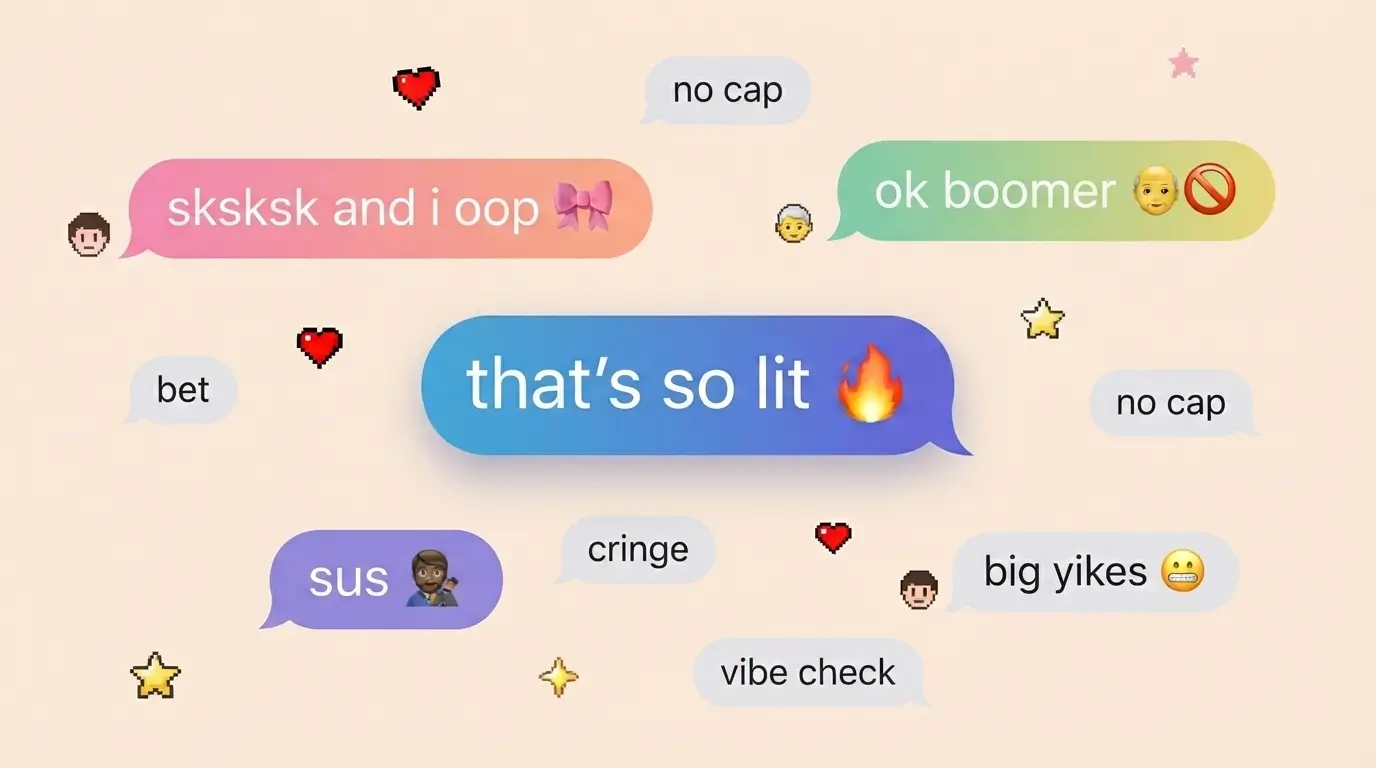
2019 slang refers to the words, phrases, and expressions that were popular that year, often tied to internet culture, teens, and viral memes. Terms like “OK boomer,” “sksksk,” and “and I oop” spread fast online. Some of this slang faded quickly, while a few words are still used today in a joking or nostalgic way.
Key Takeaways
- 2019 slang covers dozens of words and phrases that trended that year, many born from internet culture and memes.
- Most terms spread through Twitter, Instagram, and early TikTok, which was still a newer app at the time.
- Teens and Gen Z were the main users, though some words crossed into wider pop culture.
- A lot of this slang faded fast, and using it today can come off as dated or “cringe.”
- The tone is mostly playful and lighthearted, though a few terms (like “OK boomer”) carried a sharper, dismissive edge.
- Some words, like “sus” and “vibe,” survived and are still common years later.
If you scroll through old tweets, group chats, or comment sections from 2019, you’ll probably run into words that feel oddly specific to that year. That’s the nature of 2019 slang — it was fast, funny, and everywhere for a short window of time before moving on. People search for these terms today for a few reasons. Some want to relive that year’s internet culture. Others are trying to understand old posts, memes, or texts they saved. Parents and teachers sometimes look these words up to keep up with what teens were saying.
2019 sat at an interesting point online. TikTok was growing fast but hadn’t fully taken over yet. Twitter and Instagram were still the main places slang spread. Vine was gone, but its humor lived on through screenshots and reposts. This mix created a slang style that was quick, meme-driven, and often absurd on purpose.
Is any of it still used today? A little. Words like “sus” and “vibe” stuck around and even grew more popular later. Others, like “OK boomer” or “sksksk,” mostly live on as nostalgic references now. This guide breaks down where 2019 slang came from, what the biggest terms meant, and how people used them in daily life.
What Does 2019 Slang Mean?
2019 slang is not one single word — it’s a collection of expressions that were trending during that specific year. These words usually started online, spread through memes or viral posts, and got picked up in everyday texting and conversation.
Some terms had a clear, single meaning. “Sus,” short for suspicious, is a good example. Others carried more of a vibe than a strict definition, like “sksksk,” which was more about expressing excitement or embarrassment through laughter-like typing than describing anything specific. A few phrases, like “OK boomer,” were used to dismiss an outdated opinion, usually from an older generation, in a quick and blunt way.
Quick Meaning Box
| Meaning | Simple Explanation |
| Sus | Short for suspicious; something feels off or shady |
| OK boomer | A dismissive response to an outdated or out-of-touch opinion |
| Sksksk | Typing sound used to show laughing, excitement, or awkwardness |
| And I oop | An exclamation of surprise or mild embarrassment |
| VSCO girl | A style/aesthetic trend tied to scrunchies, Hydro Flasks, and shell necklaces |
| Big yikes | An exaggerated way of saying something is embarrassing or awkward |
| Vibe | The overall feeling or mood of a person, place, or situation |
Pronunciation
Most 2019 slang terms are pronounced the way they’re spelled, since they were written for texting and social media first. “Sus” is said like “suss.” “Sksksk” isn’t really spoken out loud in normal conversation — it’s more of a written expression, similar to “haha,” and doesn’t have one fixed way to say it.
Where Does 2019 Slang Come From?
Most of 2019’s biggest slang terms came from social media, especially Twitter, Instagram, and the growing app TikTok. Meme culture played a huge role, since jokes and reaction videos spread fast and often introduced new phrases along with them. The exact origin of many individual terms is unclear, since slang tends to spread across platforms before anyone can trace exactly where it started.
Gaming communities also contributed to the slang of this year. “Sus,” for example, became massively popular in 2020 through the game Among Us, but the word itself existed in slang before that and was already in casual use by 2019. Teen and Gen Z culture shaped the tone of most of this slang, favoring exaggeration, irony, and humor over serious or formal language.
History of the Term
2019 slang didn’t appear all at once — it built on trends from the years before it. Words like “lit” and “extra” carried over from earlier slang and stayed common. New additions like “sksksk” and “VSCO girl” came from specific internet subcultures that peaked that year, tied closely to a particular aesthetic or way of posting online.
By late 2019, TikTok’s growing user base helped push some slang toward an even bigger audience, setting the stage for terms that would explode in popularity in 2020. Some 2019 slang has seen a small resurgence since then, mostly through nostalgia posts, “throwback” content, or people joking about how outdated certain phrases now sound.
How People Use It Today
Some 2019 slang is still used casually, especially “sus” and “vibe,” which have stuck around in everyday texting and conversation. Other terms, like “sksksk” or “VSCO girl,” are mostly used now as a joke or a nostalgic callback rather than serious slang. People often bring these words up on TikTok or Twitter/X specifically to reminisce about 2019 internet culture or to poke fun at how quickly slang trends change.
2019 Slang Words
2019 slang words ranged from short abbreviations to full expressions, and most were built for quick typing. Words like “sus,” “lit,” “extra,” and “salty” were common across texting and social media captions. These words were short, easy to remember, and worked well in fast-paced online conversations, which helped them spread quickly among teens and young adults.
2019 Slang Phrases
Beyond single words, 2019 slang phrases added a stronger emotional punch. Phrases like “OK boomer,” “and I oop,” and “big yikes” carried more personality than single words alone. These phrases usually reacted to a specific moment — surprise, embarrassment, or frustration — and were often paired with a screenshot, video, or reaction GIF to land the joke.
2019 Slang Urban Dictionary
Many 2019 slang terms first got documented informally on Urban Dictionary, where users submitted definitions in real time as words trended. This made Urban Dictionary a useful, if unofficial, record of slang from that year. Definitions there can vary in accuracy since anyone can submit one, so it’s best used as a starting point rather than a final source.
Popular 2019 Slang
The most popular 2019 slang crossed over from niche internet circles into mainstream conversation. “OK boomer” became so widely known it was discussed on news programs and in opinion articles. “Sksksk” and “VSCO girl” were tied together, since both came from a specific teen aesthetic that dominated Instagram and early TikTok that summer.
Gen Z Slang 2019
2019 marked a turning point where Gen Z’s specific slang style became more visible to older generations. This slang leaned heavily on irony, self-aware humor, and exaggeration. Gen Z slang 2019 also reflected a generation comfortable mixing sincerity with sarcasm in the same sentence, which sometimes confused people outside that age group.
2019 Internet Slang
2019 internet slang spread mainly through memes, reaction posts, and short-form video content. Because so much of it was tied to visual jokes, some terms lose their meaning without the original meme attached. This is part of why certain 2019 internet slang feels confusing or random when read on its own today.
2019 Meme Slang
Meme-driven slang made up a big chunk of what people said in 2019. Terms like “big yikes” and “and I oop” started as reactions within specific memes before becoming general-use expressions. 2019 meme slang tended to spread fastest when tied to a video clip or image people could instantly recognize.
2019 Teen Slang
Teens were the main drivers of 2019 slang, shaping both the words and how they got used. 2019 teen slang often served as a way to bond with peers or signal being “in the know” about current trends. Much of it also worked as a light way to poke fun at older generations or outdated norms, as seen with “OK boomer.”
2019 TikTok Slang
TikTok was still building its audience in 2019, but it already had a noticeable impact on slang. 2019 TikTok slang included short phrases attached to specific sounds, dances, or video formats. Since TikTok rewarded short, catchy audio and captions, it helped push certain slang terms toward faster and wider spread than older platforms allowed.
2019 Cringe Slang
Looking back, some people now label certain 2019 slang as “cringe,” meaning outdated or embarrassing by today’s standards. 2019 cringe slang often includes terms tied heavily to a specific meme or aesthetic that quickly lost relevance. This label isn’t about the words being wrong — it’s more about slang naturally aging out of style over time.
Examples in Everyday Conversation
- “That story sounds sus, are you sure that’s what happened?”
- “Okay boomer, nobody does it that way anymore.”
- “I saw your outfit and I said sksksk, it’s so good.”
- “And I oop, I did not expect that.”
- “This party has such a good vibe.”
- “Big yikes, I can’t believe he said that out loud.”
- “She’s being extra again over nothing.”
- “That test was lit, way easier than I thought.”
- “Don’t be salty just because you lost.”
- “He’s giving major VSCO girl energy with that scrunchie.”
Text Message Examples
- “lol that’s so sus, why would he say that”
- “okay boomer 😂 you’re not wrong tho”
- “sksksksk I can’t stop laughing”
- “and I oop— wait what happened”
- “the vibe rn is immaculate”
- “big yikes at that group chat drama”
- “she’s extra but I love her for it”
- “party was lit ngl”
- “don’t be salty, it’s just a game”
- “vsco girl starter pack fr”
Social Media Caption Examples
- Instagram: “vibes only 🌊 #2019mood”
- TikTok: “sksksk this sound gets me every time”
- X/Twitter: “okay boomer but also… good point”
- Threads: “and I oop, throwback to this energy”
- Facebook: “big yikes at how fast this year went”
- Instagram: “extra? maybe. worth it? always.”
- TikTok: “vsco girl summer never ends”
- X/Twitter: “this whole thread is sus”
- Facebook: “lit night with the best people”
- Instagram: “salty weather, happy heart”
Is It Positive or Negative?
Most 2019 slang carries a light, playful tone rather than a harsh or mean one. Words like “vibe,” “lit,” and “and I oop” are generally friendly and used to react to something fun or surprising.
A few terms lean more negative or sharp, like “OK boomer,” which is meant to shut down an argument rather than continue a friendly chat. Misunderstandings usually happen when older or unfamiliar readers take a playful term too literally, or when a joking term like “sus” gets read as a serious accusation.
Who Uses This Slang?
Teens and young adults were the main users of 2019 slang, especially those active on Twitter, Instagram, and early TikTok. Gamers picked up terms like “sus” independently through online play and chat.
Some phrases, like “OK boomer,” spread wide enough to reach adults, news outlets, and even brands trying to sound current. Regionally, most of this slang wasn’t tied to one specific place it spread nationally and internationally through shared online spaces rather than local dialects.
Similar Slang Words
| Slang | Meaning |
| Sus | Suspicious or questionable |
| Shady | Untrustworthy or dishonest-seeming |
| Sketchy | Unsafe or unreliable feeling |
| Extra | Overly dramatic or over-the-top |
| Salty | Bitter or annoyed, often over losing |
Opposite Words
- Legit — the opposite of “sus,” meaning genuine or trustworthy.
- Chill — the opposite of “extra,” meaning calm and low-key.
- Wholesome — the opposite of “cringe,” meaning warm and genuinely likable.
- Content — the opposite of “salty,” meaning satisfied rather than bitter.
Common Mistakes
A common mistake is using “sus” to mean something is simply bad, when it actually means something feels suspicious or questionable. Another mix-up is spelling “sksksk” with the wrong number of letters or expecting it to be pronounced out loud, when it’s mainly a written expression. People also sometimes use “OK boomer” toward anyone slightly older, even when the phrase was meant specifically for dismissing outdated opinions, not just addressing age.
When NOT to Use It
2019 slang doesn’t belong in professional emails, school assignments, or formal writing, since it can come across as unprofessional or confusing to readers unfamiliar with it. In job interviews or workplace meetings, slang like “sus” or “big yikes” can undercut a serious point you’re trying to make. It’s best saved for casual texting, social captions, or relaxed conversations with friends who already understand the reference.
Fun Facts
- “OK boomer” became widely discussed enough to be covered by major news outlets in 2019.
- “Sus” existed in slang before 2019 but grew much bigger the following year through the game Among Us.
- VSCO girl style was closely tied to specific products like scrunchies, Hydro Flasks, and shell necklaces.
- Many 2019 slang terms originated from Vine-era humor even after Vine itself had shut down.
- TikTok was still growing its US user base in 2019, meaning much of that year’s slang still moved through Twitter and Instagram first.
Frequently Asked Questions
What was slang in 2019?
2019 slang included words and phrases like “sus,” “OK boomer,” “sksksk,” “and I oop,” “big yikes,” and “VSCO girl.” Most of these terms started online through memes, viral videos, or specific internet aesthetics before spreading into everyday texting and conversation.
The slang that year leaned heavily on humor, exaggeration, and quick reactions, shaped largely by teens and young adults active on Twitter, Instagram, and the growing app TikTok.
What are Gen Z slang words?
Gen Z slang words are terms created or popularized mainly by people born roughly between the mid-1990s and early 2010s. This slang often favors irony, self-aware humor, and fast-changing trends tied closely to social media.
Words shift quickly, with new terms replacing older ones within months. Unlike older slang tied to one region, Gen Z slang usually spreads nationally or globally through shared online platforms rather than face-to-face communities.
What are some hood slang words?
Hood slang generally refers to terms that originated in urban communities, often linked to hip-hop culture and specific city neighborhoods. This slang has its own long history separate from viral internet trends and often predates the words that spread quickly online.
Because these terms carry cultural roots tied to specific communities, it’s best to research individual words carefully rather than assuming they mean the same thing everywhere they’re used.
What is basic in Gen Z slang?
In Gen Z slang, “basic” describes someone or something seen as unoriginal, predictable, or following trends without any personal twist. It’s often used to describe common preferences, like a certain coffee order or clothing style, viewed as overly mainstream.
The term isn’t usually meant as a deep insult, but it does carry a mildly teasing edge, pointing out that someone isn’t standing out from the crowd.
Is 2019 slang still used today?
A handful of 2019 slang words are still around, especially “sus” and “vibe,” which have stayed common in everyday language. Most other terms from that year, like “sksksk” or “VSCO girl,” are mostly used now in a joking, nostalgic way rather than as active slang.
This kind of fade is normal, since internet slang usually has a short peak before newer trends take over.
Final Thoughts
2019 slang captures a specific moment online one shaped by memes, a growing TikTok, and a generation putting its own spin on how people talk. Some words from that year faded fast, while a few, like “sus” and “vibe,” stuck around and are still part of everyday conversation.
Looking back at 2019 slang is a fun way to see how quickly internet language moves and changes. Even if you don’t use these words today, knowing what they meant helps make sense of old posts, texts, and memes from that year.

James Carter is a slang researcher and writer at Slang Insight, dedicated to exploring the origins and meanings behind today’s most popular internet expressions. With a background in linguistics and a love for pop culture, James brings a unique perspective to every article, making slang easy to understand for everyone.