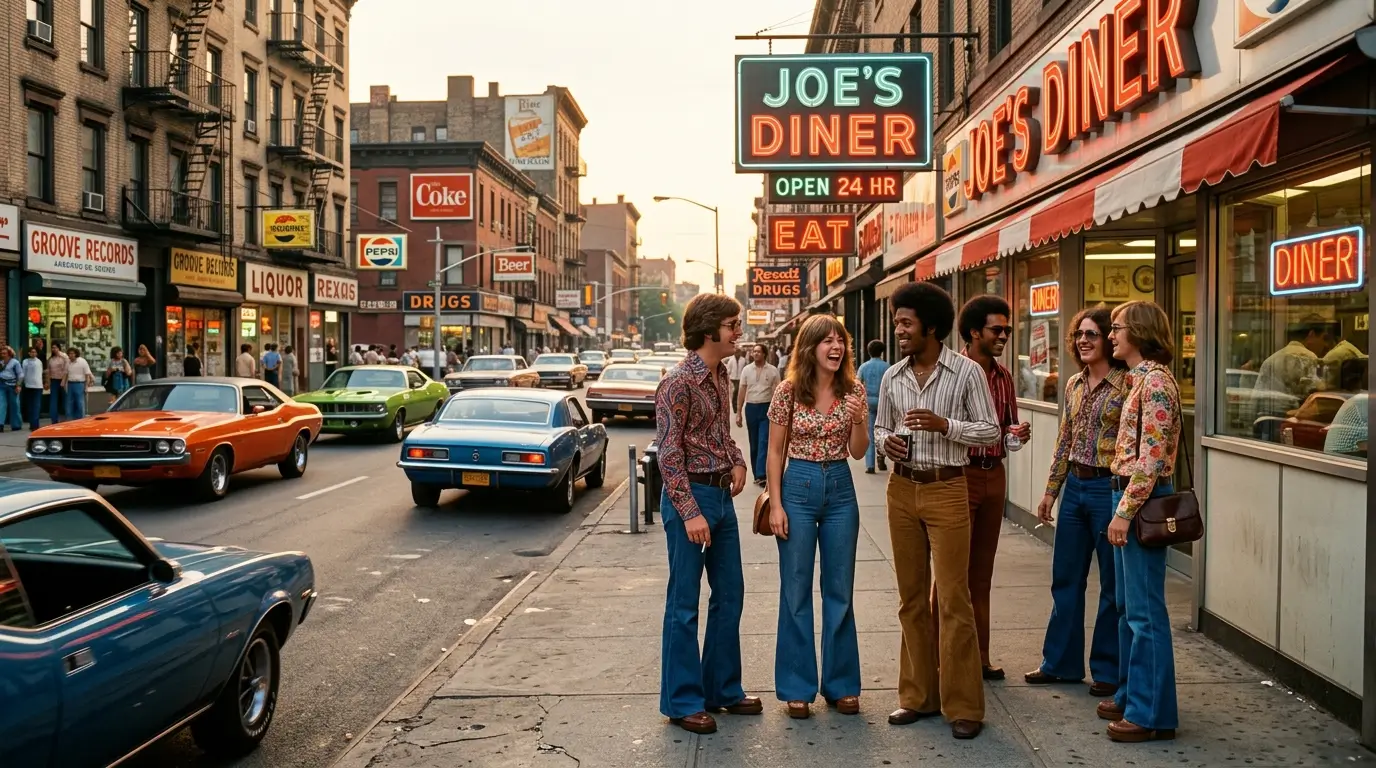
1970s slang is the collection of casual words and phrases that were popular in the United States, UK, and other English-speaking countries during the 1970s.
Terms like “groovy,” “far out,” “copacetic,” and “bogart” reflected the era’s laid-back, disco, and counterculture influences, and many are still recognized today.
Key Takeaways
- 1970s slang grew out of hippie culture, disco, TV, and everyday street talk.
- Many terms, like “groovy” and “far out,” meant something was good or exciting.
- The exact origin of some words is unclear, though a few trace back to earlier decades.
- Some 1970s slang is still used today, often with a nostalgic or joking tone.
- Most terms were friendly and positive, though a few had negative or sarcastic meanings.
- Regional differences existed, with distinct slang in the US, UK, and Black American communities.
People search for 1970s slang for many reasons. Maybe they heard an older relative say something odd. They’re writing a story set in the decade. Maybe a TV show or movie used a word they didn’t recognize.
Although the reasons vary, 1970s slang shows up more than you’d think. You’ll spot it in reruns, classic songs, family conversations, and even memes that borrow retro phrases for a laugh. Some words from this decade never really left. Others sound completely foreign to anyone born after 1990.
This Conversation walks through the most important 1970s slang words and phrases. You’ll learn what they mean, where they likely came from, and how people actually used them. You’ll also see modern examples, so you can tell if a word is still alive today or strictly a relic of bell-bottoms and disco balls.
By the end, you won’t need to look anywhere else to understand 1970s slang.
What Does 1970s Slang Mean?
1970s slang refers to informal words and expressions that were common in everyday speech during the 1970s. It covers greetings, insults, compliments, and casual descriptions of people, things, and situations.
The decade had a few different slang “scenes.” Hippie and counterculture language carried over from the late 1960s. Disco and pop culture added new terms as the decade went on. Television, music, and regional dialects all shaped what people said on the street, at school, and at work.
Some 1970s slang had multiple meanings depending on where you lived. For example, a word that meant “cool” in one region might have carried a slightly different meaning elsewhere. Context always mattered.
Quick Meaning Box
| Meaning | Simple Explanation |
| General 1970s slang | Informal words and phrases common in the 1970s |
| Positive use | Often meant something was cool, fun, or impressive |
| Negative use | Sometimes used to call out rude or selfish behavior |
| Regional use | Varied between the US, UK, and specific communities |
Pronunciation
Most 1970s slang terms are pronounced the way they’re spelled, but a few trip people up:
- Groovy > GROO-vee
- Copacetic > koh-puh-SET-ik
- Bogart > BOH-gart
- Far out > FAR-out (said with emphasis on both words)
Where Does 1970s Slang Come From?
1970s slang came from a mix of hippie counterculture, Black American communities, disco culture, and mainstream TV and music. There isn’t one single source; it developed from many overlapping influences.
A lot of early-1970s slang carried over directly from the late 1960s hippie movement, including words tied to peace, freedom, and anti-establishment attitudes. As the decade moved on, disco music and nightlife added a new layer of slang tied to style, dancing, and fun.
Black American communities also contributed heavily to the slang of the era, and many of those terms later spread into wider mainstream use through music, radio, and television. The exact origin of individual words is often unclear, since slang usually spreads through spoken conversation long before anyone writes it down.
History of the Term
1970s slang didn’t appear all at once. It evolved in stages as the decade’s culture shifted.
In the early 1970s, hippie-era language was still common. Words about peace, freedom, and being “real” carried over from the 1960s counterculture movement. As disco rose in popularity around the middle of the decade, new slang appeared around style, dancing, and nightlife.
By the late 1970s, slang had absorbed influences from television, funk and soul music, and youth culture more broadly. Some terms faded quickly once the decade ended. Others, like “copacetic” and “psych,” stuck around and are still recognized decades later, sometimes used ironically or with a nostalgic wink.
How People Use It Today
A handful of 1970s slang words are still used today, though usually in a joking or nostalgic way. People might say “groovy” or “far out” sarcastically, almost like a throwback joke rather than a serious description.
On social media, some of these words resurface in captions or comments meant to sound retro or funny. TikTok and Instagram users sometimes revive old slang for a nostalgic aesthetic, especially around retro fashion or throwback content. Outside of that kind of intentional callback, most 1970s slang isn’t part of everyday modern conversation.
1970s Slang for Cool
The most common way to say something was cool in the 1970s was “groovy” or “far out.” Both words described anything impressive, enjoyable, or exciting.
“Groovy” had roots in jazz slang from earlier decades but became a defining word of hippie and early-1970s culture. “Far out” carried a similar meaning but leaned slightly more toward describing something surprising or mind-blowing rather than just generally good. “Right on” was another common way to show approval or agreement.
What Does Bogart Mean in 1970s Slang?
“Bogart” meant to hog something or take more than your fair share, especially when it came to sharing something with a group. A common phrase was “don’t bogart it,” often said if someone was holding onto something too long instead of passing it along.
The word is widely believed to be tied to actor Humphrey Bogart, known for his tough-guy film roles where he’d often hold a cigarette in his mouth without offering it to anyone else. The exact path from movie star to slang term isn’t fully documented, but the connection to his on-screen image is the commonly cited explanation.
What Does Copacetic Mean in 1970s Slang?
“Copacetic” meant that everything was fine, in order, or going smoothly. If someone asked how things were going and you said “copacetic,” you meant there was nothing to worry about.
The word actually predates the 1970s by several decades and had already been used earlier in the 20th century. It became a familiar part of everyday slang by the 1970s, and its exact origin is unclear, though it has long been associated with American vernacular speech.
What Does Psyche Mean in 1970s Slang?
“Psyche,” often spelled “psych,” meant “just kidding” or “I fooled you.” People said it right after tricking someone or making a false statement, to reveal it wasn’t true.
It was typically used playfully, not to genuinely upset anyone. The word is still recognizable today, and some younger generations continue to use “psych” in the same way, making it one of the more durable pieces of 1970s slang.
Early 1970s Slang
Early 1970s slang leaned heavily on leftover hippie and counterculture language from the late 1960s. Words like “groovy,” “far out,” and “right on” were everywhere, along with phrases tied to peace and freedom.
This early period still carried a strong countercultural tone. Slang often reflected casual, laid-back attitudes and a general resistance to formal or “square” ways of speaking.
Late 1970s Slang
Late 1970s slang picked up more influence from disco, funk, and mainstream pop culture. Words describing style, parties, and nightlife became more common as disco culture grew.
By this point, some of the earlier hippie-era slang had started to feel dated, replaced by newer expressions tied to fashion, music, and the general energy of disco-era nightlife.
Popular 1970s Slang
Some of the most widely used 1970s slang words and phrases include:
- Groovy cool or enjoyable
- Far out surprising or impressive
- Right on an expression of agreement or approval
- Copacetic fine or going well
- Psych just kidding
- Bogart to hog or take more than your share
- Bummer something disappointing
- Boogie to dance, especially to disco music
British 1970s Slang
British 1970s slang had its own flavor, separate from American terms. Words like “naff” (meaning uncool or tacky), “gear” (meaning excellent), and “chuffed” (meaning very pleased) were common across the UK during the decade.
UK slang from this era often reflected regional dialects and had less overlap with American hippie or disco slang, since British youth culture developed along its own path.
1970s Black Slang
Black American communities contributed significantly to the slang of the 1970s, and many terms from this community later spread into broader mainstream use through music, television, and radio. Words tied to style, greetings, and everyday expressions often originated or gained popularity this way.
Because slang spreads primarily through speech, it’s often difficult to pin down an exact origin point for individual terms. What’s well documented is that Black American vernacular has long been a major influence on wider American slang, both in the 1970s and in the decades before and after.
1970s Surfer Slang
Surfer slang from the 1970s added its own set of words to describe waves, style, and the overall surfing lifestyle. Terms describing a good wave, a wipeout, or a laid-back attitude were common among surfing communities, especially in coastal areas like California.
Surfer slang often overlapped with general 1970s cool-word culture, sharing terms like “gnarly” and “stoked” that described excitement or impressive conditions.
Examples in Everyday Conversation
- “That new record is totally groovy.”
- “Don’t bogart the chips, pass them over.”
- “How’s everything going?” “Copacetic, man.”
- “I failed the test.” “Psych! I actually got an A.”
- “Check out that far-out jacket.”
- “Right on, I’m glad you made it.”
- “This party is such a bummer without music.”
- “Let’s boogie down at the club tonight.”
- “That was a gnarly wave out there.”
- “I’m totally stoked for the weekend.”
Text Message Examples
- “party tonight, u in? gonna be groovy 🎶”
- “stop bogarting my charger lol”
- “how’s the trip going” “copacetic, no problems”
- “Failed my driving test” “Psych, passed first try!”
- “That outfit is so far out”
- “Right on, see u there”
- “Rain again? total bummer”
- “We’re gonna boogie all night”
- “Waves were gnarly today”
- “So stoked for the concert”
Social Media Caption Examples
- Instagram: “Feeling groovy today”
- TikTok: “POV: it’s 1975, and everything is far out”
- X: “This whole week has been copacetic, no complaints”
- Threads: “Don’t bogart the good vibes, share them”
- Facebook: “Right on to everyone who showed up today”
- Instagram: “Totally stoked for this throwback playlist”
- TikTok: “Gnarly retro fit check”
- X: “Bummer of a Monday, need some disco energy”
- Facebook: “Boogie night with the family, so much fun”
- Instagram: “Psych! Thought I’d never post again “
Is It Positive or Negative?
Most 1970s slang carried a positive or neutral tone. Words like “groovy,” “far out,” and “right on” were friendly ways to show excitement or approval.
A few terms leaned negative. “Bummer” described disappointment, and “bogart” pointed out selfish behavior, like hogging something instead of sharing. “Psych” could feel like a harmless joke or, depending on tone, a mildly annoying prank if overused. Context and delivery usually decided if a word felt playful or pointed.
Who Uses This Slang?
1970s slang was originally used by teens and young adults during the decade itself, especially within hippie, disco, surf, and music-driven communities. Today, it’s mostly used by older generations recalling their youth, or by younger people using it jokingly for a retro or nostalgic effect.
You’ll also see writers, filmmakers, and content creators use 1970s slang intentionally to set a scene or tone in period pieces, throwback content, or nostalgic social media posts.
Similar Slang Words
| Slang | Meaning |
| Groovy | Cool or enjoyable |
| Far out | Surprising or impressive |
| Right on | Agreement or approval |
| Gnarly | Impressive, especially in surf culture |
| Stoked | Excited |
Opposite Words
- Bummer: the opposite of something groovy or exciting; describes disappointment.
- Square: the opposite of cool or hip; describes someone old-fashioned or overly conventional.
- Described something as boring, disappointing, or uncool, the opposite of far out.
Common Mistakes
People sometimes misuse “bogart” to mean stealing something outright, when it actually refers to hogging or not sharing something you already have access to, like a joint, snack, or remote control.
Another common mistake is assuming “copacetic” is a modern made-up word. It’s actually been around since well before the 1970s, even though it became widely popular during that decade.
Some also misspell “psych” as “sike,” which became a more common spelling variation in later decades but wasn’t the standard 1970s spelling.
When NOT to Use It
Avoid 1970s slang in professional emails, school assignments, business meetings, or formal writing. Words like “groovy” or “far out” can come across as unprofessional or confusing in serious settings, especially to readers who don’t recognize the era-specific meaning.
It’s best saved for casual conversation, creative writing, retro-themed content, or moments where a nostalgic or humorous tone fits the situation.
Fun Facts
- “Copacetic” was used in American speech well before the 1970s made it popular again.
- “Psych” is still used today with almost the same meaning.
- Surfer slang like “gnarly” and “stoked” crossed over into general teen slang during the decade.
- “Bogart” is widely linked to actor Humphrey Bogart’s on-screen habit of holding a cigarette without sharing it.
- Disco culture introduced a wave of new slang tied to dancing, style, and nightlife in the mid-to-late 1970s.
- British 1970s slang developed somewhat separately from American slang of the same decade.
Frequently Asked Questions
What slang was popular in the 1970s?
Some of the most popular 1970s slang words included “groovy,” “far out,” “right on,” “copacetic,” and “psych.” These terms showed up in everyday conversation, TV shows, and music of the decade. Most described something positive, like approval or excitement, though a few, like “bummer,” described disappointment. Popularity varied by region and community, with disco culture, hippie counterculture, and Black American vernacular all contributing different terms throughout the decade.
What are some retro sayings?
Retro sayings from past decades include phrases like “far out,” “groovy,” “keep on truckin’,” and “right on.” These sayings often expressed enthusiasm, approval, or a laid-back attitude. Many retro sayings are tied to a specific time period and can instantly signal a decade to listeners, which is why they’re often used today in nostalgic content, period films, or throwback social media posts rather than everyday conversation.
How did people in the 1970s talk?
People in the 1970s often spoke with a casual, relaxed tone influenced by hippie culture, disco, and television. Slang played a big role in everyday speech, especially among teens and young adults. Conversations often included expressions of approval like “right on” or “groovy,” along with playful phrases like “psych.” Regional and cultural differences meant that speech patterns varied, especially between American, British, and Black American communities.
What was the most popular slang word in 1971?
“Groovy” is widely remembered as one of the most popular slang words around 1971, carrying over from late-1960s hippie culture. It described anything enjoyable, exciting, or impressive. While exact usage data from that specific year isn’t something that can be verified, “groovy” is consistently cited as one of the defining slang terms of the early 1970s in general discussions of the decade’s language.
Final Thoughts
1970s slang paints a picture of a decade shaped by hippie leftovers, disco energy, and a generally laid-back attitude toward life.
Words like “groovy,” “copacetic,” and “psych” weren’t just casual filler; they captured the mood of the times.
Some of these words never really disappeared. Others are strictly time capsules now, popping up in throwback shows, retro posts, or family stories.
Either way, understanding 1970s slang gives you a clearer window into how people actually talked, joked, and connected back then.
Next time you hear someone say something’s “copacetic” or catch a “psych!” after a joke, you’ll know exactly where it came from.

James Carter is a slang researcher and writer at Slang Insight, dedicated to exploring the origins and meanings behind today’s most popular internet expressions. With a background in linguistics and a love for pop culture, James brings a unique perspective to every article, making slang easy to understand for everyone.