1940s slang refers to the informal words and phrases people used in the United States and Britain during World War II and the years right after.
Terms like “swell,” “cat’s pajamas,” and “gams” came from jazz clubs, the military, and Hollywood movies. Most of these words describe people, style, or approval, and a few are still around today.
Key Takeaways
- 1940s slang grew out of jazz culture, the World War II military, and Hollywood films.
- Many words describe looks, personality, or excitement, like “swell” and “the cat’s pajamas.”
- The tone of most 1940s slang was playful and upbeat, though military and gangster slang could be harsher.
- Some terms, like “cool,” survived into modern English, while others faded out by the 1950s.
- The exact origin of many phrases is unclear, since slang usually spreads by word of mouth before anyone writes it down.
- People still use 1940s slang today for retro fun, vintage aesthetics, and old movie references.
People search for 1940s slang for a few simple reasons. Old movies and TV shows use it. Grandparents and great-grandparents said these words growing up. And lately, vintage fashion and retro aesthetics have made 1940s style popular again online.
You’ll run into this slang in black-and-white films, detective novels, swing music lyrics, and history documentaries about World War II. It shows up in war letters, diner menus, and old newspaper ads too.
Is it still used today? Mostly no, though a handful of words survived. “Cool” is the best example. It started gaining ground in this decade and never really left. Most other terms, like “gams” for legs or “wolf” for a flirty guy, faded out decades ago and now sound charmingly old-fashioned.
This guide covers where 1940s slang came from, what it meant, and how to use it correctly if you want to sound like you stepped out of a 1940s diner. We’ll also cover slang by category, including gangster talk, detective lingo, and British wartime phrases, so you get a full picture of how people spoke during this decade.
What Does 1940s Slang Mean?
1940s slang means the casual, everyday words and expressions used by ordinary Americans and Britons between roughly 1940 and 1949. It covers everything from compliments to insults to military jargon.
This decade produced slang from several different worlds at once. Big cities had jazz clubs where musicians and fans invented their own vocabulary. The military created its own shorthand for wartime life. Hollywood films spread new expressions across the whole country through dialogue. And detective novels and gangster movies added a rougher, streetwise vocabulary that felt exciting to readers.
Because of this mix, 1940s slang isn’t just one style of talking. A soldier’s letter home used different words than a teenager describing a date, and a gangster movie used different words again. This guide breaks all of that down by category so you can see how each group spoke.
Quick Meaning Box
| Meaning | Simple Explanation |
| General approval | Words like “swell” or “the cat’s pajamas” meant something was great or impressive. |
| Describing people | Slang describes looks, personality, or attitude, like “dish” for an attractive woman or “square” for someone boring. |
| Military life | Terms described daily routines, gear, or attitudes among soldiers, like “chow” for food. |
| Crime and danger | Gangster and detective slang described criminals, guns, or trouble, like “heater” for a gun. |
| Flirting and romance | Words described attraction or dating, like “wolf” for a flirty man. |
Pronunciation
“1940s slang” is said the normal way: NINE-teen FOR-tees slang. Since this term covers many individual words rather than one single word, pronunciation only matters for specific slang terms, which are explained one by one throughout this guide.
Where Does 1940s Slang Come From?
1940s slang came from several overlapping sources: jazz and swing music culture, Hollywood films, the World War II military, and city street life in places like New York. Each group added its own flavor to the decade’s vocabulary.
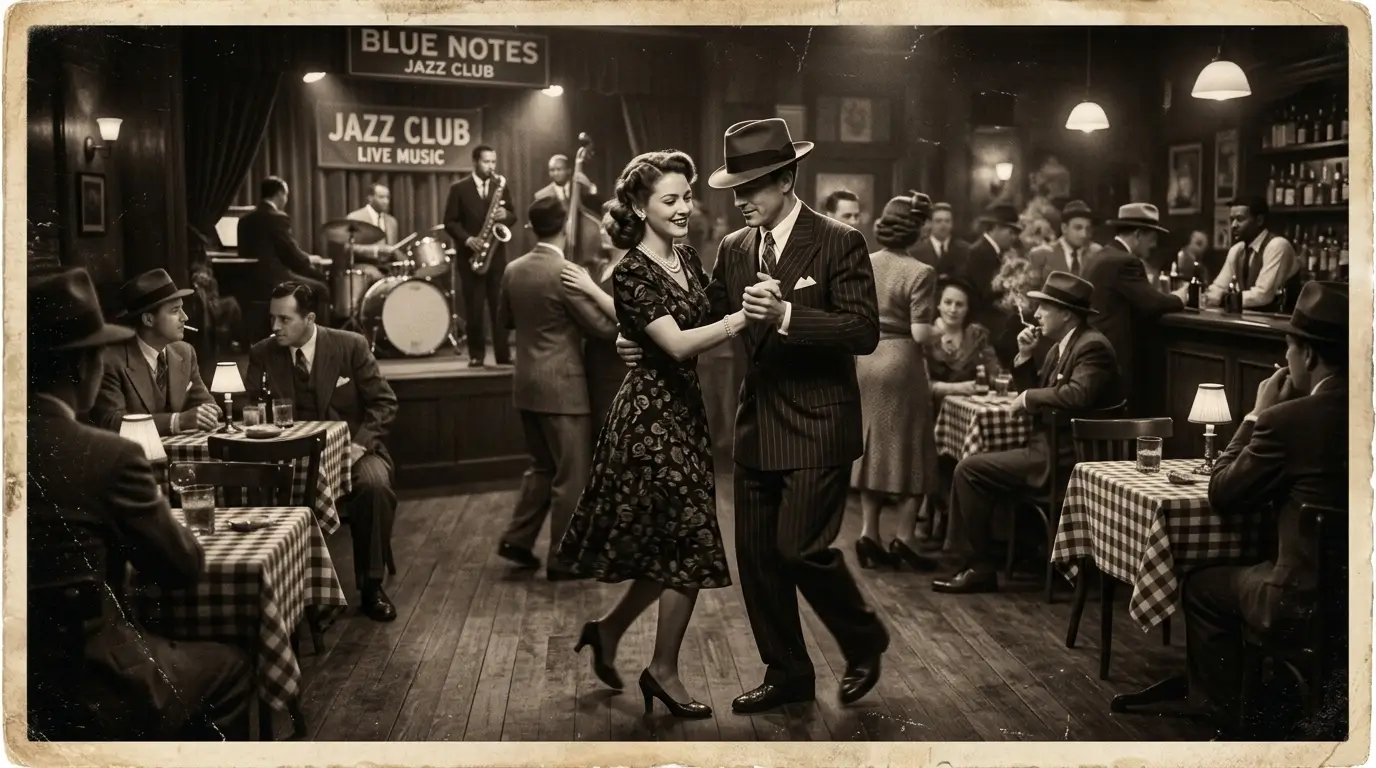
Jazz clubs in cities like New York and Chicago had been building a slang vocabulary since the 1930s, and much of it carried into the 1940s. Musicians and fans used words like “hep” and “cat” to describe people who understood the music scene.
World War II shaped a huge amount of slang during this decade. Millions of young people, including all genders, served in the military, and they brought home words from basic training, from other soldiers, and sometimes from other countries where they were stationed. Terms about food, gear, and daily routines spread this way quickly.
Hollywood also played a big role. Movies reached huge audiences and spread slang from one region to the whole country. A phrase used by a screenwriter in Los Angeles could show up in conversations in small towns within months.
The exact origin of many individual slang words is unclear. Slang usually starts as spoken language among small groups before anyone writes it down, so historians often can’t pin an exact date or person to a specific term.
History of the Term
1940s slang evolved quickly because of the war and the cultural changes it brought. Early in the decade, slang still resembled the swing-era vocabulary of the late 1930s. By the middle of the decade, wartime terms had taken over much of everyday conversation. After the war ended in 1945, some slang faded while newer, more relaxed phrases from postwar youth culture began appearing.
The postwar years brought more casual, laid-back slang as returning soldiers and a booming youth culture reshaped American life. Words tied strictly to combat and military service faded fastest, since most people had no daily use for them once the war ended.
There’s no clear recent resurgence of 1940s slang as a whole. Instead, individual words occasionally reappear in vintage-themed content, WWII documentaries, and retro fashion communities, where people enjoy using old-fashioned phrases for fun rather than as everyday speech.
How People Use It Today
Today, 1940s slang mostly shows up in nostalgic or creative contexts rather than daily conversation. People use it in vintage aesthetic content, historical reenactments, swing dance communities, and captions styled after old movies.
On platforms like Instagram and TikTok, people interested in vintage fashion, swing dancing, or “old Hollywood” style sometimes borrow 1940s phrases as a fun, retro touch in captions. This isn’t widespread slang usage, though. It’s more of a stylistic choice tied to a specific aesthetic community, and it should be treated that way rather than as common modern slang.
1940s Slang Words
1940s slang words covered a huge range of everyday life, from food to fashion to feelings. Common ones include “swell” (great), “dough” (money), “flick” (a movie), “joint” (a place, like a restaurant or bar), and “beat it” (go away).
Other everyday words included “gas” for something fun or exciting, “threads” for clothing, and “wolf” for a man who flirted a lot. People also said “on the nose” to mean something was exactly right, and “in the groove” to describe someone doing great at something.
1940s Slang Phrases
1940s slang phrases often combined a few words into a full expression rather than a single term. “The cat’s pajamas” and “the bee’s knees” both meant something excellent. “Snap to it” meant hurry up, and “don’t take any wooden nickels” was a playful way to say goodbye and stay sharp.
Another common phrase was “put on the dog,” which meant dressing up or acting fancy. “Blow your top” meant to lose your temper. These phrases worked well in casual conversation and appeared often in movie dialogue of the era.
1940s Slang for Pretty Girl
A common 1940s slang term for a pretty girl was “dish,” used to describe an attractive woman. Another popular one was “looker,” meaning someone who was easy on the eyes.
Some people also called an attractive woman a “knockout” or said she was “a real doll.” These terms were meant as compliments in the culture of the time, though some sound outdated or overly focused on looks by today’s standards.
1940s Slang for Handsome Man
A handsome man in 1940s slang might be called a “smooth operator,” meaning someone charming and confident. He could also be described as “dapper,” a word focused on sharp, stylish dressing.
Some people used “hunk” to describe a strong, good-looking man, a term that actually stuck around and is still recognizable today. “Sharp” was another compliment, describing someone who looked stylish and put-together.
1940s Slang for Cool
The word “cool” itself started gaining its modern meaning of “impressive” or “stylish” during this decade, especially in jazz culture. Musicians and fans used it to describe someone confident, relaxed, and in tune with the music scene.
Other words carried a similar meaning, including “hep” and “hip,” both used to describe someone who understood current trends, especially in music and fashion. Someone who was “in the know” about what was fashionable might be called “hep to the jive.”
1940s Slang for Eccentric
1940s slang for impulsive included “screwy,” “nuts,” and “loco.” “Screwy” described something strange or that didn’t make sense, while “nuts” was a more direct way to call someone or something out of control.
“Loco,” borrowed from Spanish, was also common in casual American English during this time. People used these words for both silly situations and more serious concerns about someone’s behavior, so tone mattered a lot when using them.
1940s Slang Insults
Common 1940s slang insults included “square,” meaning someone boring or old-fashioned, and “lousy,” meaning something was bad or unpleasant. “Chump” and “sap” both described someone who was easily fooled or not very smart.
“Rat” was a harsher insult, often used for someone who betrayed a friend or told secrets to the authorities, especially in gangster and detective slang. “Palooka” described a clumsy or unskilled person, often used in a boxing context.
British 1940s Slang
British 1940s slang had its own flavor, shaped heavily by wartime life and rationing. Common terms included “cheerio” for goodbye, “blighty” for Britain itself (especially used by soldiers abroad), and “spiffing” to mean excellent.
Other British wartime terms included “gen,” meaning information or facts, and “wizard,” used to describe something impressive, especially among Royal Air Force pilots. Rationing also produced its own vocabulary, including “on the ration” to describe something in short supply.
American 1940s Slang
American 1940s slang leaned heavily on jazz culture, Hollywood dialogue, and city life. Words like “swell,” “dough,” “gas,” and “the cat’s pajamas” were common across the country, spread partly through radio shows and movies.
Regional differences existed too. Big cities like New York and Chicago had their own street slang, often tied to jazz clubs and nightlife, while military slang spread more evenly across the whole country because service members came from every region.
1940s Gangster Slang
1940s gangster slang overlapped heavily with detective slang but focused more on crime organization and danger. A gangster’s associates were sometimes called his “mob” or his “outfit.” Getting killed was often described as getting “bumped off” or “taken for a ride.”
“Torpedo” described a hired gunman, while “the works” meant a harsh punishment or even death, as in “give him the works.” This vocabulary shaped how gangster movies from the era sounded and still influences how crime films portray the period today.
Examples in Everyday Conversation
- “That new record is really the cat’s pajamas, don’t you think?”
- “Quit being such a square and come dancing with us.”
- “She’s a real dish, isn’t she?”
- “I don’t have any dough left until payday.”
- “Snap to it, we’re going to be late for the flick.”
- “That guy’s a wolf, watch yourself around him.”
- “This diner is a swell joint for lunch.”
- “Don’t blow your top, it was just a joke.”
- “He’s dressed sharp tonight, real dapper.”
- “Stop acting screwy and just tell me what happened.”
Text Message Examples
- “Running late, be there in a sec, don’t blow your top lol”
- “That movie was the cat’s pajamas fr”
- “New diner downtown is a swell joint, we should go”
- “He’s being a total square about the whole thing”
- “No dough until Friday, can we do something free”
- “She looked like a real dish at the party”
- “Quit being screwy and just answer me”
- “This guy’s such a wolf, be careful”
- “Snap to it, we are leaving in five”
- “That outfit is sharp, very dapper energy”
Social Media Caption Examples
- Instagram: “Feeling like the cat’s pajamas today 🐾”
- TikTok: “POV: you talk like it’s 1945 for a day”
- X: “This whole timeline is acting screwy today”
- Threads: “Dressed sharp, feeling swell, ready for the weekend”
- Facebook: “Grandpa used to say ‘don’t take any wooden nickels’ and I finally get it”
- Instagram: “Vintage vibes, real doll energy today ✨”
- TikTok: “Trying out 1940s slang for the whole day, results inside”
- X: “Someone please stop being such a square in the replies”
- Threads: “This diner is giving swell joint energy”
- Facebook: “Old photos, older slang, best combo”
Is It Positive or Negative?
Most 1940s slang was lighthearted and positive, especially words describing approval or attractiveness, like “swell” or “dish.” These terms were meant to compliment or express excitement.
Some words carried a negative or harsher tone, especially insults like “square,” “sap,” and “rat.” Gangster and detective slang could also sound harsh or threatening, since it described crime and danger rather than everyday friendliness.
Misunderstandings can happen today mainly around looks-based compliments like “dish” or “doll,” which were normal at the time but can sound outdated or overly focused on appearance to modern ears.
Who Uses This Slang?
Today, 1940s slang is mostly used by history enthusiasts, swing dance communities, vintage fashion fans, and people creating retro-themed content online. It isn’t part of regular daily speech for most people anymore.
Older generations who grew up hearing these words from their parents or grandparents sometimes still use a few terms casually, especially “swell” or “the cat’s pajamas,” as a nostalgic habit rather than trying to sound trendy.
Similar Slang Words
| Slang | Meaning |
| Swell | Great, wonderful |
| Hep | Aware, in the know, cool |
| Dough | Money |
| Joint | A place, like a bar or restaurant |
| Square | Boring, old-fashioned person |
| Gas | Something fun or exciting |
| Wolf | A flirty man |
| Dish | An attractive woman |
Opposite Words
- Square — the opposite of being “hep” or “cool,” describing someone out of touch or boring.
- Lousy — the opposite of “swell,” describing something bad instead of great.
- Drag — used to describe something boring, the opposite of something being “the cat’s pajamas.”
- Dud — someone or something disappointing, the opposite of a “knockout” or “looker.”
Common Mistakes
A common mistake is using “cool” the exact same way it’s used today, when in the 1940s it was a newer term still tied closely to jazz culture and confident, relaxed style rather than general approval of anything.
Another mistake is treating all 1940s slang as one single style. Detective slang, military slang, and everyday teen slang all sounded different, so mixing them without understanding the context can sound off in historical writing or dialogue.
People also sometimes misspell or mispronounce older terms, like saying “gumshoe” incorrectly or confusing “dame” with “dime.” Getting the exact wording right matters if you’re trying to recreate authentic period dialogue.
When NOT to Use It
1940s slang shouldn’t be used in professional emails, school assignments, business meetings, or any formal writing, since it can come across as confusing, unprofessional, or unclear to modern readers.
Terms like “dame,” “broad,” or “dish” can also sound outdated or disrespectful in professional or mixed-generation settings today, even though they were common compliments in the 1940s. It’s best to save this vocabulary for creative writing, historical projects, or casual retro-themed fun rather than everyday communication.
Fun Facts
- The word “cool” started gaining its modern meaning of “impressive” during the 1940s jazz scene.
- “Hep” and “hip” were closely related terms describing someone in tune with current trends.
- Wartime rationing created its own slang, like the British term “on the ration.”
- Detective and gangster slang from this decade still heavily influences how crime movies sound today.
- Many 1940s terms, like “gams” and “wolf,” have fallen out of everyday use entirely.
- “Digger” remains a recognized term for an Australian soldier even today.
- Coded language used within gay communities in the 1940s is documented mainly through oral history, since it was rarely written down at the time.
Frequently Asked Questions
What are some slang words from the 1940s?
Common 1940s slang words include “swell” (great), “dough” (money), “joint” (a place), “gas” (something fun), and “threads” (clothing). Many of these words focused on approval, money, or everyday hangout spots. People also used “flick” for a movie and “beat it” to tell someone to leave. Most of these terms came from jazz culture, city slang, or Hollywood films, and they spread quickly through radio shows and movie dialogue across the country during the decade.
What are some old slang phrases?
Beyond single words, the 1940s produced full phrases like “the cat’s pajamas” and “the bee’s knees,” both meaning something excellent. “Snap to it” meant hurry up, and “put on the dog” meant dressing up fancy. These phrases worked well in casual conversation and often appeared in movie scripts, which helped spread them nationally. Many phrases combined humor with rhythm, making them fun and memorable, which is part of why some are still remembered and referenced today.
How to talk like the 1940s?
To talk like the 1940s, focus on tone as much as vocabulary. Use upbeat words like “swell” for good things, “dough” for money, and “joint” for places. Add playful phrases like “don’t take any wooden nickels” when saying goodbye. Avoid modern slang and internet abbreviations entirely, since they clash with the vintage feel. Reading dialogue from 1940s films or detective novels helps a lot, since it shows exactly how these words fit naturally into real sentences and conversations.
What slang was used during WWII?
WWII slang included military-specific terms like “chow” for food and “gen” (British) for information, along with terms soldiers picked up from daily service life. “Blighty” referred to Britain among British troops stationed abroad, while “digger” described Australian soldiers. American troops also brought home civilian jazz slang mixed with new military terms, creating a vocabulary that blended battlefield life with the popular culture soldiers had left behind.
Final Thoughts
1940s slang gives us a real window into what daily life sounded like during one of the most eventful decades in modern history. It mixed jazz culture, Hollywood glamour, wartime hardship, and city street life into one colorful vocabulary.
Most of these words have faded from everyday speech, but they still show up in old movies, history lessons, and vintage-themed content today. A few, like “cool,” never really left at all.
If you’re writing historical fiction, enjoying a swing dance night, or just curious about how your grandparents talked, this slang offers a fun, honest look at a different era of American and British life.

Sarah Mitchell is a content writer at Slang Insight, passionate about internet culture, trending phrases, and the ever-changing world of digital communication. With a keen eye for spotting new slang before it goes viral, Sarah loves breaking down complex expressions into simple, relatable explanations for readers of all ages.