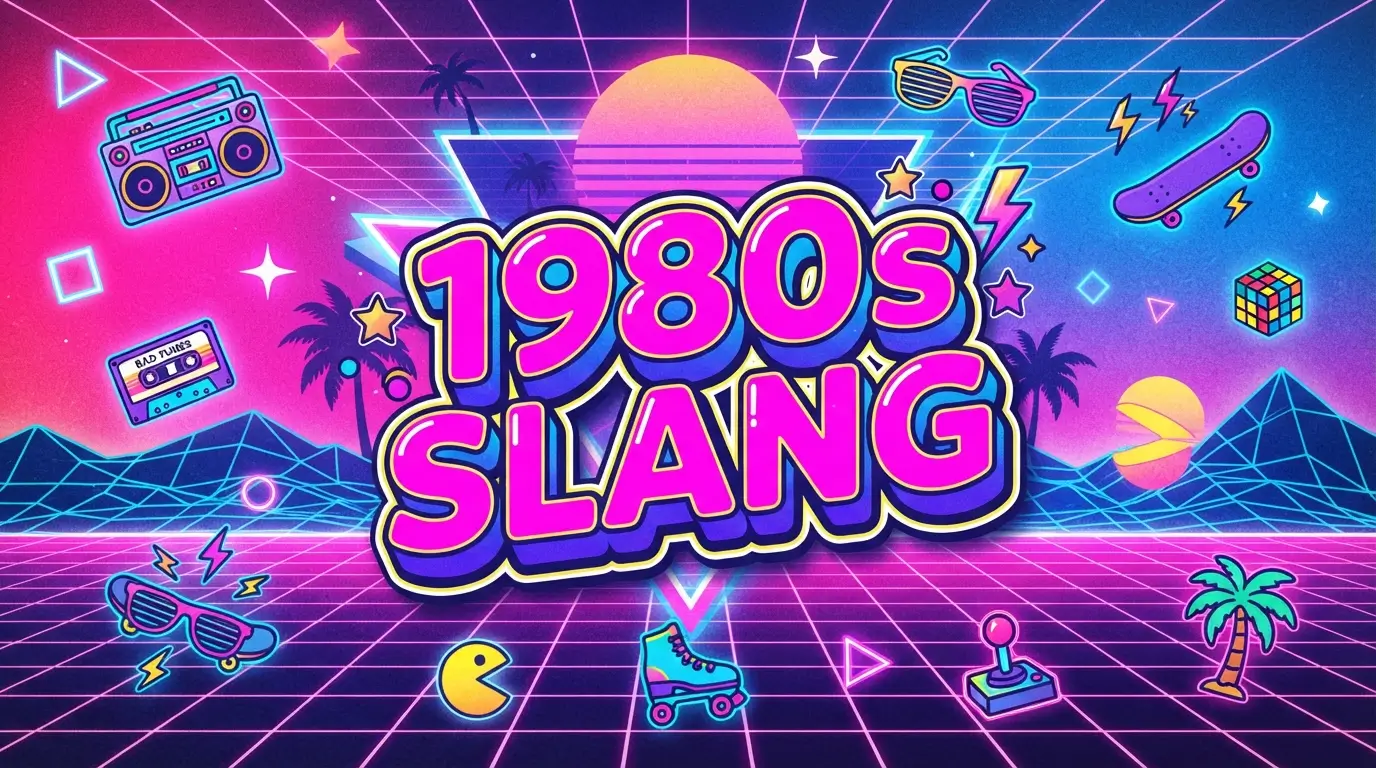
1980s slang refers to the casual words and phrases that became popular during the decade, mostly through teen culture, movies, MTV, and mall hangouts. Words like “radical,” “gnarly,” and “totally” showed excitement, while “gag me with a spoon” showed annoyance. Much of it is still used today, often as a nostalgic or playful callback.
Key Takeaways
- 1980s slang grew out of teen culture, movies, music videos, and mall life.
- Many terms, like “rad” and “totally,” started as regional or subculture slang before going mainstream.
- Some words came from surfer and Valley Girl culture in California; others came from Black culture, hip hop, and British youth slang.
- Most 1980s slang carried a positive, upbeat tone, though a few terms were used as playful insults.
- A lot of this slang is still used today, sometimes ironically or as a throwback.
- The exact origin of some terms is unclear, and word historians still debate a few of them.
Introduction
People search for 1980s slang for a few simple reasons. Some want to understand an old movie line that confused them. Others are writing something set in the 80s and want it to sound real. And plenty of people just miss the words they grew up saying, or heard their parents say.
You’ll run into 1980s slang everywhere from reruns of classic sitcoms to nostalgic TikTok videos and 80s-themed parties. It shows up in movies like Fast Times at Ridgemont High, in early MTV clips, and in casual conversations between people who grew up during that decade.
Is any of it still used today? Yes, quite a bit. Words like “awesome” and “totally” never really left. Others, like “gnarly” or “tubular,” mostly show up now as jokes or intentional throwbacks. This guide covers where 1980s slang came from, what it meant, how people used it, and how it’s used today, so you never need to look anywhere else to understand it.
What Does 1980s Slang Mean?
1980s slang means the informal words and expressions that were common during the 1980s, mostly among teenagers and young adults. It wasn’t one single type of slang. It was a mix of surfer talk, Valley Girl phrases, hip hop terms, and general teen lingo that all blended together during the decade.
Some of these words described excitement or approval, like “awesome” or “radical.” Others described something bad or annoying, like “bogus” or “boring.” A few were just filler words people used to fill space in a sentence, like “totally” or “like.”
For example, someone in 1985 might have said, “That new movie was totally rad,” meaning the movie was really good. Or they might have said, “This homework is so bogus,” meaning it was annoying or unfair.
Quick Meaning Box
| Meaning | Simple Explanation |
| Excitement or approval | Words like “rad,” “awesome,” and “tubular” meant something was great |
| Disapproval or annoyance | Words like “bogus” and “lame” meant something was bad or unfair |
| Filler or emphasis | Words like “totally” and “like” added emphasis without changing meaning |
| Social insults | Words like “dweeb” or “geek” were used to tease or mock someone |
| Agreement | Phrases like “for sure” or “no doubt” meant you agreed with someone |
Pronunciation
Most 1980s slang doesn’t need a pronunciation guide since the words are still spoken in everyday English. A few worth noting:
- Gnarly: NAR-lee
- Tubular: TOO-byuh-ler
- Bodacious: boh-DAY-shus
Where Does 1980s Slang Come From?
1980s slang came from several places at once, including surfer culture, teen movies, music videos, and regional dialects across the US and UK. There wasn’t one single source. It was shaped by California beach culture, MTV, hip hop, and British youth slang all blending together throughout the decade.
Surfer culture in California gave the world words like “gnarly” and “tubular,” both describing a great wave or, later, anything impressive. Valley Girl culture, centered around Southern California malls, added phrases like “totally” and “gag me with a spoon.” Hip hop culture, especially in New York, contributed words like “fresh” and “def,” which spread quickly once rap music reached wider audiences through radio and early music videos.
Meanwhile, British slang from the 80s had its own flavor, with words like “brilliant” and “ace” meaning something excellent, separate from the American versions.
The exact origin of some terms is unclear. Slang often spreads through spoken conversation long before anyone writes it down, so pinpointing exactly who said a word first is usually impossible.
History of the Term
1980s slang didn’t stay the same throughout the whole decade. It shifted as new movies, music, and TV shows came out.
Early 1980s slang leaned heavily on disco leftovers and early punk influence, along with surfer terms that had been building since the 1970s. Words like “gnarly” and “rad” were already common among skaters and surfers by the early part of the decade.
By the mid-80s, MTV was in full swing, and teen movies were shaping the way young people talked. Words like “awesome,” “psych,” and “no way” became everyday phrases. Valley Girl slang exploded in popularity after songs and movies parodied the style, even though real teens across the country picked it up seriously.
Late 1980s slang added more hip hop influence as rap music grew mainstream. Words like “fresh,” “def,” and “chill” became common outside of just hip hop communities.
Some of these words saw a small resurgence later, especially through 80s-themed nostalgia in movies, TV shows, and social media trends that recreate the decade’s style for fun.
How People Use It Today
Today, people mostly use 1980s slang in a joking or nostalgic way rather than as everyday speech. On platforms like TikTok and Instagram, users often bring back words like “totally” or “gnarly” in captions meant to feel retro or funny.
On X and Threads, people sometimes quote 80s movie lines using this slang to make a joke or reference pop culture. In texting, a few words like “for sure” and “chill” survived so naturally that people don’t even think of them as old slang anymore.
Gaming and Discord communities occasionally use 1980s slang ironically, especially when referencing retro games or 80s-themed content.
1980s Slang Words and Phrases
1980s slang words and phrases covered everything from greetings to insults to expressions of excitement. The most common ones described feelings of approval, like “rad,” “awesome,” and “tubular,” while others expressed frustration, like “bogus” and “harsh.”
Phrases were just as common as single words. “Gag me with a spoon” showed disgust. “As if!” showed disbelief or rejection. “Take a chill pill” told someone to calm down.
1980s Slang Insults
1980s slang insults were usually playful rather than harsh, often used between friends without any real intent to hurt feelings. Words like “dweeb,” “dork,” and “geek” described someone seen as socially awkward, though today some of these words have been reclaimed in a positive way, especially “geek.”
Other insults included “airhead,” used for someone seen as not very smart, and “poser,” used for someone pretending to be something they weren’t, like pretending to like a band or style just to fit in.
Popular 1980s Slang
Popular 1980s slang included words nearly everyone recognized, no matter their region or social group. “Awesome,” “cool,” “rad,” and “totally” topped the list, along with phrases like “no way” and “for sure.”
These words spread quickly through movies and TV because they were simple, easy to say, and fit almost any exciting situation. That’s part of why so many of them are still recognizable decades later.
Common 1980s Slang
Common 1980s slang refers to the words people used in daily conversation without thinking twice, the kind of slang that felt normal rather than trendy. This included words like “chill,” “psych,” “later,” and “catch you later,” all used casually among friends and classmates.
Common slang tends to last the longest because it’s practical. That’s why words like “chill” and “later” are still used today with almost the exact same meaning.
Excellent in 1980s Slang
The most common way to say something was excellent in 1980s slang was “rad” or “awesome,” both used constantly across movies, TV, and everyday conversation. Other options included “tubular,” “bodacious,” and “bitchin’,” all borrowed from surfer culture.
British teens in the 80s were more likely to say “brilliant” or “ace” to mean the same thing, showing how American and British slang developed separately even while covering the same basic idea.
1980s Slang for Cool
1980s slang for cool included words like “rad,” “awesome,” “tubular,” and “gnarly,” all describing something impressive or enjoyable. These words were used for everything from a good song to an exciting party to a new pair of shoes.
“Cool” itself was still used constantly too, since it had already been part of American slang for decades before the 80s. It simply stuck around alongside the newer words.
1980s Teen Slang
1980s teen slang was shaped heavily by high school life, mall culture, and the movies teens watched together. Words like “totally,” “as if,” and “gag me with a spoon” became closely tied to teenage speech patterns, especially among girls influenced by Valley Girl style.
Teen slang also included words for social groups, like “prep,” “jock,” and “burnout,” which described different cliques within a typical high school.
1980s Valley Girl Slang
1980s Valley Girl slang came from teenage girls in Southern California’s San Fernando Valley and quickly spread nationwide through music and movies. Phrases like “gag me with a spoon,” “totally,” and “grody” became instantly recognizable thanks to media parodying the style.
Even though it started as a specific regional accent and vocabulary, Valley Girl slang became one of the most widely imitated speech styles of the entire decade.
1980s British Slang
1980s British slang had its own vocabulary, separate from American slang, even though both shared the same decade. Words like “ace” and “brilliant” meant something excellent, while “naff” meant something uncool or poorly done.
British slang also included “sorted,” meaning something was handled or figured out, and “gutted,” meaning extremely disappointed. These terms remained mostly separate from American 80s slang, showing how the two countries developed their own youth language side by side.
1980s Hip Hop Slang
1980s hip hop slang came from New York’s early rap scene and spread through radio, music videos, and word of mouth. Words like “fresh,” meaning stylish or excellent, and “def,” meaning great or impressive, became widely known once rap crossed into mainstream culture.
Other hip hop terms from the decade included “dope,” describing something excellent, and “chill,” which meant to relax or calm down. Many of these words are still part of everyday English today.
1980s Sayings and Slang
1980s sayings and slang went beyond single words into full expressions people used constantly. “Take a chill pill” told someone to relax. “Talk to the hand” dismissed someone mid-conversation, though this phrase became more associated with the early 90s. “Don’t have a cow” told someone to stop overreacting.
These sayings often carried a light, humorous tone, even when telling someone to calm down or stop complaining.
Examples in Everyday Conversation
- “That concert was totally rad, I still can’t believe we got tickets.”
- “Ugh, my curfew is so bogus. I have to be home by nine.”
- “Did you see her new jacket? Totally tubular.”
- “Chill out, it’s not that big of a deal.”
- “No way, you actually met the band?”
- “This homework is so boring, I don’t even get why we need it.”
- “She’s such an airhead, she forgot her own locker combination.”
- “Gag me with a spoon, that smell is awful.”
- “He’s acting like such a poser, pretending he likes that band.”
- “For sure, I’ll meet you at the mall after school.”
Text Message Examples
- “omg that party last night was totally rad”
- “ugh homework is so bogus tonight”
- “u coming to the mall later? for sure?”
- “he’s being such a dweeb rn”
- “that movie was gnarly, we should watch it again”
- “as if i’m going to that dance lol”
- “chill, it’s not a big deal”
- “she’s so fresh with that new haircut”
- “no way that actually happened”
- “catch you later, gotta bounce”
Social Media Caption Examples
- Instagram: “Feeling totally rad today ✨ #80svibes”
- TikTok: “POV: it’s 1985 and you’re totally tubular 🕶️”
- X: “as if this Monday could get any more bogus”
- Threads: “gnarly weekend, 10/10 would recommend”
- Facebook: “Throwback to when everything was totally awesome”
- Instagram: “Bodacious brunch with the squad 🥞”
- TikTok: “Talk to the hand, it’s the weekend now”
- X: “For sure the best playlist I’ve made all year”
- Threads: “Feeling fresh, feeling def, feeling great”
- Facebook: “No cap, this is straight up rad”
Is It Positive or Negative?
Most 1980s slang carried a positive, upbeat tone, especially words like “rad,” “awesome,” and “tubular.” These were meant to express genuine excitement or approval, not sarcasm.
A smaller group of words leaned negative, like “bogus,” “boring,” and “harsh,” which described disappointment or unfairness. Insults like “dweeb” or “airhead” could feel rude depending on tone and context, but they were usually said between friends rather than strangers.
Misunderstandings can happen today if someone uses 80s slang sarcastically without the listener realizing it’s a joke, especially with younger audiences who didn’t grow up with the terms.
Who Uses This Slang?
Teenagers in the 1980s were the main group using this slang, especially in California and other parts of the US influenced by surfer and mall culture. Adults sometimes picked it up too, especially parents trying to relate to their kids or workplaces adopting casual expressions from popular culture.
Today, people who grew up in the 80s often use this slang out of nostalgia. Younger generations sometimes borrow it ironically, especially through 80s-themed content on social media, retro gaming communities, or costume parties.
Similar Slang Words
| Slang | Meaning |
| Rad | Excellent or impressive |
| Awesome | Great or amazing |
| Tubular | Excellent, from surfer culture |
| Fresh | Stylish or excellent, from hip hop |
| Chill | Relaxed or calm |
| Bogus | Unfair or fake |
| Dweeb | A socially awkward person |
| Psych | Said after a joke or trick |
Opposite Words
- boring: the opposite of “rad” or “awesome,” meaning boring or disappointing.
- Bogus: the opposite of something fair or genuine, meaning fake or unfair.
- Harsh: the opposite of something pleasant, meaning rough or unkind.
- Grody: the opposite of clean or attractive, meaning gross or dirty.
Common Mistakes
People sometimes confuse “gnarly” with only meaning something bad, but in 80s slang it usually meant something impressive, not negative. Another mistake is using “psych” without the exclamation tone, which changes it from a joke into confusion.
Some people misspell “tubular” as “tubalar” or shorten it incorrectly. Others mix up regional slang, using a British term like “ace” in an American 80s context where it wouldn’t have been common, or vice versa.
When NOT to Use It
1980s slang doesn’t belong in professional emails, school essays, business meetings, or formal writing. Words like “totally rad” or “gag me with a spoon” can come across as unprofessional or confusing in serious settings.
In job interviews or client communication, using outdated slang can make a message seem unclear or overly casual. It’s best saved for casual conversation, creative writing, nostalgic content, or 80s-themed projects where the tone is meant to be playful.
Fun Facts
- Many 80s slang words came from surfer and skater culture before spreading to mainstream teens.
- MTV played a major role in spreading slang nationwide once it launched in 1981.
- Valley Girl slang became so popular it inspired a well-known song satirizing the accent and vocabulary.
- Hip hop slang from the 80s introduced words that are still common in English today, like “fresh” and “dope.”
- Some 80s slang, like “chill” and “for sure,” never really went out of style.
- British and American 80s slang developed mostly separately, despite sharing the same decade.
Frequently Asked Questions
What was some popular slang in the 80s?
Some of the most popular slang from the 80s included “rad,” “awesome,” “totally,” “gnarly,” and “tubular.” These words were used constantly in movies, TV shows, and everyday teen conversation. Phrases like “no way” and “for sure” were also extremely common. Much of this slang came from surfer culture, Valley Girl speech, and early hip hop, all blending together throughout the decade to create a shared teen vocabulary across the country.
What is 80s slang for cool?
In 80s slang, “cool” was often replaced or paired with words like “rad,” “awesome,” “tubular,” and “gnarly.” Each of these described something impressive or exciting. “Rad,” short for radical, became one of the most recognizable ways to say something was cool. Surfer culture in California played a big role in popularizing many of these specific words before they spread nationwide through movies and television.
What are some 80s catchphrases?
Popular 80s catchphrases included “gag me with a spoon,” used to show disgust, and “as if!” used to reject an idea completely. “Take a chill pill” told someone to calm down, while “psych!” was said right after tricking someone with a joke. These catchphrases often came from teen movies and TV shows, which helped spread them from California youth culture to audiences across the entire country.
What are some slang words from the 70s and 80s?
Slang that carried over from the 70s into the 80s included words like “groovy” and “far out,” though these faded as the decade went on. Newer 80s-specific words like “rad,” “awesome,” and “totally” eventually replaced them in everyday teen speech. Disco culture from the late 70s also influenced early 80s slang before surfer, Valley Girl, and hip hop slang became more dominant later in the decade.
Final Thoughts
1980s slang tells a story about a decade full of movies, mall culture, surf life, and early hip hop all mixing together. Whether it’s “rad,” “totally,” or “gag me with a spoon,” these words capture a specific moment in American and British youth culture that still shows up in nostalgic content today.
Even if you didn’t grow up in the 80s, understanding this slang makes old movies, songs, and conversations make a lot more sense. And if you did grow up then, chances are a few of these words never really left your vocabulary at all.

Sarah Mitchell is a content writer at Slang Insight, passionate about internet culture, trending phrases, and the ever-changing world of digital communication. With a keen eye for spotting new slang before it goes viral, Sarah loves breaking down complex expressions into simple, relatable explanations for readers of all ages.